In 2026, the landscape for digital course creators, coaches, and educators is more competitive than ever.
With the rise of remote learning and the creator economy, choosing the right online course platform is no longer optional it’s mission-critical for growth, engagement, and monetization.
Two major contenders often dominate this decision: Passion.io vs. Kajabi.
At a glance, both platforms cater to creators, but with very different approaches.
Passion.io offers a mobile-first, no-code experience tailored for coaches and educators who want to launch branded learning apps without hiring developers.
Kajabi, on the other hand, is an all-in-one course platform focused on combining course creation, funnel building, email marketing, and monetization in a single ecosystem.
Whether you’re an individual coach looking to build a community-driven mobile app or a content marketer aiming to scale digital products through funnels and automations, this guide offers a comprehensive comparison based on real platform features, user experiences, pricing, and more.
Table Of Contents
Quick Comparison Table: Kajabi vs. Passion.io
Here’s a quick snapshot of how Kajabi vs Passion.io compares across critical categories.
This overview helps you identify which platform aligns better with your teaching style, branding needs, and business goals.
| Feature | Kajabi | Passion.io |
|---|---|---|
| Course Creation | Web-based builder with modules, drip content, assessments | Mobile-first course builder with drag-and-drop interface |
| Mobile App | Web app + branded mobile app (on Growth plan or higher) | Native mobile app for iOS & Android with offline access |
| Monetization Options | Subscriptions, upsells, affiliate marketing, one-time products | Subscriptions, one-time payments (3.9% transaction fee on Passion Payments) |
| Sales Funnels & Marketing | Built-in funnels, email sequences, automation tools | Uses third-party tools like Zapier, basic automation |
| Community Features | Live events, challenges, member-only access, comments | In-app groups, quizzes, push notifications |
| Analytics | In-depth analytics (revenue, engagement, traffic, course progress) | Habit tracking, course completion tracking, basic analytics |
| Integrations | Email tools, CRMs, payment gateways, API access | Primarily integrates through Zapier, limited native options |
| Ideal For | Marketers, agencies, course businesses scaling revenue | Coaches, fitness experts, creators with mobile-first audiences |
| Pricing | Starts at $149/month, no transaction fees | Starts at $97/month, 3.9% fee on Passion Payments |
What Is Passion.io?

Passion.io is a modern, no-code mobile app builder designed for digital educators, fitness coaches, and creators who want to launch interactive learning experiences directly to their audience’s smartphones.
Built with a strong focus on mobile-first UX, the platform removes the need for technical knowledge by offering a streamlined drag-and-drop course creation environment.
At its core, Passion.io is not just a traditional online course platform it’s tailored to support the new generation of creators who prioritize accessibility, branding, and student engagement.
Its intuitive interface enables users to build fully functional, custom-branded learning apps that can be published on both iOS and Android without writing a single line of code.
One of the standout features of Passion.io is its drag-and-drop builder, which simplifies the process of creating lessons, challenges, and assessments.
You can organize modules, upload video or audio content, and design interactive learning paths that reflect your unique teaching style.
Another area where Passion.io excels is offline accessibility. Users can download course content for offline learning, making it ideal for global audiences or those on the move.
For creators, this means more flexibility in how their material is consumed.
The platform also includes features like habit tracking and progress visualization, which are helpful in maintaining learner motivation and driving engagement over time.
Designed specifically for solopreneurs, coaches, and educators, Passion.io puts full creative and business control in your hands.
You can monetize your app using subscriptions or one-time payments, integrate with tools like Zapier for workflow automation, and build a branded experience that goes beyond a typical web course.
If you’re looking for alternatives to Passion.io that offer different customization or pricing models, you might want to explore our Passion.io Alternatives for Course Creators guide.
What Is Kajabi?

Kajabi is a powerful web-based all-in-one learning management system (LMS) designed to help digital entrepreneurs, course creators, and online coaches build, market, and monetize their knowledge without needing multiple disconnected tools.
Unlike platforms that focus only on content delivery, Kajabi combines course creation, sales funnels, email marketing, and community engagement under one roof.
At its foundation, Kajabi allows users to create structured learning experiences with video lessons, quizzes, and downloadable content.
It’s built-in course builder supports multi-tiered modules, assessments, and content dripping, making it suitable for everything from simple one-off tutorials to full-scale certification programs.
Where Kajabi stands out is in its deep sales funnel integration. Creators can design and automate marketing pipelines directly within the platform using customizable landing pages, lead magnets, upsells, and behavior-triggered email sequences.
This native automation streamlines the buyer journey and allows users to convert leads into paying members without relying on third-party tools.
Kajabi’s email marketing suite is tightly integrated into its ecosystem, offering segmentation, visual workflows, and broadcast email features.
It replaces the need for external tools like Mailchimp or ConvertKit, reducing complexity and saving costs for growing businesses.
Monetization is another strength. Kajabi supports one-time payments, recurring subscriptions, and membership site models, giving creators multiple ways to structure and price their offers.
The platform also includes a built-in affiliate program, enabling you to reward partners for promoting your products a key benefit for scaling reach without additional ad spend.
For digital business owners focused on growth, Kajabi offers advanced analytics, automation, CRM tools, and customizable branding features.
These capabilities make it a popular choice for established creators looking to scale their business while maintaining complete control over the customer experience.
If you’re comparing platforms based on scalability and all-in-one efficiency, Kajabi often becomes the top pick.
For a deeper pricing breakdown, you can explore our complete Kajabi Pricing Guide or compare it directly in our Passion.io vs Kajabi Cost Comparison section.
Kajabi vs. Passion.io: Feature-by-Feature Comparison

Choosing the right platform goes beyond brand recognition. What truly matters is how each tool performs where it counts course creation, delivery, and marketing.
Below is a side-by-side look at how Kajabi vs. Passion.io compare in these foundational areas.
1. Course Creation & Delivery
Both Kajabi and Passion.io offer course-building tools, but their approaches are suited to different learning environments.
Kajabi is built around a traditional web-based LMS (Learning Management System) model.
It allows creators to develop structured learning paths, complete with drip content, assessments, and downloadable resources.
Users can design modular course layouts, schedule lesson releases, and track student progress with precision.
The user experience (UX) focuses on clarity and consistency, making it easier for learners to navigate through complex programs.
On the other hand, Passion.io takes a mobile-first approach, optimized for coaches and creators who want to deliver learning experiences via smartphones.
Its drag-and-drop course builder emphasizes interactive, multimedia-based content, which can include video, audio, quizzes, and challenges.
It also supports offline access so that learners can engage with materials without a constant internet connection a key advantage for global and on-the-go audiences.
Passion.io’s design makes it ideal for shorter, action-driven courses, while Kajabi is better suited for structured, certification-style programs with multiple learning stages.
2. Sales Funnels & Landing Pages
The ability to attract, convert, and nurture leads is vital to any knowledge business.
Here’s how Kajabi and Passion.io support your sales process.
Kajabi includes a built-in sales funnel builder that enables users to create landing pages, opt-ins, upsells, and automated email sequences.
All of this is managed natively within the platform, allowing creators to set up full marketing pipelines without relying on external tools.
This seamless integration makes Kajabi particularly strong for content marketers and course sellers focused on scaling.
In contrast, Passion.io doesn’t offer its funnel-building interface. Instead, it relies on third-party integrations via tools like Zapier to connect with your CRM, email marketing platform, or checkout system.
While this offers flexibility, it requires additional setup and may introduce more complexity, especially for users without technical experience.
For those looking to build and optimize the full customer journey from a single dashboard, Kajabi offers a more comprehensive and user-friendly solution.
3. Monetization & Pricing Models
When evaluating Passion.io vs. Kajabi, monetization flexibility and pricing structure are crucial considerations for creators building a sustainable digital product business.
Kajabi supports multiple monetization options, including memberships, one-time sales, subscriptions, upsells, and a fully integrated affiliate marketing program.
This allows course creators and coaches to diversify their income streams and strategically scale revenue.
Whether you’re selling a standalone course, a coaching program, or a full-fledged membership site, Kajabi offers the tools to package and price your content in the way that best suits your audience.
One significant advantage is Kajabi’s lack of transaction fees across all pricing tiers.
While plans start at a higher monthly cost, the ability to sell unlimited products without losing a percentage of each sale is a significant benefit for high-volume sellers.
This is especially important for those comparing Kajabi cost vs Passion.io pricing.
In contrast, Passion.io enables creators to monetize using subscription models or one-time payments, but it charges a 3.9% Passion Payments fee on transactions if you use its default gateway.
While its starting plan is more affordable, the transaction fees may reduce long-term profitability, especially as your audience and revenue grow.
Still, Passion.io simplifies monetization for coaches and educators delivering via mobile.
Its in-app purchase features work well for users who want to charge for access directly inside their branded mobile app, without a complex checkout setup.
4. Student Engagement & Community Building
Successful course platforms do more than deliver content they foster engagement, interaction, and community.
When comparing Kajabi vs Passion.io, the way each platform handles student experience plays a significant role in retention and long-term results.
Kajabi empowers creators to build deeper student relationships through live sessions, challenges, and gamification tools.
With features like progress tracking, automated rewards, and leaderboards, users can design interactive learning journeys that keep students motivated.
These tools are particularly effective for coaches running cohorts or multi-phase learning programs.
Kajabi also allows you to create exclusive communities where members can comment, ask questions, and support one another.
Passion.io, staying true to its mobile-first identity, includes in-app channels that work similarly to group chats or discussion boards.
It also integrates goal tracking, allowing users to set targets and measure their progress over time.
Interactive elements like quizzes, video challenges, and real-time feedback loops help build a sense of accountability, essential for coaching-focused use cases.
For creators who prioritize community-building and active learning, both platforms offer unique approaches tailored to their core audiences.
Kajabi leans toward structured interaction, while Passion.io emphasizes casual, mobile-native engagement.
5. Branding & Customization
When it comes to creating a recognizable and consistent brand, Kajabi vs Passion.io offer very different levels of control and customization.
Kajabi gives creators full access to brand customization tools, allowing you to personalize everything from your custom domain and email templates to color palettes, typography, and instructor profiles.
Whether you’re building a high-ticket coaching program or a membership site, Kajabi provides the flexibility to create a seamless, on-brand user experience that feels like your own.
This level of customization is especially valuable for agencies, marketers, and personal brands who need to maintain visual consistency across their course platform, landing pages, and communication assets.
Kajabi’s dashboard makes it easy to update your branding globally, ensuring that every touchpoint reflects your identity.
Passion.io, by contrast, offers limited branding options, particularly on its starter plans.
While you can adjust elements like logos, app icons, and color schemes within the mobile app interface, you don’t get complete control over layout or design across all screens.
Additionally, unless you upgrade to higher tiers, the app may still display Passion.io’s branding alongside your own.
For creators seeking a fully white-label platform with end-to-end control, Kajabi stands out. Passion.io is a better fit for those prioritizing mobile-first delivery over advanced customization.
6. App & Mobile Experience
A standout difference between Passion.io vs. Kajabi lies in their mobile delivery capabilities — a crucial factor for today’s on-the-go learners.
Passion.io was built from the ground up as a mobile-first learning platform, offering a native mobile app experience for both iOS and Android.
Students can stream or download course content for offline learning, making it highly convenient for fitness clients, coaching groups, or international audiences with limited connectivity.
The app supports push notifications, interactive video challenges, and goal tracking — creating an immersive learning environment right inside your own branded mobile app.
Kajabi, on the other hand, provides a responsive web-based interface that adapts well across devices.
It also offers a branded mobile app, but only on higher-tier plans, and with more limitations in customization and offline access compared to Passion.io.
While the Kajabi app ensures accessibility, it feels more like an extension of the web platform rather than a standalone mobile learning experience.
For creators building a learning ecosystem centered around mobile delivery, Passion.io clearly leads.
Kajabi offers reliable accessibility but is best suited for creators who rely on a desktop-first experience with mobile as a supplement.
7. Analytics & Performance Tracking
One of the key areas where course platforms can make or break a creator’s business is in how well they support analytics and performance tracking.
Comparing Kajabi vs Passion.io, both offer tools for measuring user engagement and business outcomes, but the depth and usability differ significantly.
Kajabi provides an integrated analytics dashboard that allows creators to track revenue, sales conversions, email open rates, course progress, and customer behavior — all from within a single interface.
Its performance insights are ideal for creators who want to scale strategically using data-driven decisions.
The platform also supports funnel tracking, making it easier to see how users move through your content and where drop-offs occur in the buying journey.
For creators running multiple products, Kajabi’s built-in CRM for course creators adds another layer of insight, helping you segment audiences, understand buying patterns, and optimize your lifecycle marketing.
It’s a comprehensive solution for those who want tight control over performance metrics and customer segmentation.
Passion.io, on the other hand, offers more lightweight tracking features.
Its mobile dashboard includes habit tracking, goal completions, and course progression stats, giving creators a view into how users interact with their content.
While it lacks advanced funnel metrics or revenue dashboards, it does a solid job of promoting accountability among students with progress visibility and milestone tracking.
For creators who rely heavily on business intelligence and full-funnel optimization, Kajabi is the stronger choice.
Passion.io is more focused on real-time engagement at the student level, especially within a coaching or fitness environment.
8. Ease of Use & Learning Curve
A platform’s power is only as valuable as its usability.
For many coaches and creators, ease of use and a gentle learning curve can determine whether they actually launch their courses.
Kajabi is a feature-rich platform that combines course hosting, marketing automation, and community tools in one place.
But that depth comes with a steeper learning curve.
New users typically need time to familiarize themselves with the layout, especially when managing funnels, emails, and offers.
While Kajabi offers excellent support and onboarding resources, it can feel overwhelming to beginners who are just starting to build their digital business.
Passion.io, in contrast, is purpose-built for simplicity. Its intuitive mobile interface and drag-and-drop setup allow users to build course structures and launch mobile apps with minimal friction.
For creators who don’t want to worry about technical setup, Passion.io removes many of the common barriers.
There are fewer customization options, but that’s intentional the platform trades flexibility for speed and simplicity.
If you’re looking for an all-in-one LMS with deep functionality and don’t mind an initial setup phase, Kajabi offers long-term scalability.
If ease of launch and mobile-first design are top priorities, Passion.io is easier to master.
9. Third-Party Integrations & API Access
One critical consideration when comparing Kajabi vs. Passion.io is how well each platform plays with other tools in your digital stack.
As your online business grows, the ability to connect your course platform with email providers, CRMs, and analytics tools becomes essential.
Kajabi offers a robust integration ecosystem, supporting native connections with popular marketing tools like ConvertKit, Mailchimp, ActiveCampaign, and Google Analytics.
It also includes built-in payment gateway support for Stripe and PayPal.
For advanced users or developers, Kajabi provides access to a custom API, enabling deeper integrations with external platforms or custom-built workflows.
This flexibility makes Kajabi a strong choice for creators who rely on automation and data to scale their digital products.
You can automate lead generation, nurture sequences, affiliate tracking, and more without leaving the Kajabi dashboard.
Passion.io, by comparison, relies primarily on Zapier to connect with third-party services.
While this offers compatibility with a wide range of tools, it introduces extra steps and may require technical know-how, especially when building multi-step automations.
Passion.io does not currently offer public API access, which limits deeper customization for developers or advanced users.
10. Support & Community
Ongoing support and a strong creator network can significantly impact your experience with a course platform.
Here’s how Kajabi vs Passion.io compares when it comes to helping users succeed after signing up.
Kajabi excels in customer support with 24/7 live chat, a comprehensive knowledge base, and an extensive library of tutorials and webinars.
It also hosts a large, active user community through its official Kajabi Hero program and Facebook groups, where creators can share tips, troubleshoot issues, and celebrate milestones.
Whether you’re just starting or scaling a multi-product brand, Kajabi’s support system is designed to grow with you.
Passion.io offers a more streamlined approach.
Support is primarily delivered through email, and while they do provide helpful onboarding materials, the overall scope of their help center is narrower.
Community access is more limited, with fewer user-led forums or groups compared to Kajabi. For creators who prefer self-service or peer engagement, this may feel restrictive.
While both platforms offer essential resources, Kajabi’s combination of 24/7 availability and a vibrant creator network makes it a more reliable option for users who expect to need guidance or enjoy being part of an active learning community.
Passion.io vs Kajabi: Pricing Comparison
Pricing is one of the most critical factors when choosing between Passion.io vs Kajabi, especially for creators balancing affordability with features.
Here’s a side-by-side breakdown of how both platforms structure their pricing, including what you get, what you pay, and what to watch out for.
1. Passion.io Pricing Breakdown

Passion.io provides mobile-first app creation at a lower entry price, but with 3.9% transaction fees via Passion Payments unless removed in premium plans:
- Launch Plan – $99/month (billed annually)
Comes with your own Passion App, basic integrations, 1-on-1 messaging, in-app search, and creator community access. - Scale Plan – $239/month (billed annually)
Adds Zapier integrations, advanced drip automation, group chat, chat support, and the ability to remove Passion.io branding. - Expand Plan – $599/month (billed annually)
Ideal for listing your app on stores. Includes unlimited users, offline access, and Apple Pay/Google Pay support. - Passion Plus – Custom pricing (Done-For-You Service)
Designed for serious entrepreneurs with a validated business idea. Includes marketing support, app submission, analytics, and a dedicated success coach.
What to watch for: The built-in payment processor fee adds up quickly if you’re scaling.
Passion.io’s lower pricing can be appealing upfront, but may cost more long-term depending on your sales volume.
2. Kajabi Pricing Breakdown

Kajabi offers more features upfront with no transaction fees, making it ideal for scaling businesses:
- Kickstarter Plan – $71/month (billed annually)
Includes 1 product, 1 community, 250 contacts, and access to Kajabi AI, with unlimited landing pages and 7,500 marketing emails. - Basic Plan – $119/month (billed annually)
Offers 3 products, 10,000 contacts, custom domain support, and 3rd-party integrations. Ideal for creators testing growth potential. - Growth Plan – $159/month (billed annually)
Supports 15 products and 25,000 contacts. Adds affiliate programs, branding control, and 24/7 support. Most popular for growing businesses. - Pro Plan – $319/month (billed annually)
Tailored for large-scale businesses: 100 products, 100,000 contacts, 3 websites, and custom code editor.
Annual billing includes a 20% discount, and all plans come with a free trial.
What to watch for: The upfront cost is higher than Passion.io, but Kajabi eliminates transaction fees and replaces multiple third-party tools — making it more cost-effective in the long run for scaling creators.
Passion.io Alternatives
Suppose Passion.io isn’t quite the right fit whether due to its limited design control, reliance on Zapier, or transaction fees there are several strong competitors worth exploring.
The ideal Passion.io alternative depends on what you value most: mobile-first delivery, advanced course design, strong community features, or streamlined monetization.
Below is a deep comparison of the best coaching platform alternatives to Passion.io, including their strengths, trade-offs, and who they serve best.
1. Podia
Best for: Beginners and creators seeking simplicity and affordability
Overview:
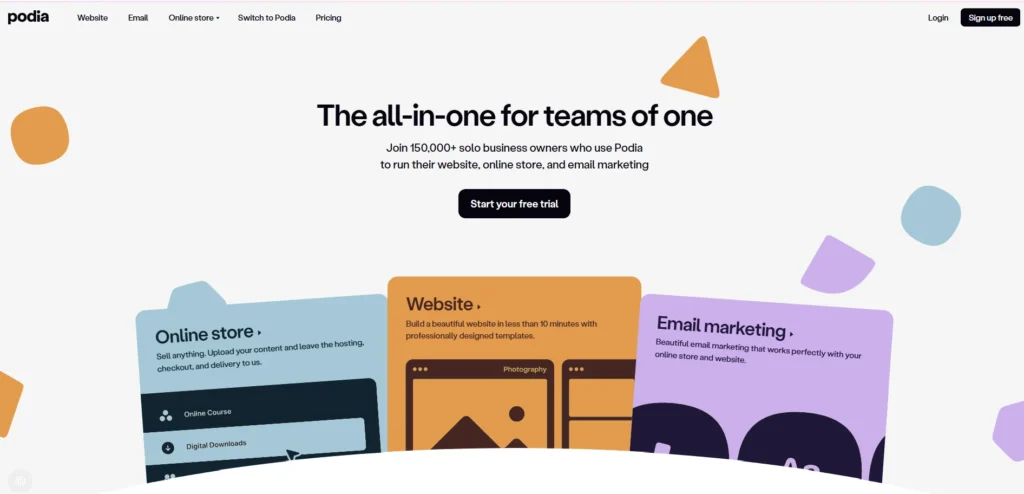
Podia is a clean, beginner-friendly platform that brings together online courses, digital downloads, email marketing, and webinars — all under one dashboard.
Unlike Passion.io, Podia is more web-focused and doesn’t charge transaction fees on its paid plans.
Pros:
- Easy-to-use interface, no coding required
- No transaction fees on paid plans
- Built-in email marketing
- Affordable pricing with clean UI
- Strong for selling digital products, not just courses
Cons:
- No native mobile app
- Limited customization on lower tiers
- Not ideal for large communities or advanced learning paths
2. Teachable
Best for: Professional educators and instructors needing structured learning paths
Overview:
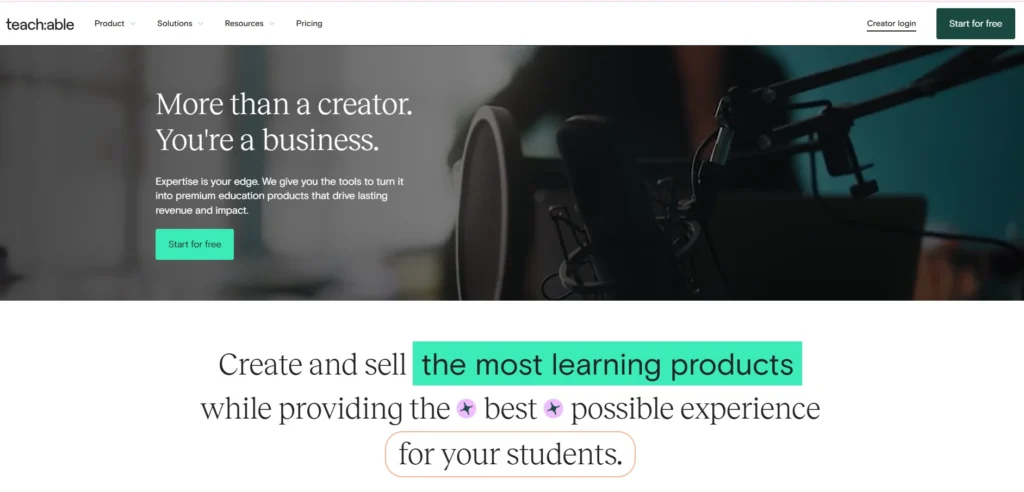
Teachable is widely used by educators and course businesses that need granular control over curriculum, assessments, and pricing tiers.
It’s flexible, reliable, and offers solid support for creators scaling their content business.
Pros:
- Drag-and-drop course builder
- Advanced quiz and assessment options
- Multiple pricing models (subscriptions, bundles, one-time)
- Course compliance features for certificates
Cons:
- The mobile app is limited to the Teachable ecosystem (not white-labeled)
- Transaction fees on lower-tier plans
- Limited design flexibility
3. Thinkific

Best for: Course businesses focused on scalability and student progress tracking
Overview:
Thinkific is a professional-grade LMS that offers flexibility and control over your course structure, website, and student tracking.
It’s ideal for solo creators scaling up or small teams managing multiple courses or clients.
Pros:
- No transaction fees
- Customizable course website with branded themes
- Powerful student progress reporting and analytics
- Free plan available with essential features
Cons:
- No built-in mobile app (though the web is mobile responsive)
- Requires third-party tools for advanced automation
- Design is more templated compared to Passion.io
4. LearnWorlds
Best for: Interactive, media-rich learning experiences and academic-style training
Overview:
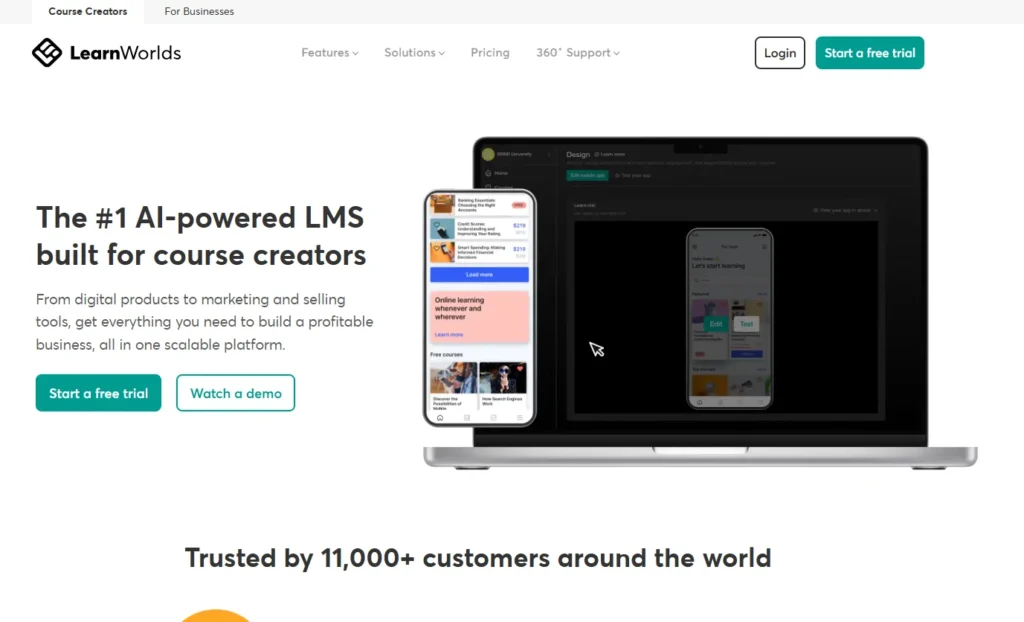
LearnWorlds caters to creators and institutions delivering interactive courses. It supports advanced video tools, SCORM compliance, assessments, certificates, and even eLearning academies.
Pros:
- Interactive video tools with in-video quizzes
- SCORM and multi-language support
- Integrated assessment engine
- White-labeling and branded app options on higher plans
Cons:
- It can feel overwhelming for beginners
- Higher learning curve than Passion.io
- Requires higher-tier plans for complete branding and advanced features
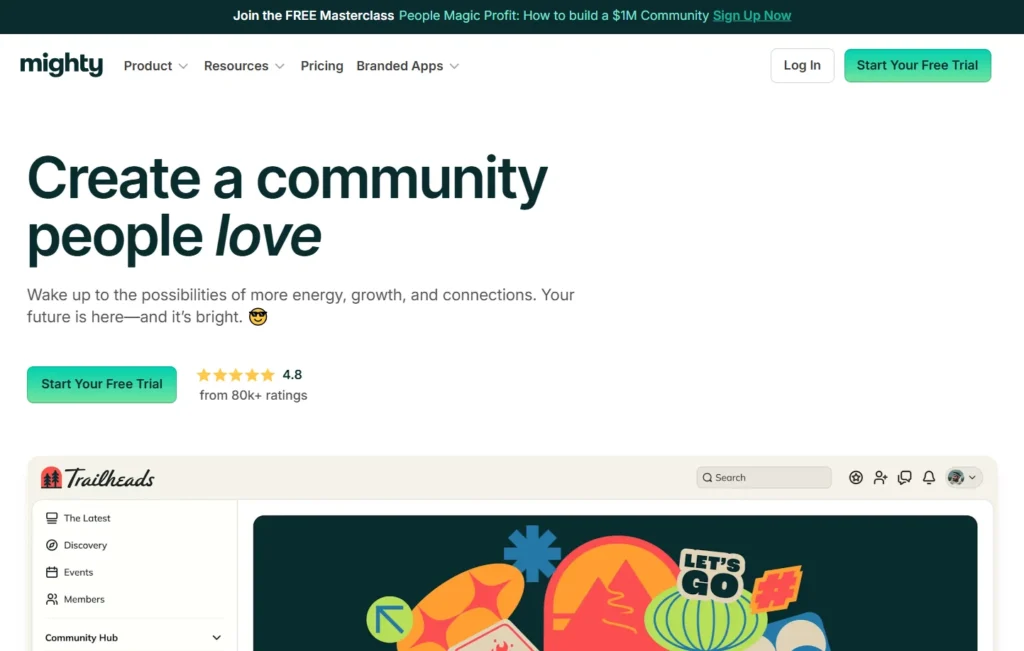
5. Mighty Networks
Best for: Building community-driven learning ecosystems with memberships
Overview:
Mighty Networks is built around community-first learning. It combines courses, events, and social groups into one cohesive space.
With native mobile apps and community tools baked in, it’s perfect for coaches and niche educators who want to build more than just a course.
Pros:
- Integrated community + courses in one mobile app
- Clean member experience with branded social feeds
- Built-in events, memberships, and live streaming
- Great for nurturing long-term engagement and discussions
Cons:
- Limited course customization and assessments
- Not ideal for complex curriculum or funnels
- Requires higher plans for complete white-label options
Who Should Use Passion.io or Kajabi?
When comparing Passion.io vs Kajabi, the better choice depends entirely on your business model, technical skill level, and content delivery goals.
Both platforms serve the creator economy, but they cater to distinctly different user types and monetization strategies.
To help you decide, here’s a breakdown of who each platform suits best:
Choose Passion.io if you are:
- A coach, fitness instructor, or mentor focused on building a branded mobile app.
- Looking for a mobile-first platform that supports downloadable content and habit tracking
- Just getting started and want to launch quickly with minimal technical setup.
- Prioritizing coaching tools over funnel building or email automation
- Planning to build a client-facing app experience optimized for passive income
Passion.io thrives in environments where quick delivery, in-app engagement, and direct access to learners are more critical than web-based automation or deep analytics.
It’s ideal for users who want to be part of the mobile-first creator economy without investing in complex infrastructure.
Choose Kajabi if you are:
- An agency, marketing consultant, or course creator scaling multiple products.
- Needing advanced tools like email automation, funnels, analytics, and CRM integration
- Selling digital products or memberships through a full-featured sales system
- Looking for a self-hosted platform to manage everything from branding to checkout
- Planning long-term scalability with structured content and deep customization
Kajabi is suited for creators with long-term business growth in mind.
If you need an all-in-one LMS that supports branding, upsells, automation, and analytics and you prefer managing everything under one cloud-based dashboard Kajabi offers the infrastructure to grow sustainably.
This comparison aligns with two different audience profiles:
- Passion.io = mobile-first simplicity for solo creators and coaches
- Kajabi = full-suite platform for advanced marketers and scaling course businesses
Pros and Cons of Kajabi vs Passion.io
When evaluating Kajabi vs Passion.io, both platforms offer compelling features tailored to different types of creators.
To help you make an informed decision, here’s an honest side-by-side look at their key strengths and limitations.
| Kajabi | Passion.io | |
|---|---|---|
| Pros | – All-in-one platform with built-in email marketing, funnels, and CRM tools | – Mobile-first design tailored for coaches and fitness experts |
| – Supports unlimited products with no transaction fees | – Offers a drag-and-drop interface and intuitive Passion.io UX | |
| – Strong automation and segmentation for scaling course sales | – Allows users to build native apps for iOS and Android | |
| – Deep analytics and performance tracking | – Includes habit tracking and offline course access | |
| – Custom branding across web and mobile with strong Kajabi mobile responsiveness | – Ideal for quick app launches with minimal technical setup | |
| Cons | – Higher upfront pricing with a steeper learning curve | – Charges 3.9% Passion Payments transaction fee on lower tiers |
| – Mobile experience is limited unless you’re on higher-tier plans | – Fewer native integrations, relies mostly on Zapier | |
| – May feel overwhelming for beginners who don’t need all the built-in tools | – Limited design control and customization compared to web-based platforms |
Both platforms are valuable, but your ideal choice depends on whether you prioritize web-based functionality with complete automation (Kajabi) or fast, app-based course delivery with a focus on engagement (Passion.io).
Final Verdict – Which Platform Wins in 2026?
Choosing between Passion.io vs Kajabi ultimately comes down to your business model, budget, and long-term vision.
Suppose you’re a coach, fitness trainer, or educator looking for a fast way to launch a mobile app and start selling content without technical hurdles.
In that case, Passion.io offers a mobile-first solution with intuitive tools for content delivery and student engagement.
It’s well-suited for solo creators who want to build their audience from their smartphone.
For digital entrepreneurs focused on scaling an online course business, managing a self-hosted platform, and integrating automation, sales funnels, and analytics into a single ecosystem, Kajabi is the stronger choice.
While the upfront cost is higher, it delivers better long-term ROI through enhanced control, brand customization, and a robust platform scalability model.
Both platforms offer free trials, so if you’re still on the fence, testing each tool firsthand is the best way to determine which aligns better with your needs and workflow.
FAQs – Passion.io vs. Kajabi
How do Passion.io’s mobile app features compare to Kajabi’s web platform?
Passion.io focuses on a native mobile experience with offline access and habit tracking, while Kajabi offers a mobile-responsive interface and a branded app with broader web-based functionality.
Which platform offers better tools for building a community audience?
Kajabi provides live challenges, member-only content, and event hosting. Passion.io uses in-app channels and push notifications to foster engagement inside its mobile app.
How does Kajabi’s all-in-one approach benefit my business?
Kajabi integrates course creation, email marketing, landing pages, CRM, and automation, allowing you to manage everything under one dashboard and reduce third-party dependency.
What are the key differences in monetization options between Passion.io and Kajabi?
Kajabi supports memberships, upsells, and affiliate programs with no transaction fees. Passion.io supports subscriptions and one-time sales but applies a 3.9% Passion Payments fee.
Which platform provides better analytics for growth?
Kajabi has detailed analytics covering revenue, funnel performance, and user engagement. Passion.io offers basic progress and habit tracking designed more for student accountability.
What is the alternative to Passion.io?
Alternatives include Podia, Teachable, Thinkific, LearnWorlds, and Mighty Networks — each catering to different creator needs like branding, integrations, or web-first design.
How much does Passion.io cost?
Plans start around $99/month, with additional transaction fees applied when using Passion Payments.
Which is the most profitable app platform for course creators?
Kajabi often yields higher profitability over time due to better scalability, built-in tools, and no transaction fees, especially for creators running multiple digital products.
What is the downside of Passion.io?
Limitations include fewer customization options, reliance on Zapier for integrations, and transaction fees on lower-tier plans.
Also Read:
- Kajabi vs Clickfunnels (2026): Which All-in-One Platform Is Right for You?
- 15+ Top Kajabi Alternatives for 2026 (Free, Cheap & Paid Options)
- Ahrefs vs SEMrush 2026 – Which SEO Tool Should You Use?