If you’re looking for powerful SEO tools but find Semrush overwhelming, expensive, or simply not the right fit, you’re not alone.
While Semrush remains a leading name in digital marketing platforms, it’s not always the most accessible choice for small businesses, freelancers, or those just starting with SEO.
This guide explores the best Semrush alternatives in 2026, including free SEO software, affordable paid plans, and even open-source tools.
Whether you need advanced backlink analysis, keyword research tools, or simpler rank-tracking solutions, there’s a smarter, cost-effective SEO platform out there for you.
Table Of Contents
Why Are People Looking for Semrush Alternatives?

While Semrush has earned its reputation as a top-tier SEO platform, it’s not always the best fit for every user.
The platform’s pricing structure alone makes many small businesses and independent creators search for a Semrush cheaper alternative.
For freelancers or early-stage startups managing tight budgets, even the basic plan can feel out of reach.
This financial barrier often forces users to explore more affordable SEO tools without compromising essential features like keyword research, backlink tracking, and domain analysis.
Beyond cost, many beginners find Semrush’s dashboard complex and unintuitive.
With a vast array of features and menus, the steep learning curve can become overwhelming, especially for users who only need a few core functions.
This has increased the demand for focused SEO tools that don’t bundle every feature under the sun but instead provide clarity and ease of use.
Another key reason people seek Semrush replacements is feature overload. Despite its all-in-one appeal, many marketers use only a fraction of Semrush’s capabilities.
Paying for unused modules like ad research, content marketing toolkits, or social tracking doesn’t make sense for users focused purely on SEO metrics or site audits.
There’s also a growing shift toward modular digital marketing tools.
Instead of relying on a single ecosystem, users now prefer combining best-in-class tools for specific tasks: one for backlinks, another for keyword research, and a third for technical audits.
This strategy not only offers more flexibility but also better control over pricing and functionality.
Lastly, open-source and freemium options are becoming more viable in 2026.
Tools like Google Search Console, Ubersuggest, or even desktop-based suites like SEO PowerSuite offer robust functionalities without recurring subscription fees.
These platforms give users greater autonomy and cost control, making them attractive Semrush alternatives.
How to Choose the Right Semrush Alternative
Choosing the right Semrush alternative isn’t about finding a one-size-fits-all solution it’s about matching the tool to your specific needs, experience level, and budget.
Whether you’re a solo blogger managing a content site or a digital agency overseeing multiple client campaigns, the best option depends on what you truly require from your SEO stack.
One of the first factors to consider is the feature set.
While Semrush offers everything from keyword research tools and backlink analysis to SERP tracking and domain audits, not every user needs that level of depth.
If your focus is on on-page SEO, content planning, or technical audits, it’s more cost-efficient to choose a tool that specializes in that area instead of paying for an entire suite.
Next comes the budget.
Small businesses and freelancers often look for a Semrush alternative for small businesses that provides essential tools without the high monthly fees.
Platforms offering freemium models or flexible pricing tiers can deliver excellent value especially if they include critical functionalities like SEO metrics, rank tracking, and competitor insights.
User interface and usability are equally important. Many users switch from Semrush due to its steep learning curve.
A clean, intuitive dashboard can drastically reduce onboarding time and make routine SEO tasks much easier to manage.
For those just starting, a simplified experience can make all the difference.
Reporting and dashboards are crucial, particularly for agencies. If you’re serving clients, you need SEO platforms with customizable, automated SEO reporting dashboards.
These not only save time but also deliver insights in a client-friendly format.
Integrations with tools like Google Analytics and Google Search Console can further streamline your workflow and improve data consistency.
Also, don’t underestimate the importance of support and documentation. Some free or open-source platforms lack the active communities or onboarding resources you’d expect from premium tools.
If you’re new to SEO or transitioning from another platform, robust tutorials, chat support, and detailed guides are essential for a smooth transition.
Ultimately, the ideal Semrush alternative will depend on who you are:
- Beginners might prefer tools with simplified interfaces and learning support.
- Bloggers may look for keyword research and content-focused insights.
- Agencies often need multi-project dashboards, advanced reporting, and user permissions.
- Startups usually prioritize affordability, scalability, and time-saving automation.
Top All-in-One SEO Tools Like Semrush
When people look for Semrush alternatives, they’re often trying to find a platform that can deliver a similar all-in-one experience without the high cost or overwhelming complexity.
While Semrush offers a broad feature set from keyword research and backlink tracking to site audits and competitor analysis it’s not always the best fit for every user.
That’s where these alternatives come in.
Each tool covered below is built to serve as a comprehensive SEO solution, offering features that directly compete with Semrush and, in some cases, even surpass it in usability or specific functionalities.
Here’s a deeper look at the top all-in-one SEO platforms worth considering in 2026.
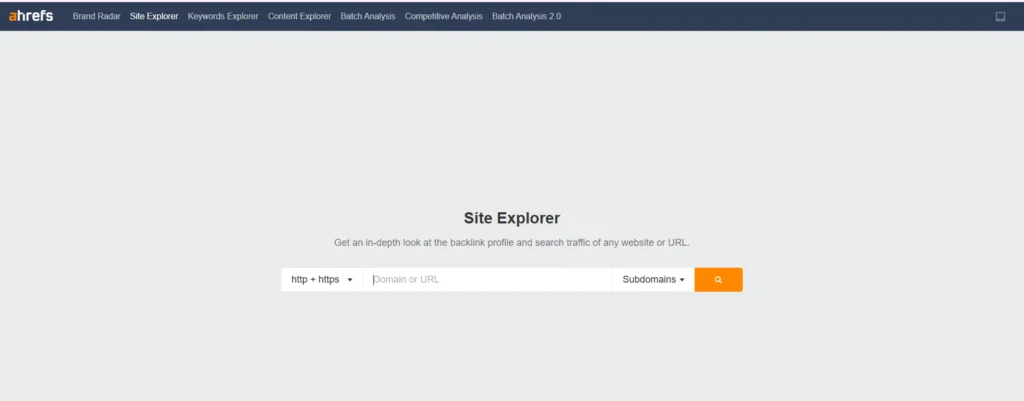
Ahrefs
Why It Stands Out:
Ahrefs is one of the most powerful SEO platforms on the market, particularly when it comes to backlink analysis and competitor research.
While Semrush spreads its focus across SEO, PPC, and social tools, Ahrefs doubles down on link data, content insights, and keyword intelligence—making it a favourite for SEOs who prioritize organic search.
Core Features:
- Backlink Explorer with the largest index after Google
- Keyword Explorer with metrics like return rate and click data
- Site Explorer for full domain-level analysis
- Rank tracker with historical SERP movement
- Content Explorer for competitor content research
Pros:
- Industry-leading backlink index
- Clean, intuitive UI
- Powrful content explorer for content marketing
- Accurate keyword difficulty metrics
Cons:
- No free version or trial
- Lacks some features like SEO reporting dashboards
Pricing Summary:
- Lite: $129/month
- Standard: $249/month
- Advanced: $449/month
Best For:
Agencies, SEO professionals, and content marketers rely heavily on backlink checker tools and competitive research.
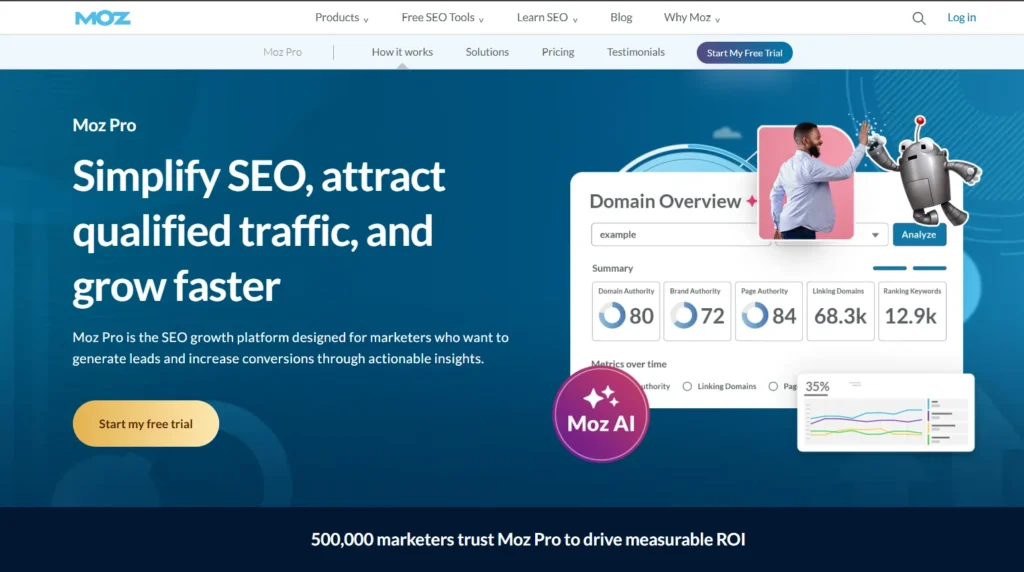
Moz Pro
Why It Stands Out:
Moz Pro is known for its user-friendly design and focus on on-page SEO.
While it may not have the sheer volume of data that Ahrefs or Semrush offers, it provides high-quality insights in a more accessible interface, especially useful for beginners or smaller teams.
Core Features:
- Keyword Explorer with SERP analysis
- Site crawl and issue tracking
- Domain Authority and Page Authority metrics
- Customizable reports for stakeholders
- Rank tracking for local and national terms
Pros:
- Beginner-friendly interface
- Strong on-page SEO suggestions
- Includes a Chrome extension (MozBar)
- Solid keyword tracking and SERP features
Cons:
- The link index is smaller than Ahrefs or Semrush
- Reporting features limited in customization
Pricing Summary:
- Free tools available (with limited access)
- Starter: $49.00/month
- Standard: $99.00/month
- Medium: $179.00/month
- Large: $299.00/month
Best For:
Small businesses and bloggers needing an affordable Semrush plan alternative with a gentle learning curve.
SEO PowerSuite
Why It Stands Out:
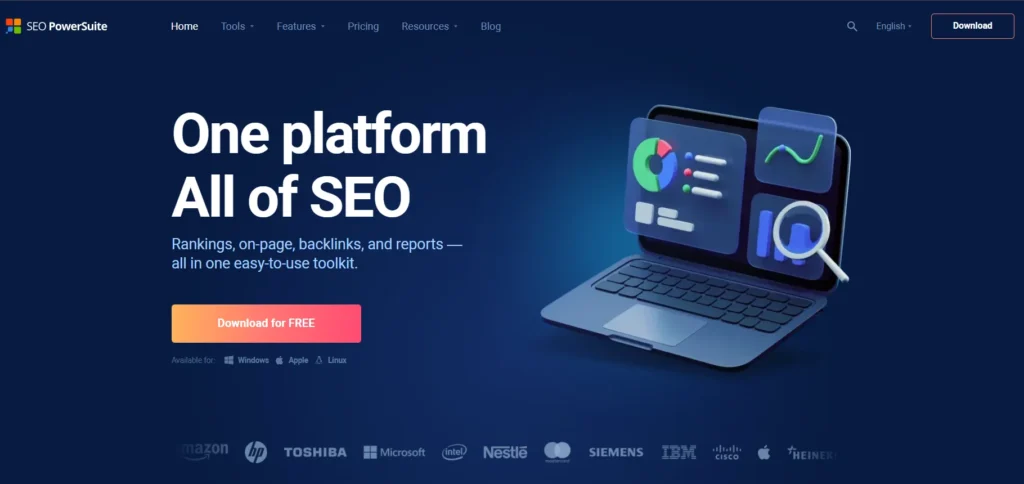
Unlike most cloud-based SEO tools, SEO PowerSuite is a downloadable desktop application offering lifetime licensing options—making it one of the few Semrush alternatives without subscription costs.
It provides an impressive suite for site auditing, keyword tracking, and backlink research.
Core Features:
- Rank Tracker with daily SERP monitoring
- Website Auditor for technical SEO checks
- SEO SpyGlass for backlink tracking and competitor research
- LinkAssistant for outreach management and link prospecting
- White-label reporting features for agencies
Pros:
- One-time license with no recurring fees
- Deep website audit and backlink analysis
- White-label SEO reports available
- Highly customizable reporting
Cons:
- Requires software installation
- Slower data updates compared to cloud platforms
Pricing Summary:
- Free version with limited features
- Professional: $29.10/month
- Enterprise: $49.95/month
Best For:
Agencies and advanced SEOs who want powerful desktop software without recurring costs.
SE Ranking
Why It Stands Out:
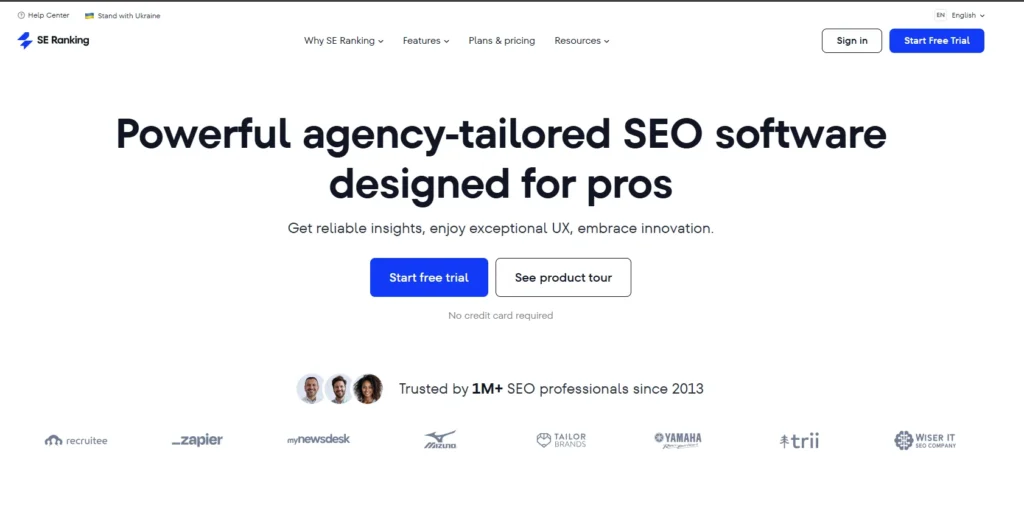
SE Ranking is one of the most balanced and cost-effective Semrush alternatives available.
It combines essential SEO tools with white-label reporting, scalable pricing, and an intuitive interface—making it a go-to choice for both freelancers and digital agencies.
Core Features:
- Rank tracking with flexible frequency
- Competitive research and traffic analytics
- On-page SEO checker
- Backlink monitoring
- Lead generation widget and report automation
Pros:
- White-label reports and marketing plans
- Responsive support
- Flexible pricing based on usage
- Intuitive UI
Cons:
- The backlink index is not as large as Ahrefs
- The interface can feel limited for advanced users.
Pricing Summary:
- 14-day free trial
- Essential: $59.00/month
- Pro: $95.20/month
- Business: $207.20/month
- Custom plans: Available
Best For:
Agencies, freelancers, and SMBs need a flexible, cloud-based Semrush alternative for small businesses.
Serpstat
Why It Stands Out:
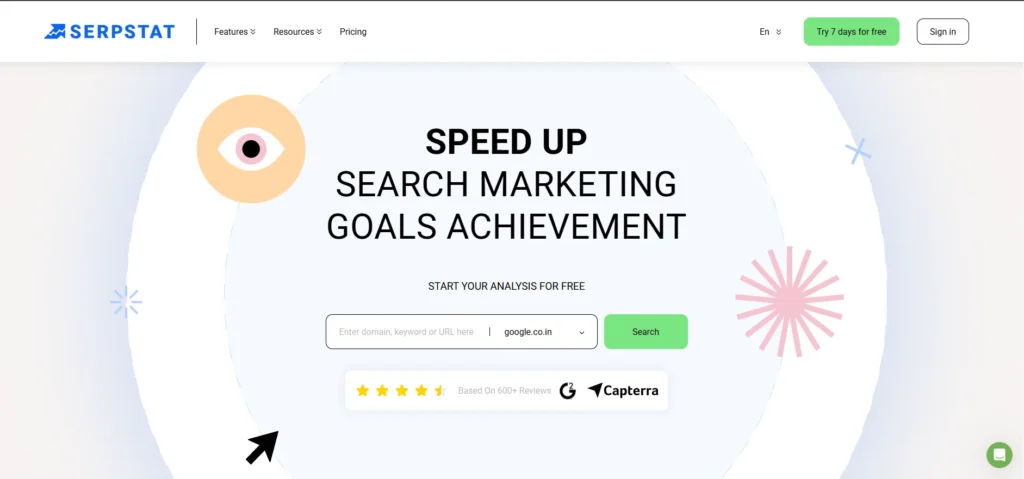
Serpstat is an all-in-one platform that delivers great value, especially for mid-size teams or those working across SEO and PPC.
It offers solid keyword clustering, backlink tracking, and competitor keyword gap features that appeal to growth-focused digital teams.
Core Features:
- Domain and URL analysis
- Keyword research with market segmentation
- Backlink index with referring domains and anchors
- Rank tracking and site audits
- Team collaboration tools and user management
Pros:
- Generous usage limits for lower tiers
- Site audit and rank tracking are included in all plans.
- Integrates PPC research and batch analysis
- Multi-user access at a low cost
Cons:
- Interface can feel outdated
- Support content is less detailed than that of major platforms.
Pricing Summary:
- Free plan with limited access
- Individual: $50.00/month
- Team: $100.00/month
- Agency: $410.00/month
Best For:
Small businesses and teams looking for an affordable entry into all-in-one SEO tools.
Mangools
Why It Stands Out:
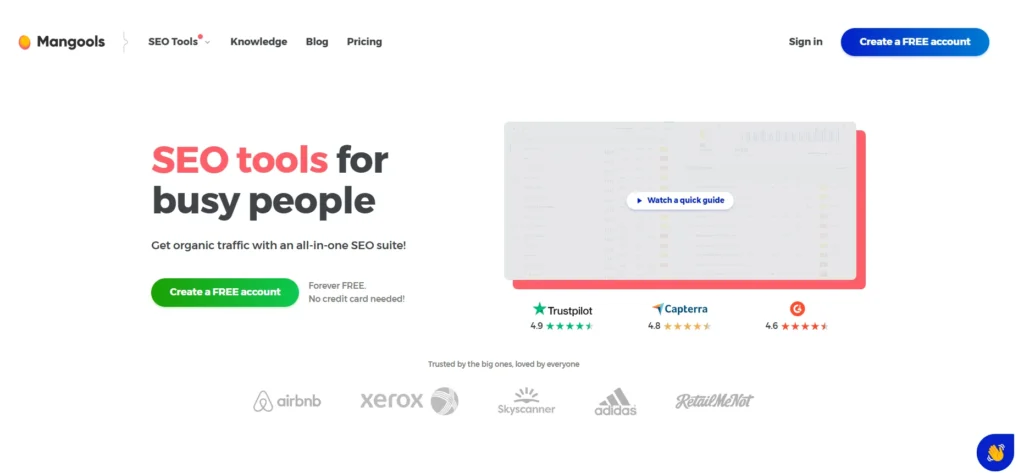
Mangools is a favourite among solo marketers, bloggers, and beginners due to its clean design and Simplicity.
It’s less feature-dense than Semrush, but it excels in ease of use and user-focused design.
Core Features:
- KWFinder for intuitive keyword research
- SERPChecker to evaluate the competition.
- SERPWatcher for keyword tracking
- LinkMiner for basic backlink monitoring
- SiteProfiler for domain overview
Pros:
- Extremely user-friendly
- Visual keyword and SERP insights
- Affordable and beginner-focused
- Browser extension included
Cons:
- Limited link index
- No deep site audit tool compared to others
Pricing Summary:
- 10-day free trial
- Basic: $14.95/month
- Premium: $22.45/month
- Agency: $44.95/month
Best For:
Beginners, bloggers, and startups need a quick and simple Semrush alternative.
Best Free & Freemium Semrush Alternatives
Not everyone needs an enterprise-level SEO suite, and for many individuals and small businesses, a Semrush alternative free of cost can offer all the essentials without the subscription burden.
Whether you’re tracking organic keywords, researching competitors, or improving on-page SEO, these tools provide a capable foundation for building traffic and visibility especially if you’re looking for free SEO software like Semrush.
Here’s a closer look at free and freemium tools that help marketers accomplish core SEO tasks efficiently.
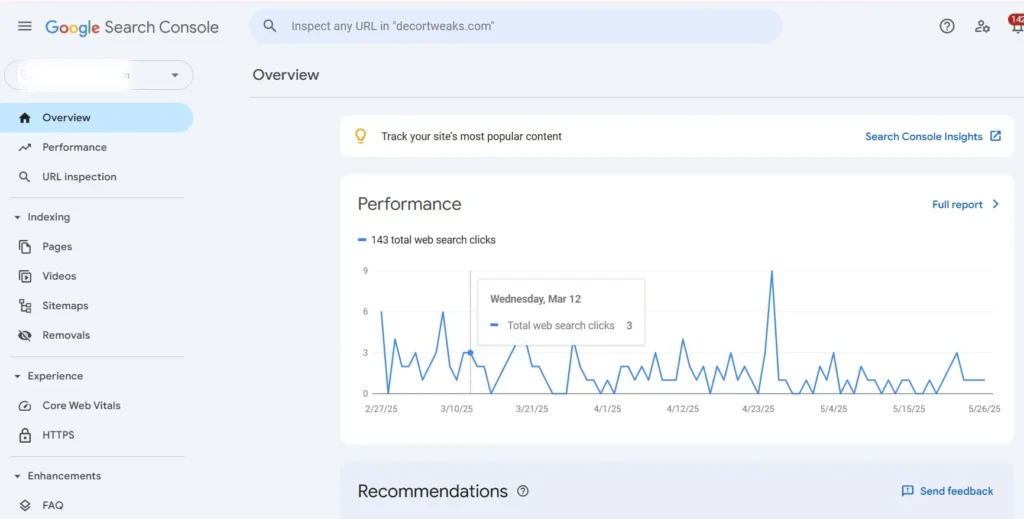
1. Google Search Console
Overview:
Google Search Console is one of the most reliable Google tools available for tracking how your website performs in search.
It gives insights into organic keyword impressions, clicks, and click-through rates directly from Google’s search index.
Features:
- Tracks performance of individual URLs
- Identifies indexing issues and mobile usability errors
- Shows keywords your pages rank for
- Submits sitemaps and inspects pages
- Tracks Core Web Vitals and mobile performance
Free Limitations:
- It only shows your website data
- Lacks competitive keyword tracking and backlink insights
- No rank tracking or advanced reporting dashboards
Ideal Use Case:
It is best for bloggers, publishers, and small businesses looking to monitor their organic traffic directly from Google’s perspective.
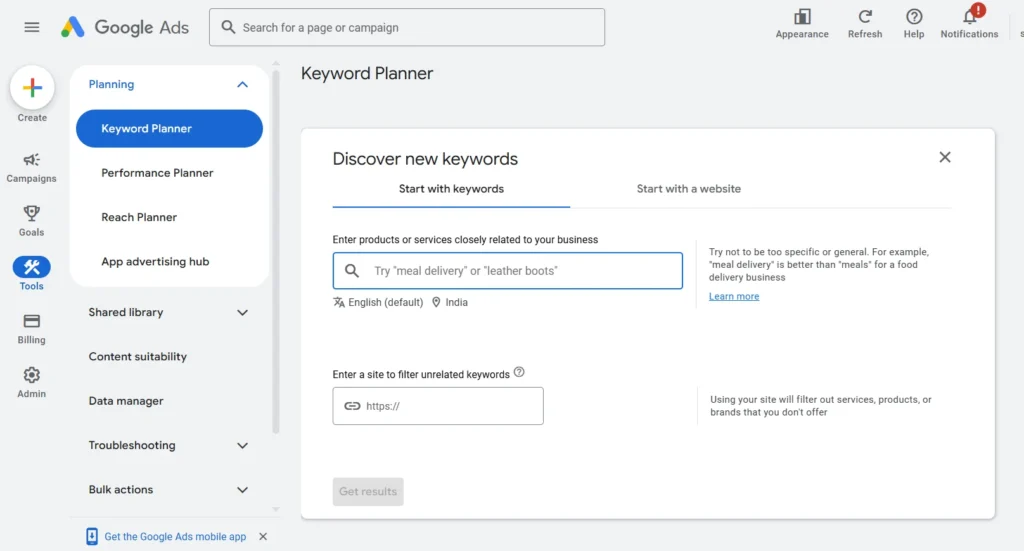
2. Google Keyword Planner
Overview:
Designed for Google Ads but useful for SEO, Keyword Planner helps identify search volume trends, keyword suggestions, and competitive benchmarks.
Features:
- Discover keyword ideas by topic or URL
- View monthly search volumes and competition levels.
- Forecasts for keyword performance (in ads context)
- Filters by location, language, and device
Free Limitations:
- Requires a Google Ads account to access
- Volume data is given in ranges without active campaigns.
- Not intended for SEO-specific suggestions
Ideal Use Case:
Useful for SEOs doing keyword research in specific regions or industries, especially when exploring new content ideas.
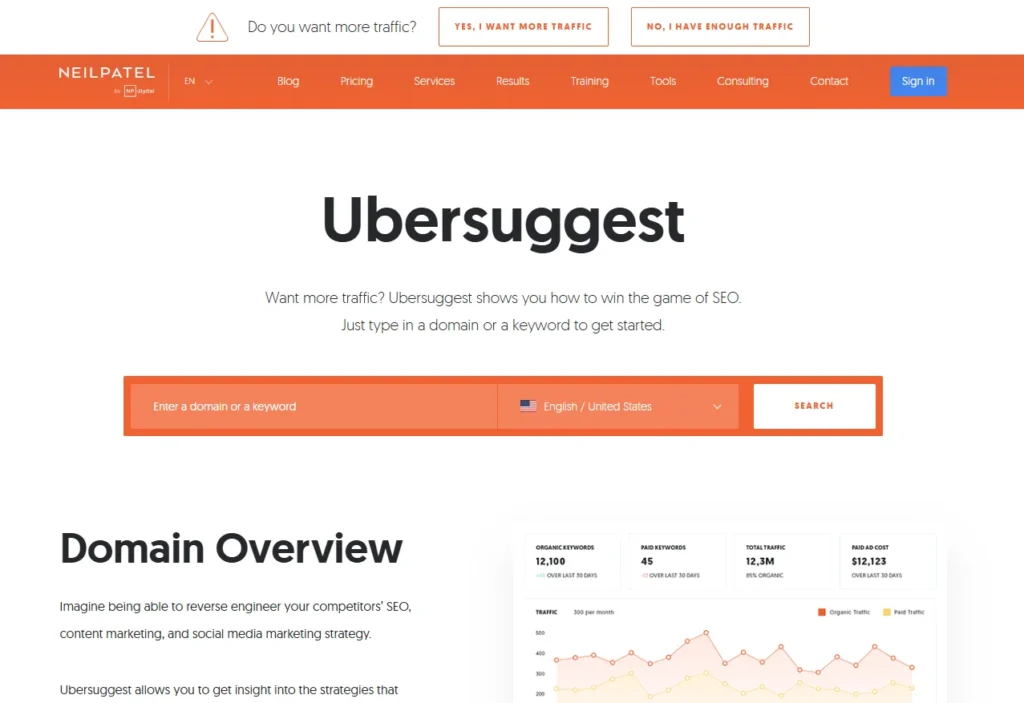
3. Ubersuggest
Overview:
Ubersuggest offers one of the most accessible freemium plans among SEO platforms.
Created by Neil Patel, it serves as a practical Semrush alternative for small businesses, offering keyword tracking, site audits, and competitor analysis.
Features:
- Keyword suggestions with difficulty metrics
- Content idea generator
- Basic backlink data and domain overview
- Rank tracking and limited site audit reports
- Chrome extension for SERP insights
Free Limitations:
- Daily usage caps
- Limited tracked keywords and projects on the free plan
- Backlink data is less comprehensive than paid platforms.
Ideal Use Case:
Perfect for individual bloggers, freelance marketers, and small startups needing a light, affordable SEO stack.
Pricing:
- Free version with capped features
- Business: $20.00/month
- Individual: $12.00/month
- Enterprise: $40.00/month
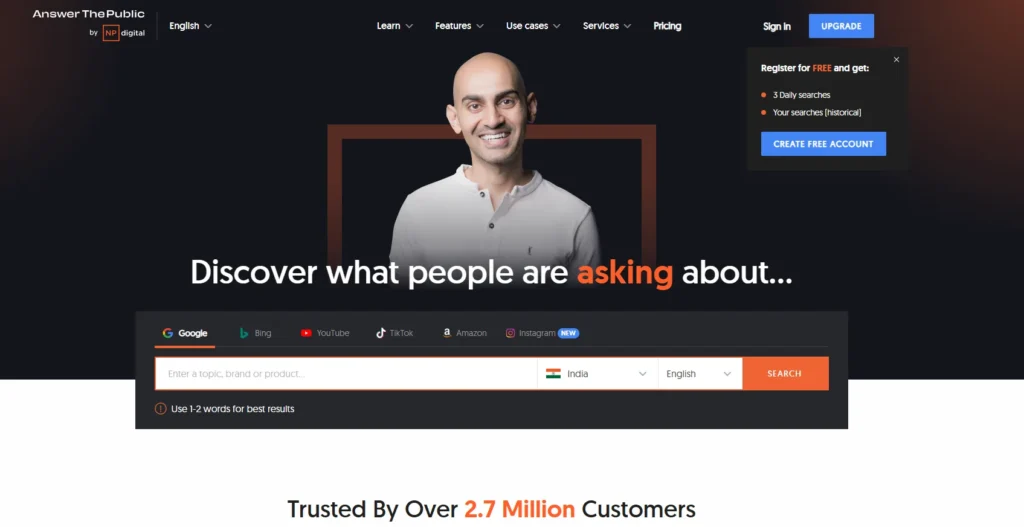
4. Answer The Public
Overview:
AnswerThePublic is a unique tool that visualizes search questions and autocomplete suggestions.
It’s useful for generating content topics and understanding what users are searching for related to your keywords.
Features:
- Creates visual maps of questions, prepositions, and comparisons
- Supports multiple languages and regions
- Organizes keyword queries by intent
- Exports data for ideation and content planning
Free Limitations:
- Limited daily searches on free plan
- No keyword difficulty metrics
- No rank tracking or audit features
Ideal Use Case:
It is best for content marketers and bloggers looking to understand user search behaviour and brainstorm relevant, long-tail keywords.
5. Keyword Surfer
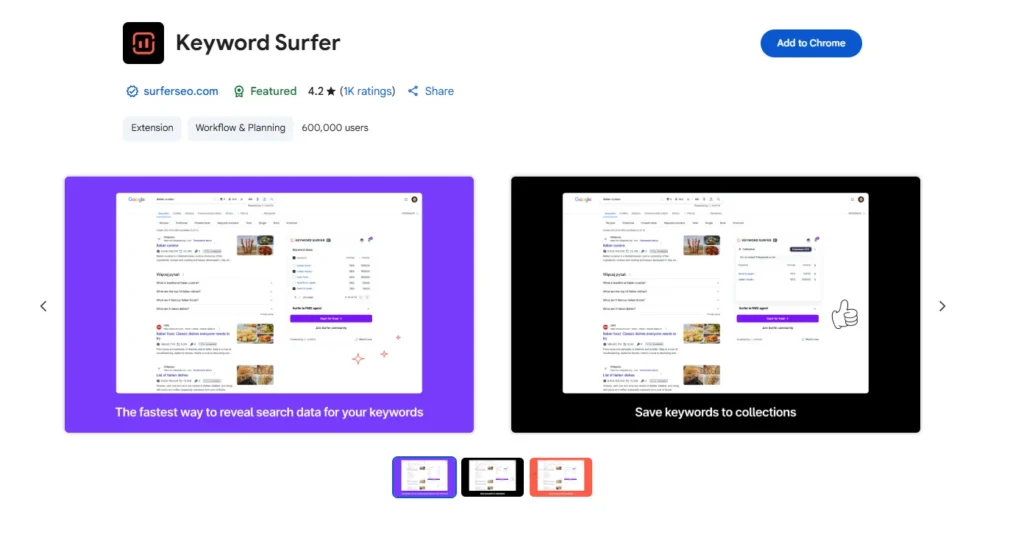
Overview:
A free Chrome extension that brings real-time keyword research and traffic data directly into your Google search results.
It’s lightweight but powerful enough for initial content planning.
Features:
- Displays monthly search volume in SERPs
- Provides keyword ideas and similarity score
- Shows estimated traffic for top-ranking pages
- Includes on-page word count and backlink info
Free Limitations:
- Browser-based only
- Limited data granularity compared to full platforms
- No export or campaign features
Ideal Use Case:
Useful for on-the-go content creators or SEOs who want to gather fast keyword data without logging into a dashboard.
Specialized SEO Tools for Advanced Use-Cases
While many users seek all-in-one SEO suites, others prefer modular tools tailored to specific strategies like link building, technical audits, or on-page optimization.
These specialized SEO tools serve advanced marketers who need precision over-generalization, and they often provide deeper insights into their focused areas compared to broader platforms.
If you’re exploring open-source Semrush tools or looking to enhance your technical SEO stack, the tools below offer targeted solutions to meet those goals.
1. Link Building & Competitor Research
SpyFu
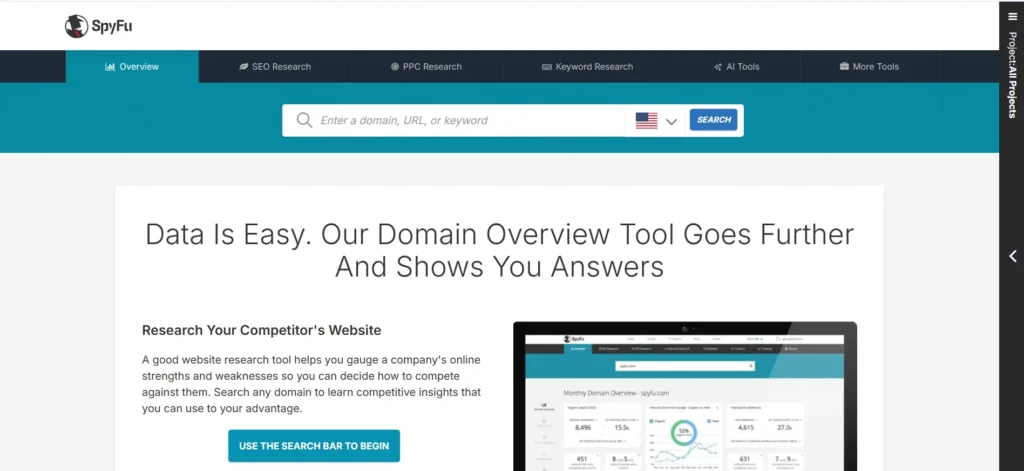
Overview:
SpyFu is a powerful tool designed to uncover your competitors’ most profitable keywords and paid search strategies.
It offers in-depth competitor analysis, which is particularly useful for identifying backlinks and historical ad spending.
Features:
- Competitor keyword insights (SEO & PPC)
- Backlink tracking and comparison
- SERP analysis and historical ranking trends
- Ad campaign research tools
Use Case:
It is ideal for agencies and digital marketers who rely heavily on backlink checker tools and need a detailed view of competitor strategies.
Majestic
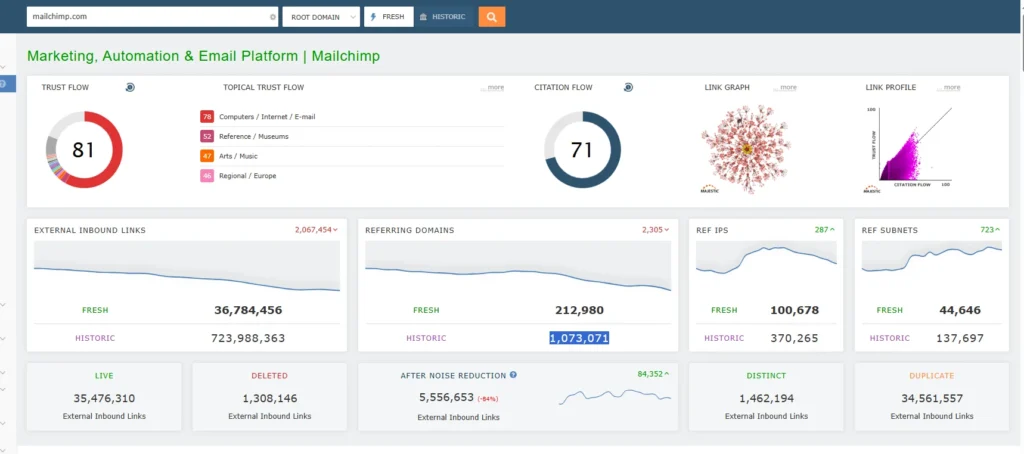
Overview:
Majestic specializes in link intelligence and is known for its Trust Flow and Citation Flow metrics.
Unlike other tools, it is built entirely around link data and backlink profiling.
Features:
- Proprietary link metrics (TF/CF)
- Historic and Fresh index modes
- Anchor text distribution analysis
- Link context explorer
Use Case:
Recommended for SEOs and analysts focused on large-scale link-building campaigns and link quality evaluation.
Linkody
Overview:
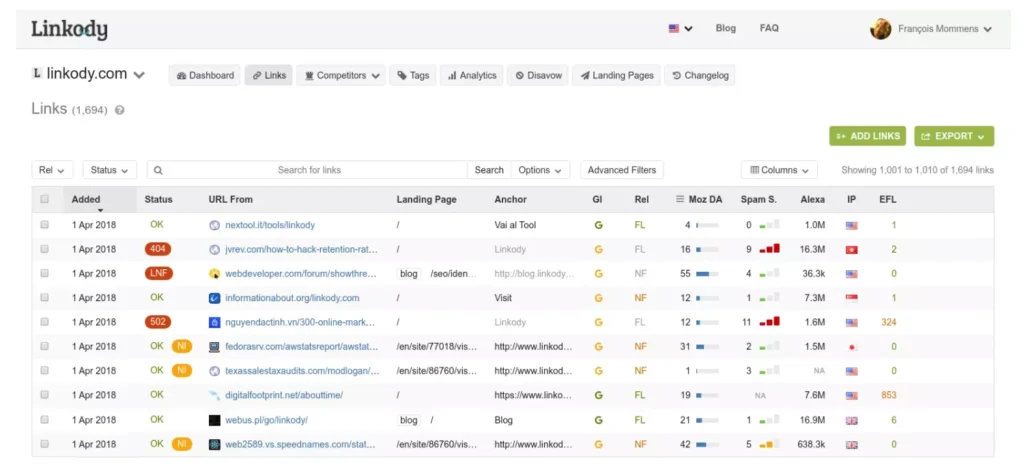
Linkody is a simple, user-friendly backlink monitoring platform designed for freelancers and in-house SEOs who want to keep tabs on acquired links and potential losses.
Features:
- Automatic backlink updates
- Link status monitoring and alerts
- Spam score tracking
- Integration with Google Analytics
Use Case:
It is ideal for SEOs who want daily backlink updates and historical link performance in a digestible format.
2. Technical SEO Tools
Screaming Frog
Overview:
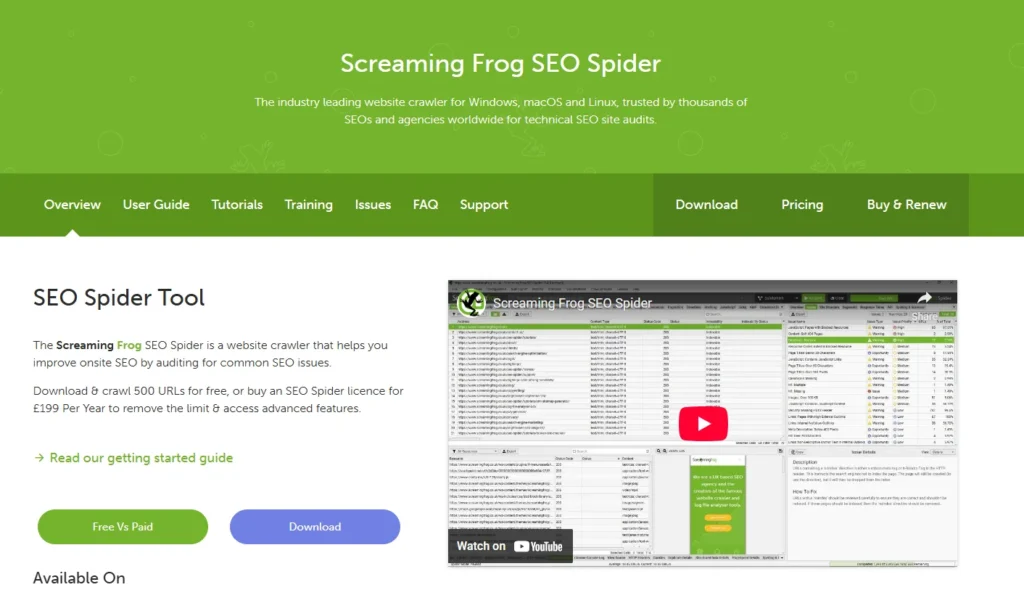
Screaming Frog is a desktop-based crawler that performs comprehensive technical SEO audits.
It simulates how search engines crawl your site, highlighting issues that could impact visibility.
Features:
- Deep crawl reports
- Status code and redirect checker
- Metadata and canonical tag audit
- Integration with Google Analytics & Search Console
Use Case:
It is best for technical SEOs and developers looking to diagnose site health at the structural level.
GTmetrix
Overview:
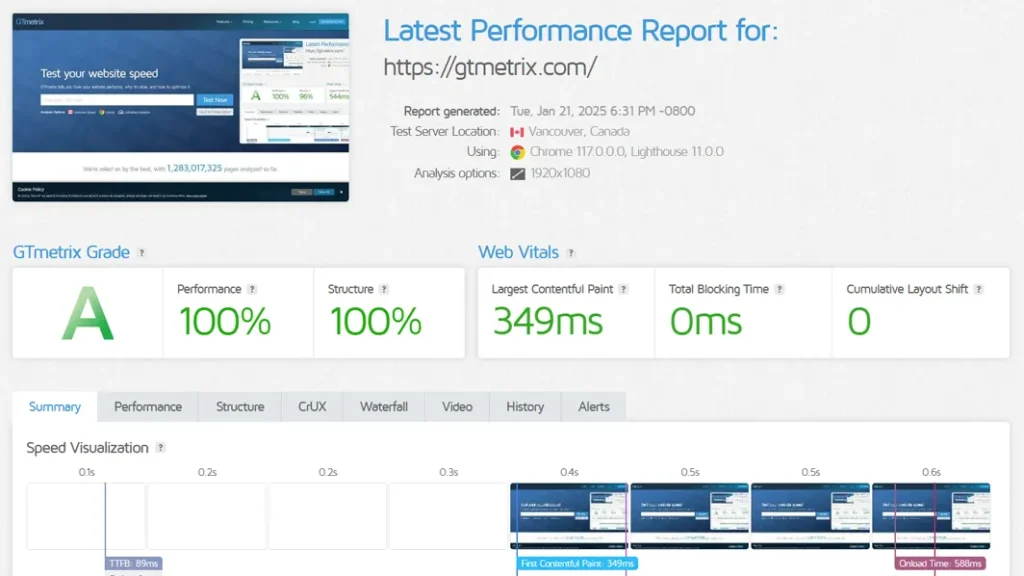
GTmetrix focuses on performance analysis by examining page load speed, structure, and Core Web Vitals.
It’s a go-to for technical insights on UX and Google’s performance signals.
Features:
- Lighthouse performance scores
- Waterfall breakdowns of load time
- Mobile and desktop testing
- Historical performance trends
Use Case:
Perfect for developers and SEOs optimizing for speed, mobile performance, and Core Web Vitals compliance.
Lumar (Deepcrawl)

Overview:
Lumar, formerly Deepcrawl, is a cloud-based crawling and automation platform aimed at enterprises managing large, complex websites.
It excels in scalability and real-time collaboration.
Features:
- Customizable crawl setups
- JavaScript rendering and dynamic page handling
- Structured data and hreflang audits
- Monitoring for site migrations and technical SEO compliance
Use Case:
Designed for enterprise SEOs and large teams managing global domains and frequent site changes.
3. Content Optimization Tools
Surfer SEO
Overview:
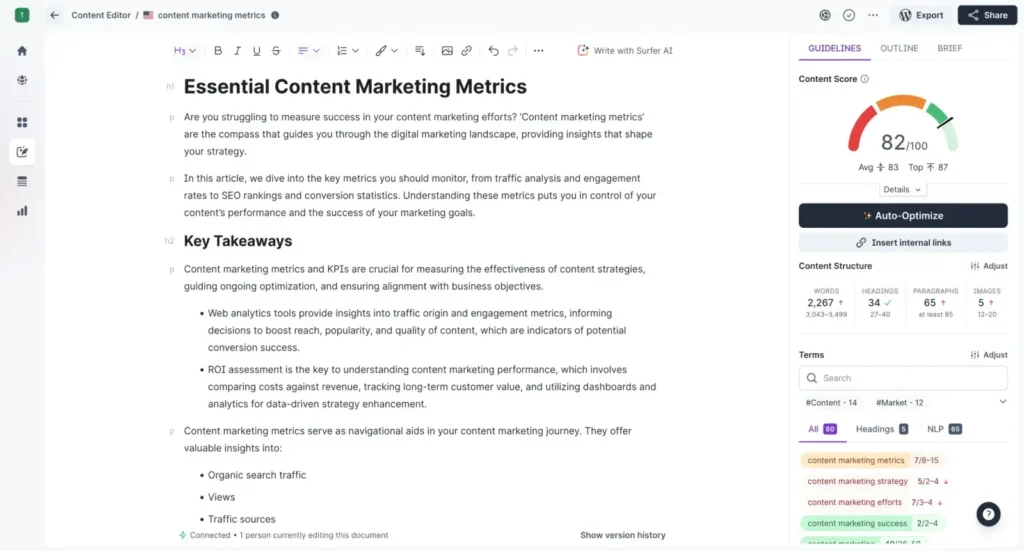
Surfer SEO uses NLP and SERP analysis to help content creators optimize articles for search intent and semantic relevance.
It bridges the gap between content strategy and on-page SEO.
Features:
- SERP-driven content editor
- NLP-powered keyword suggestions
- On-page structure scoring
- Integration with Google Docs and WordPress
Use Case:
Best for content teams and bloggers creating long-form articles targeting competitive keywords.
Yoast SEO
Overview:
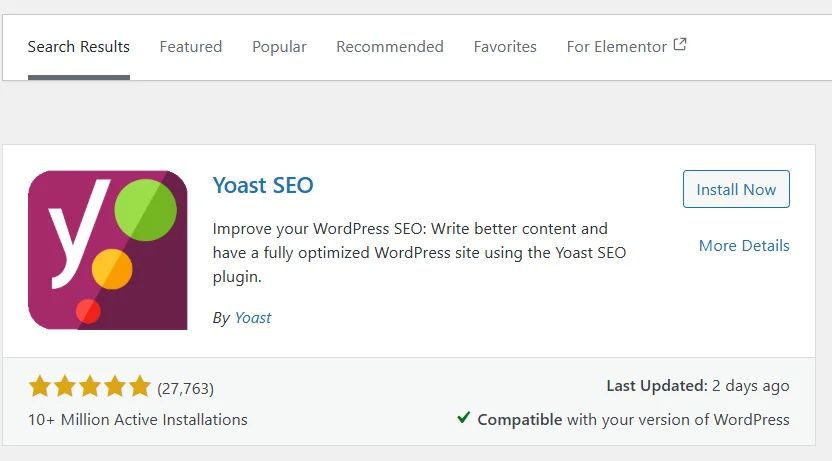
Yoast SEO is a WordPress plugin that helps with real-time on-page SEO optimization.
It’s widely used due to its Simplicity and effectiveness in guiding SEO best practices.
Features:
- Real-time content and readability analysis
- Meta tag and schema management
- XML sitemap generation
- Internal linking suggestions
Use Case:
Great for bloggers, small business owners, and WordPress users needing reliable on-page SEO support without a steep learning curve.
Open-Source Semrush Alternatives Worth Exploring
For those seeking a cost-effective and customizable Semrush open-source alternative, open-source SEO tools are gaining more attention in 2026.
These tools provide the essential functionality needed for optimization without locking users into subscriptions or usage limits.
While they often require manual setup, technical know-how, or self-hosting, they’re ideal for marketers and developers who want complete control over their search engine optimization software.
If you’re specifically looking for a free SEO tool like Semrush but prefer community-driven development or hosting on your infrastructure, the tools below are worth exploring.
1. SEO Panel
Overview:
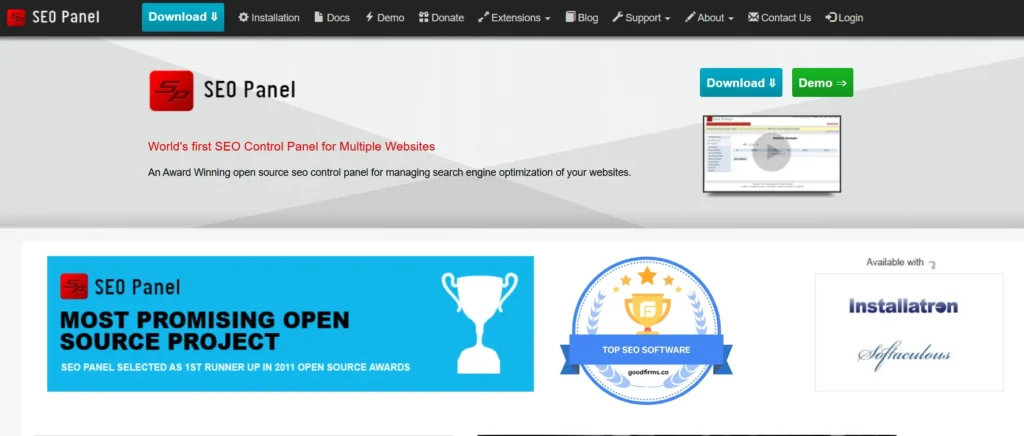
SEO Panel is a multi-purpose open-source SEO management platform.
It supports keyword position tracking, site auditing, and directory submission, making it a comprehensive solution for users willing to configure and self-host their tools.
Key Features:
- Position checker for keyword rankings
- Automated SEO audits
- Sitemap and keyword density tools
- Plugin manager to expand capabilities.
Limitations:
- Requires server setup and PHP/MySQL configuration
- Outdated user interface compared to cloud-based tools.
- Lacks real-time data connections
Ideal For:
Independent SEO consultants or developers looking to build a personalized SEO dashboard without recurring payments.
2. Matomo (Analytics Alternative)
Overview:
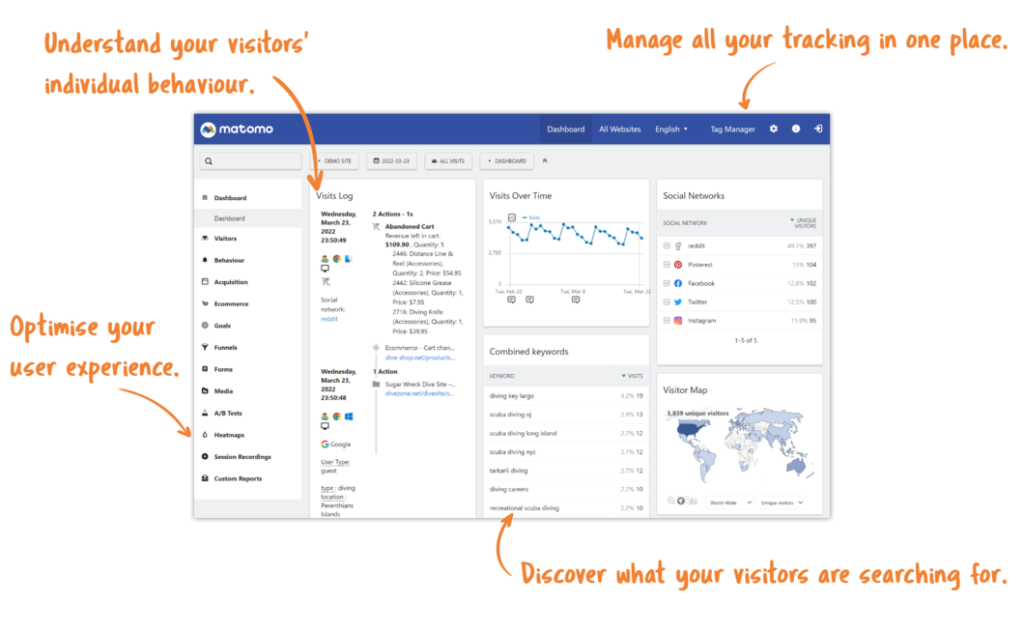
Matomo is a privacy-focused, self-hosted web analytics platform often seen as an alternative to Google Analytics.
While not a full SEO suite, it complements SEO efforts by offering detailed behavioural data and traffic reports.
Key Features:
- Organic search data tracking
- Keyword referrer insights
- Goal and conversion tracking
- GDPR and privacy compliance
Limitations:
- Requires technical setup or paid cloud hosting
- Lacks built-in keyword research or site audit functionality
- Not strictly an SEO tool (analytics-focused)
Ideal For:
Website owners seek complete control over their traffic analytics without relying on third-party platforms like Google Analytics.
3. Rank Math (WordPress Plugin)
Overview:
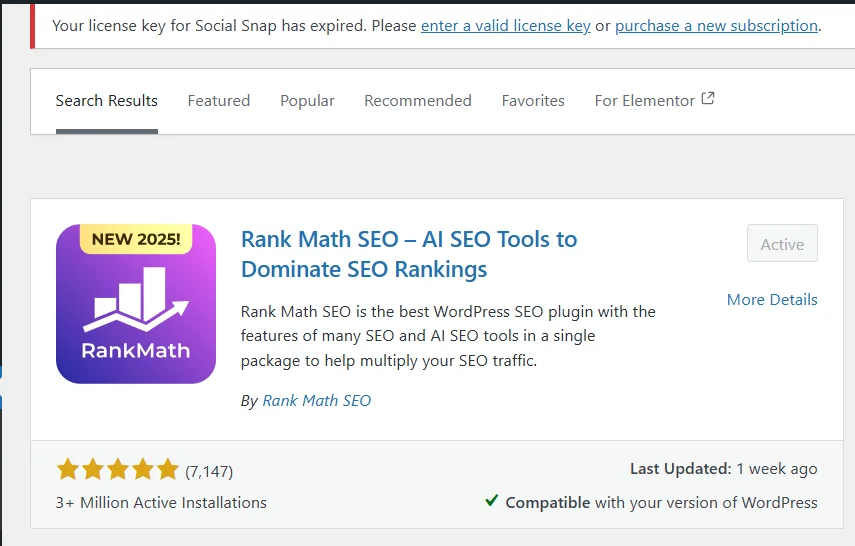
Rank Math is a popular WordPress plugin offering powerful on-page SEO capabilities for bloggers and content marketers.
It integrates well with WordPress’s native functionality and supports schema markup, keyword optimization, and social media previews.
Key Features:
- Real-time content analysis
- Rich snippet and schema integration
- XML sitemap generation
- Local SEO and WooCommerce support
Limitations:
- It only works on WordPress websites
- Some features are gated behind a pro version.
- Not suited for technical audits or backlink analysis
Ideal For:
Bloggers, niche site creators, and small businesses using WordPress need an intuitive and robust on-page optimization tool.
4. Web SEO Analyzer (GitHub-Based Tools)
Overview:
Web SEO Analyzer is a collection of open-source scripts and projects hosted on GitHub that allow users to perform specific tasks such as meta tag analysis, link checks, and SEO crawl simulations.
While not a packaged suite, it’s highly flexible for developers.
Key Features:
- Code-level SEO diagnostics
- Page speed testing and header analysis
- The modular structure allows for customization.
- Lightweight and script-based
Limitations:
- No GUI, command-line, or code interaction required
- Limited support or documentation
- Best suited for technical users
Ideal For:
Developers or technical SEOs looking for scriptable tools to integrate into automated workflows.
Comparison Table – Free vs Paid Semrush Alternatives
When evaluating Semrush alternatives, pricing is often a defining factor.
Not every tool requires a premium subscription to deliver value.
This comparison table outlines both free SEO software like Semrush and paid platforms to help you determine the right fit based on your SEO needs, budget, and goals.
Whether you’re focused on organic traffic monitoring, NLP-powered content optimization, or precise backlink accuracy, the table below compares the most reliable Semrush competitors across features and affordability.
| Tool | Free Plan | Ideal For | Strengths | Starting Price |
|---|---|---|---|---|
| Ahrefs | No | Agencies | Backlink accuracy | $99/mo |
| SE Ranking | Yes | SMBs, Freelancers | Affordable all-in-one | $59/mo |
| Google GSC | Yes | Beginners | Organic traffic monitoring | Free |
| Ubersuggest | Yes | Content creators | Keyword ideas | $20/mo |
| Surfer SEO | No | Content SEO teams | NLP-powered optimization | $79/mo |
| Screaming Frog | Yes | Technical SEOs | Crawl analysis | Free / $279/yr |
Real-World Use Cases – Which Tool Fits Your Scenario?
Choosing the right Semrush alternative isn’t just about comparing features it’s about identifying the best tool for your specific goals and day-to-day workflow.
Different user types have distinct needs, and while some platforms are well-suited for casual use or solo projects, others are built to handle complex SEO campaigns across multiple domains.
This section helps you determine which tools are most effective for your SEO role, whether you’re a content creator, a digital agency, or part of a technical SEO team.
If you’re in the final stage of your buying journey, this breakdown can guide your decision-making with clarity.
For Bloggers and Solopreneurs
Recommended Tools: Ubersuggest, Mangools
Bloggers and solo creators typically prioritize ease of use, keyword discovery, and affordable pricing.
Ubersuggest offers intuitive dashboards and content-focused features like keyword suggestions and basic backlink checker functionality.
Mangools, with its clean UI and tools like KWFinder and SERPChecker, helps non-technical users identify organic keywords and understand search intent easily.
Why It Works:
- Easy onboarding
- Content optimization and keyword research
- Freemium or low-cost pricing models
For Agencies
Recommended Tools: SE Ranking, SEO PowerSuite
Agencies managing multiple client accounts need tools that balance scalability with reporting.
SE Ranking includes SEO reporting dashboards, white-label exports, and flexible pricing based on project needs.
SEO PowerSuite, while desktop-based, provides unlimited website support and strong site audit software tools that agencies can fully control.
Why It Works:
- Multi-client tracking
- Branded report generation
- Deep competitor and keyword insights
For Local SEO
Recommended Tools: Moz Pro, BrightLocal
Local SEO specialists focus on local rankings, NAP consistency, and reviews.
Moz Pro helps with on-page SEO and local rank tracking.
At the same time, BrightLocal delivers robust local citation audits, review monitoring, and Google My Business tracking—all tailored for brick-and-mortar businesses.
Why It Works:
- Built-in tools for local SEO
- Local rank and listing audits
- Citation management and review monitoring
For Enterprise-Level SEO
Recommended Tools: Ahrefs, Semrush (reconsidered)
For enterprises with complex needs across multiple channels, high-tier platforms like Ahrefs and Semrush remain relevant.
While Semrush may be expensive, it offers exhaustive toolkits, including PPC, content, and social tracking.
Ahrefs continues to lead with its backlink checker, massive link database, and advanced competitor analysis tools.
Why It Works:
- Comprehensive platform suites
- Enterprise integrations and APIs
- Historic data tracking and scalability
For Dev-Focused Teams
Recommended Tools: Screaming Frog + Open-Source Stack
Technical SEOs and development teams often prefer tools that integrate directly with codebases or automation systems.
Screaming Frog provides full-scale technical SEO crawling, and when combined with open-source tools like SEO Panel or GitHub-based scripts, teams can create a tailored audit workflow.
Why It Works:
- Custom automation and scripting
- Detailed crawl diagnostics
- Freedom to self-host or modify tools
Case Study – Replacing Semrush With SE Ranking
For many small agencies and freelancers, investing in a premium SEO platform like Semrush can become more of a burden than a benefit.
This real-world case study highlights how one mid-sized digital marketing agency transitioned from Semrush to SE Ranking, a switch that addressed cost concerns while maintaining key SEO functionalities.
Initial Pain Points with Semrush
As the agency grew, so did its client base.
While Semrush initially supported their campaigns effectively, the costs quickly escalated with the need for additional user seats, projects, and reporting capabilities.
At one point, the monthly bill exceeded $300 due to add-ons and feature limitations under the standard plan.
Additionally, team members reported a steep learning curve, especially for junior marketers who only used a handful of features like keyword research, site audits, and rank tracking.
There was also frustration over unused features such as ad tracking and social tools, which inflated the subscription cost without contributing to ROI.
This led the team to begin evaluating Semrush alternatives that could better align with their workflow and budget constraints.
Why SE Ranking Was Chosen
SE Ranking emerged as the top choice during the evaluation phase due to its balance of features, usability, and pricing flexibility.
The team was particularly drawn to the modular pricing model, where they could scale usage according to client volume without incurring excessive monthly costs.
It provided an intuitive UI, powerful competitor analysis tools, and white-label SEO reporting dashboards all essentials for an agency environment.
The platform also offered automated rank tracking, deep keyword research, and fully customizable reports, which mirrored much of what they were using in Semrush but at a significantly lower cost.
Transition Experience
The migration process was smoother than expected.
The SE Ranking support team assisted with onboarding and data import, making it easy to replicate existing keyword groups and tracking settings.
Within the first two weeks, the team was able to recreate core campaign templates and generate client-facing reports using the platform’s built-in automation features.
Training sessions for junior staff were shorter, as SE Ranking’s layout required less explanation than Semrush.
Tasks like auditing new client sites or creating SEO roadmaps were streamlined thanks to the simplified interface and real-time metrics.
Cost and Performance Outcomes
Switching to SE Ranking led to immediate savings of over 50% in monthly SEO tool expenses.
The agency downgraded from a $299 Semrush plan to a custom SE Ranking plan costing $120, even with multiple user logins and active client projects.
These savings were reinvested in content development and link-building campaigns.
In terms of performance, keyword tracking remained stable and accurate.
Clients responded positively to the branded reports, and internal task completion time dropped due to a more intuitive UI and faster page loads.
While Semrush still offers a broader suite of features, SE Ranking delivered exactly what the agency needed, making it a highly efficient Semrush alternative for small businesses and agencies.
Expert Recommendations – What SEO Pros Use Instead of Semrush
While Semrush continues to dominate discussions around all-in-one SEO platforms, many seasoned SEO professionals have transitioned to alternative tool stacks that offer better value, usability, or precision.
Conversations across Reddit threads, LinkedIn posts, YouTube reviews, and Twitter insights reveal a noticeable shift toward modular tools and budget-conscious solutions.
The question isn’t just what replaces Semrush but what combination of tools gets the job done more efficiently.
What the Industry Is Saying
SEO professionals are increasingly vocal about cost-to-benefit concerns with Semrush.
On platforms like Reddit’s r/SEO and Twitter, the recurring theme is that Semrush is too expensive for the features most users actually use.
“I moved to SE Ranking and Screaming Frog. Between the two, I cover 90% of what I was using Semrush for, at less than half the price.” — u/marketingmod on Reddit.
“If you’re serious about backlinks, Ahrefs is still unmatched. I pair it with Surfer SEO for content work. Semrush just felt bloated.” — @chris_optimizes on Twitter
Content creators on YouTube also emphasize the value of focused tools:
“I’ve replaced Semrush with Ubersuggest for keyword research and Screaming Frog for audits. It works fine if you don’t need paid ads data.” — Miles Beckler
LinkedIn threads show agencies are leaning into white-label tools like SE Ranking and SEO PowerSuite, citing their cost-effectiveness and client-ready reporting dashboards.
Popular Expert Tool Stacks
Rather than searching for a single Semrush replacement, experts are building personalized SEO workflows with multiple tools that outperform Semrush in targeted areas:
- Ahrefs + Surfer SEO: A powerful duo for link building and NLP-based content optimization. Used widely by bloggers and niche site builders.
- SE Ranking + Screaming Frog: Common among mid-sized agencies needing rank tracking, site audit software, and custom reports.
- Google Search Console + Ubersuggest: Frequently used by solopreneurs and small business owners for cost-effective organic keyword tracking and content strategy.
- Moz Pro + BrightLocal: Trusted by local SEO specialists focused on map packs, review management, and local citations.
These combinations reflect a growing trend: using specialized tools instead of sticking with an all-in-one platform that might be overpriced or underutilized.
Pros & Cons of Semrush vs Its Alternatives
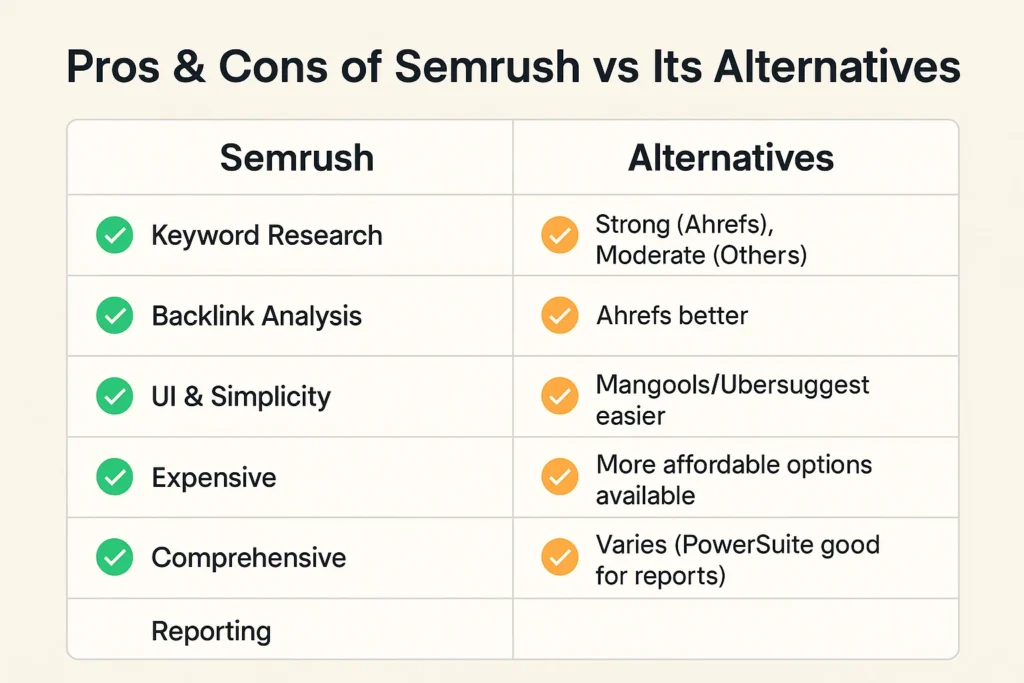
When evaluating the best SEO platforms available in 2026, many professionals ask: Is there an SEO tool better than Semrush? The answer depends on your specific needs, team size, and budget.
While Semrush alternatives may not always offer the same breadth of features, many outperform it in specific areas such as ease of use, affordability, or reporting flexibility.
Below is a side-by-side comparison of Semrush vs its top competitors, including Ahrefs, SE Ranking, Mangools, and SEO PowerSuite, to help you determine what trade-offs matter most for your SEO workflow.
| Factor | Semrush | Alternatives (Ahrefs, SE Ranking, etc.) |
|---|---|---|
| Keyword Research | Excellent database with global coverage | Ahrefs is similarly strong; others offer moderate depth |
| Backlink Analysis | Reliable, but slightly behind Ahrefs | Ahrefs leads in backlink index quality and speed |
| UI & Simplicity | Steep learning curve for new users | Ubersuggest and Mangools offer cleaner interfaces |
| Pricing | Premium pricing tiers can be prohibitive | SE Ranking and SEO PowerSuite are more affordable |
| Reporting | Comprehensive with branded exports | SEO PowerSuite excels at customizable reporting |
Analysis and Use Case Alignment
Semrush’s strength lies in being an all-in-one platform.
It’s ideal for enterprise-level operations where budget is less of a concern and where PPC data, social media tracking, and marketing automation integrations are in constant use.
However, for smaller agencies, bloggers, and freelancers, the high cost and steep onboarding curve may outweigh the benefits.
Ahrefs, for example, is widely acknowledged for its superior backlink checker, making it the go-to tool for link-building strategies.
SE Ranking delivers high value for small businesses and agencies due to its flexible pricing and intuitive SEO reporting dashboards.
Ubersuggest and Mangools are often selected for their Simplicity and cost-effectiveness qualities particularly important for beginners.
For reporting-heavy needs, SEO PowerSuite offers unlimited access with a one-time license, making it a viable Semrush alternative free from ongoing subscriptions, especially for agencies focused on white-label reports.
How We Evaluated These Semrush Alternatives
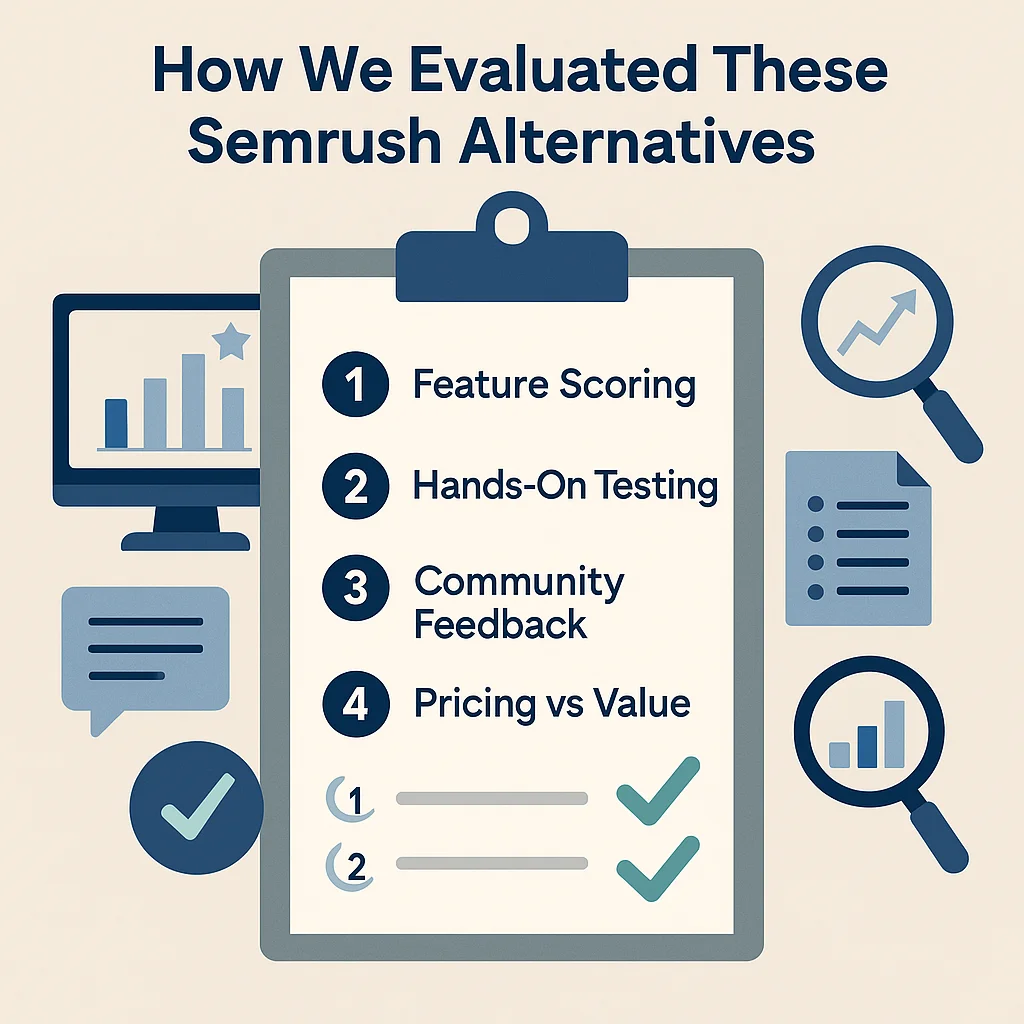
To ensure this guide delivers practical and trustworthy insights, we used a transparent, criteria-based approach to assess each tool as a potential Semrush alternative.
Our goal was to balance both data and user experience to help different types of SEO professionals from solo bloggers to large agencies make confident, informed decisions.
This evaluation wasn’t just theoretical.
We conducted hands-on testing with each platform, analyzing how they performed in real-world SEO workflows, including keyword research, site audits, backlink analysis, and reporting.
Below is a breakdown of the core factors we used to determine the value and performance of every alternative listed in this guide.
Feature Scoring
We began by comparing each tool’s feature set against the core capabilities provided by Semrush.
‘This included evaluating the depth and accuracy of keyword research tools, competitor analysis features, backlink checker capabilities, and SEO reporting dashboards.
Tools with focused specialization (like Ahrefs for backlinks or Surfer SEO for content optimization) were scored based on their performance within that niche.
Hands-On Testing
Every tool was tested in active SEO campaigns or audits.
We tracked organic keywords, generated reports, crawled websites, and compared search engine optimization software performance side by side.
Tools were rated not just on what they offer but on how effectively and intuitively they deliver on their promises.
Platforms like SE Ranking and SEO PowerSuite were particularly tested in terms of how they handle bulk data, reporting automation, and site-level insights.
Community Feedback
We explored trusted industry channels like Reddit (r/SEO), Twitter discussions, YouTube reviews, and LinkedIn commentary to validate our experience with real-world user feedback.
This helped us understand how professionals rate these Semrush alternatives in different use cases, such as content SEO, link building, or technical optimization.
Expert commentary also revealed growing interest in open-source Semrush tools and freemium models, particularly among solo creators and budget-conscious marketers.
Pricing vs Value Assessment
We closely examined each tool’s pricing structure in relation to its capabilities.
‘Tools like Ahrefs and Surfer SEO provide premium insights but come with higher price tags.
Meanwhile, SE Ranking and Mangools were noted for offering essential functionality at much lower costs making them ideal for users seeking a Semrush cheaper alternative without sacrificing quality.
We also included free SEO software like Semrush, such as Google Search Console and Ubersuggest, to highlight cost-effective solutions that still deliver on the basics.
Tool Documentation and UI/UX Rating
Ease of use and documentation quality can make or break an SEO tool, especially for beginners or teams with varying levels of expertise.
‘We rated platforms based on how clearly they explain features, availability of tutorials, onboarding flow, and overall dashboard navigation.
Platforms like Mangools and Rank Math stood out for their clean interfaces and user-friendly onboarding, whereas tools like SEO PowerSuite required a steeper learning curve but offered unmatched customization.
Conclusion
Choosing the right SEO tool begins with understanding your specific goals and pain points.
‘Whether you’re looking for a free Semrush alternative, a budget-conscious platform, or a highly specialized SEO solution, the landscape in 2026 offers a wide variety of options to match different skill levels and business sizes.
- For beginners and bloggers, Mangools and Uber suggest offering simplicity and value.
- Agencies can benefit from the reporting power of SE Ranking or SEO PowerSuite.
- Enterprise-level users may still find value in Ahrefs or even reconsider Semrush, especially when leveraging its multi-channel capabilities.
Before committing to any platform, it’s smart to test out free trials or freemium versions to get hands-on experience.
That way, you can ensure the tool aligns with your SEO workflow, goals, and budget.
If you’ve tried one of these Semrush alternatives or have a stack that works better, feel free to share your experience in the comments or ask questions.
Your feedback helps others find the most effective solution for their needs.
FAQs – Choosing the Right Semrush Alternative (2026 Update)
What is the best alternative to Semrush?
There’s no single best choice for everyone, but tools like Ahrefs, SE Ranking, and Mangools stand out depending on your goals.
Ahrefs is ideal for backlink analysis, SE Ranking works well for agencies with reporting needs, and Mangools is great for beginners focused on keyword research tools.
Can I use Ahrefs for free?
Ahrefs does not offer a free version of its main toolset, but it does provide a limited free tool called Ahrefs Webmaster Tools for verified websites.
However, full access to competitive research and backlink analysis requires a paid plan.
Is SpyFu better than Semrush?
SpyFu is a strong Semrush alternative for competitor analysis, especially when it comes to historical PPC data and keyword overlap.
It’s also more affordable, making it a budget-friendly option for agencies and small businesses.
Why is Semrush so expensive?
Semrush offers a vast suite of features—including content marketing, social tracking, and advertising analytics—which inflates its pricing tiers.
For many users, especially those who only use core SEO features, this creates a mismatch between cost and actual usage.
Can I get Semrush for free?
Semrush does not offer a permanently free plan.
However, you can explore their 7-day free trial or seek out promotional offers. If cost is a primary concern, consider freemium alternatives like Ubersuggest or open-source solutions.
Which Semrush alternative offers the most comprehensive backlink data?
Ahrefs is widely recognized for its extensive backlink database.
It consistently outperforms other tools in link index size, freshness, and backlink accuracy, making it the top choice for link-building campaigns.
How does Ahrefs compare to Semrush in terms of local SEO tools?
While both platforms offer local SEO insights, Moz Pro and BrightLocal are often preferred in this area.
Ahrefs lacks some of the local citations and Google Business tracking features found in these dedicated tools.
What makes SpyFu a budget-friendly option for competitor
SpyFu provides unlimited search results, historical keyword data, and detailed competitor reports on even its most affordable plans.
For those seeking rich competitor analysis tools without enterprise pricing, it offers strong value.
Why is Mangools considered user-friendly for SEO beginners?
Mangools stands out due to its clean UI, simple dashboards, and focused toolset.
Features like KWFinder and SERPChecker make tasks like keyword discovery and SERP analysis more approachable for those new to SEO.
What are cognitiveSEO’s strengths despite its higher price point?
CognitiveSEO excels in backlink auditing and content performance analysis.
It’s particularly effective for penalty detection and content visibility tracking, which justifies its pricing for SEO professionals working with large or penalized sites.
Also Read:
- Canva Alternatives 2026 – Better and Cheaper Than Canva at Zero Monthly Fee?
- 9 Best Affordable Bluehost Alternatives That Saves Your Money
- SEMrush vs SimilarWeb 2026 – Which SEO Tool Should You Use?