
Quick Answer: Credit card affiliate marketing programs pay between $50 and $150 per approved application internationally, with some premium programs paying significantly more. The highest-paying options include American Express, Bankrate, and Discover. For beginners, Credit Karma and Experian offer easier approval and a wider audience match. All 14 programs are compared below by commission, cookie duration, and best audience fit.
Credit card affiliate marketing programs are one of the highest-paying categories in all of affiliate marketing, yet they are also one of the most misunderstood by bloggers who are just finding their footing in the finance niche.
The reason these programs pay so well comes down to simple economics: banks compete fiercely for high-value applicants and are willing to pay top CPA rates to affiliates who deliver qualified traffic.
A new cardholder is worth thousands of dollars to a bank over their lifetime through interest, fees, and interchange revenue. That value justifies commissions that most affiliate niches cannot come close to matching.
That said, this niche operates by stricter rules than most.
Credit card affiliate marketing programs fall under the financial products category, which means FTC disclosure requirements, CFPB compliance in the US, and FCA compliance in the UK all apply to every piece of content you publish. Getting the compliance side right is not optional here.
It is what separates affiliates who build sustainable income in this niche from those who get their accounts terminated.
This guide covers the 14 best credit card affiliate programs available in 2026, with honest CPA rates, cookie durations, approval requirements, and the exact audience each program converts best for.
What Are Credit Card Affiliate Marketing Programs?
A credit card affiliate marketing program pays you a flat commission fee, called a CPA or Cost Per Action, when someone you refer successfully applies for and gets approved for a credit card through your affiliate link.
You are not earning a percentage of purchases the cardholder makes. You earn a one-time fixed payment per approved application.
Here is how the tracking works in practice. When a reader clicks your affiliate link, a cookie is stored in their browser. That cookie has a set lifespan, typically 30 to 90 days depending on the program.
If your reader completes their application within that window and gets approved, the network or program dashboard records the conversion and credits your account. You then receive your commission on the program’s payment schedule.
The CPA model dominates this niche for a specific reason. Unlike SaaS or consumer goods where an affiliate earns a percentage of a recurring subscription or a product sale, credit card issuers measure success differently.
They pay per approved application because the cardholder relationship itself is the value. The bank does not need to share ongoing revenue with you. It pays once, upfront, for the introduction.
A few key terms you will see throughout this guide and across every program you work with:
- CPA (Cost Per Action): The flat fee you earn per approved application. This is the primary commission structure in credit card affiliate marketing.
- EPC (Earnings Per Click): Your average earnings divided by total clicks. This metric tells you how efficiently your content converts traffic into commissions. A high CPA with a low approval rate produces a lower EPC than a moderate CPA with high approval rates.
- Cookie Duration: How long your referral link stays active after a click. Longer cookies give your readers more time to complete an application, which matters in this niche because people research credit cards over days or weeks before applying.
- Network vs Direct Program: Some credit card programs run through affiliate networks like Commission Junction, Impact, FlexOffers, or ShareASale. Others run direct programs through their own affiliate portal. Networks give you centralized reporting and payment. Direct programs sometimes offer higher rates but require a separate relationship with each issuer.
One important note before you move forward: promoting credit cards is financial product marketing, and it is regulated.
Every post you publish promoting a credit card affiliate program must include a clear affiliate relationship disclosure per FTC guidelines.
You cannot make guarantees about approval odds. You cannot publish inaccurate APR or fee information. Compliance is not a footnote in this niche. It is a core part of the job.
Why Credit Card Affiliate Programs Pay So Well
If you have ever wondered why credit card programs pay $100 or more per approved application when most affiliate programs pay $5 to $30, the answer lies in how much a new cardholder is worth to a bank over time.
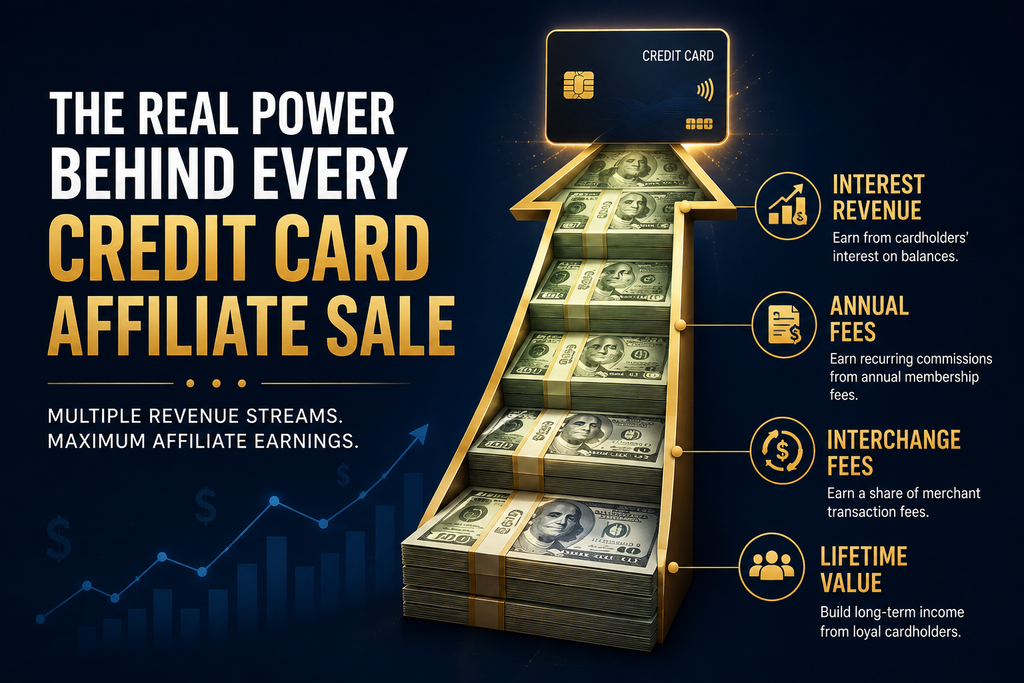
When a bank acquires a new credit card customer through an affiliate, that customer generates revenue through multiple channels simultaneously.
There is the interest on carried balances, the annual fee if the card has one, the interchange fee the bank earns every time the card is swiped at a merchant, and in many cases cross-selling opportunities for other financial products like savings accounts, mortgages, and investment accounts.
The average lifetime value of a credit card customer to a major issuer runs into the thousands of dollars. Against that backdrop, paying an affiliate $50 to $150 to deliver a qualified applicant is not generous.
It is a calculated acquisition cost.
This is also why the “Your Money or Your Life” classification matters so much for anyone building a finance affiliate site.
Google’s quality rater guidelines place financial content in its highest scrutiny category, meaning your site is held to a higher standard of accuracy, expertise, and trustworthiness than a site reviewing headphones or kitchen appliances.
That sounds intimidating, but it is actually good news for content creators who approach this seriously.
Sites with genuine E-E-A-T signals earn stronger rankings in this category than thin affiliate pages stuffed with comparison tables and no original insight.
If you are building real content authority, you are on the right side of this.
The compliance requirements in this niche serve a similar function. Programs enforce editorial standards because regulatory scrutiny falls on them as well as on you.
A single misleading claim in a sponsored post can trigger a program termination for the affiliate and unwanted attention from financial regulators for the issuer.
This is why finance affiliate programs tend to be more selective about who they approve and more attentive to how affiliates are promoting their products than programs in lower-risk categories.
For bloggers who do the work correctly, this dynamic is a competitive moat.
Most people who try credit card affiliate marketing underestimate the compliance requirements, publish thin content, and get filtered out.
The ones who stay are the ones producing genuinely useful, accurate, compliant comparison content that serves readers who are actively looking for the right credit card.
Quick Comparison Table: Top Credit Card Affiliate Programs 2026
| Program | Commission (CPA) | Cookie Duration | Network | Best Audience |
|---|---|---|---|---|
| American Express | $100 plus per approval | 45 days | Direct / CJ | Premium rewards seekers |
| Bankrate | $50 to $200 per approval | 30 days | Bankrate Network | Finance comparison traffic |
| Discover | $50 to $100 per approval | 30 days | Direct / FlexOffers | Cashback and student audiences |
| Credit Karma | Lead-based | 30 days | Direct | Credit score improvement seekers |
| Experian | $6 to $30 per lead | 30 days | Impact | Credit monitoring audience |
| Capital Bank OpenSky | $25 to $35 per approval | 30 days | FlexOffers | Credit-building audiences |
| Petal | Per approved card | 30 days | Impact | Young adults, thin-file applicants |
| Upgrade | $60 to $130 per approval | 45 days | Impact | Personal finance content audiences |
| Luxury Card | $405 per approval | 45 days | Direct / CJ | High-net-worth lifestyle audiences |
| Credit Assistance Network | $40 to $90 per lead | 45 days | ShareASale | Credit repair audiences |
| Chase | $50 to $200 per approval | 14 days | Direct | Travel and rewards card seekers |
| Capital One | Varies by card | 30 days | CJ | General credit card audience |
| CardRatings | Varies by card | 30 days | Direct | Finance publishers and editorial sites |
| Credit Strong | Per signup | 30 days | Impact | Credit-building personal finance |
14 Best Credit Card Affiliate Marketing Programs in 2026
1. American Express
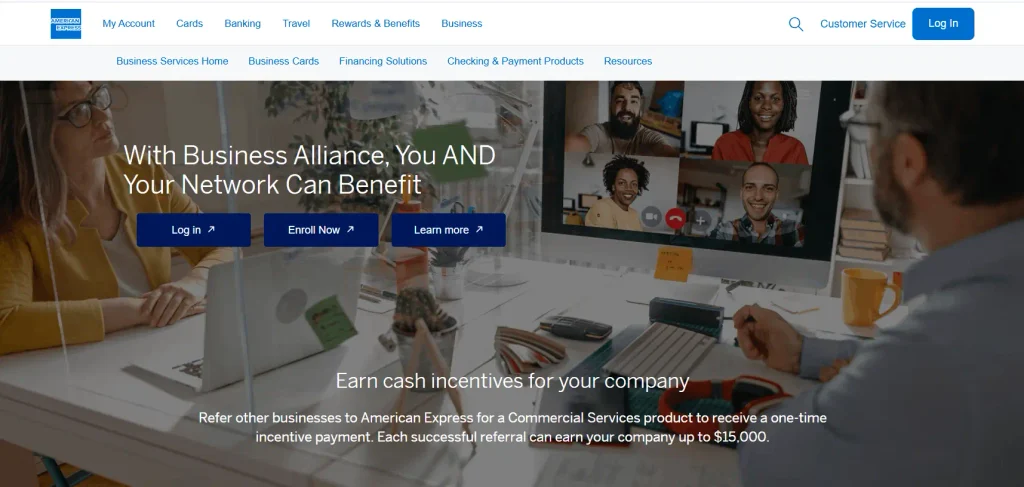
American Express is the most recognized premium card brand in the world, and its affiliate program reflects that brand positioning in both its CPA rates and its editorial standards.
The program operates through Commission Junction and a direct affiliate portal, giving publishers flexibility in how they connect.
Key Features
CPA rates start at $100 per approved application and go higher depending on the specific card being promoted. The Platinum Card and Gold Card carry the strongest CPAs.
The cookie window sits at 45 days, which is generous for this category and gives your readers time to complete the research and application process that premium card applicants typically go through.
The program is available across the US, UK, Canada, and Australia, making it one of the few truly multi-market options in this list. Creative assets include high-quality banner ads, pre-approved promotional copy, and seasonal campaign materials that are updated regularly.
Pros and Cons
- Pros: Highest brand recognition of any card in this list, premium CPA rates, strong conversion rates for the right audience, multi-market availability, long cookie window.
- Cons: Strict editorial standards for affiliate site approval, lower application approval rates for readers with average credit scores, requires a genuinely premium audience to convert well, not the right program for credit-building or general personal finance traffic.
Verdict
Best for personal finance bloggers and travel content creators whose audience is actively seeking premium rewards, airport lounge access, and high-value points programs.
If your readers have good to excellent credit and are in the market for a card that justifies a high annual fee, American Express converts exceptionally well.
If your audience skews toward credit-building or fair credit, the approval rate on applications will be low, and your actual earnings per click will disappoint regardless of the headline CPA.
2. Bankrate
Bankrate runs its own credit card affiliate network that is genuinely different from the standard issuer-to-affiliate model.
Instead of representing a single card, the Bankrate network aggregates offers from multiple major issuers under one affiliate relationship.
For bloggers who publish comparison content, this structure is highly efficient because one application gives you access to multiple card programs.
Key Features
Commission rates vary depending on which card the referred reader ultimately applies for, with typical ranges sitting between $50 and $200 per approved application.
The cookie window is 30 days. The network is currently available for US publishers only.
The practical advantage of Bankrate is the breadth of inventory. If your reader clicks your Bankrate link and ends up applying for a card you had not specifically featured, you still earn the commission for that approval.
For comparison content that sends readers to a selection of options rather than a single card, this model captures conversions you would otherwise miss.
Pros and Cons
- Pros: One application gives access to multiple card programs and issuers, strong editorial support tools designed for content publishers, competitive CPA rates across card types, consolidated reporting and payment through one network.
- Cons: US-only program limits international publisher eligibility; competitive marketplace means your content needs to outperform other Bankrate publishers to capture significant volume genuinely.
Verdict
Best for finance bloggers who regularly publish comparison content like “best cashback cards of 2026” or “top travel rewards cards for beginners” and want access to multiple card offers through a single affiliate relationship.
Particularly strong for content-heavy sites that drive consistent informational and commercial finance traffic.
Also Read: How to Write a Blog Post 2026: A Step-by-Step Guide (A-Z)
3. Discover
Discover has built a strong position in two specific credit card segments: cashback cards for everyday spenders and student cards for people opening their first credit account.
The affiliate program reflects this positioning with products that genuinely convert for the right audience.
Key Features
CPA rates range from $50 to $100 per approved card, depending on which Discover product the reader applies for. The cookie duration is 30 days.
The program is available through FlexOffers as well as through a direct program. Standout products include the Discover it Cash Back, the Discover it Student Cash Back, and the Discover it Miles card.
Pros and Cons
- Pros: The student card is one of the most accessible credit card affiliate conversions available for audiences in their early 20s; strong brand recognition in the cashback category; no annual fee on most Discover cards removes a common objection in promotional content.
- Cons: Primarily US-focused with limited international applicant eligibility, the absence of a strong no-foreign-transaction-fee card limits appeal for travel-focused content.
Verdict
Best for personal finance bloggers and student finance content creators whose audience sits in the credit-building to fair credit range and is interested in cashback rewards.
Particularly well-suited for content targeting college students, recent graduates, and young adults opening their first credit card account.
4. Credit Karma

Credit Karma operates on a different model than the card issuers on this list. Rather than paying per approved credit card application, Credit Karma uses a lead-based commission structure, paying per qualified signup or credit check completion.
This lower conversion barrier makes it one of the more accessible programs in the finance affiliate space.
Key Features
The commission is paid per qualified lead rather than per approved card, which significantly lowers the conversion friction compared to programs requiring a completed application and approval.
The cookie duration is 30 days. The program runs through Credit Karma’s direct affiliate portal.
The audience for Credit Karma is anyone checking their credit score, looking for personalized card recommendations based on their credit profile, or trying to understand their financial health overall.
Pros and Cons
- Pros: Massive brand recognition that readers already trust, lower barrier to conversion since you are sending readers to check a score rather than complete a card application, very broad audience match across credit profiles.
- Cons: Lower CPA per action than card-specific programs; actual card revenue for Credit Karma depends on their own recommendation engine converting your referred visitor into a card applicant, so your downstream earnings depend partly on their platform performance.
Verdict
Best for personal finance bloggers whose content covers credit scores, credit improvement, and financial health broadly rather than specific card product recommendations.
Strong fit for content targeting readers who are not ready to apply for a card but are actively managing their credit situation.
5. Experian

Experian is one of the three major credit bureaus, and its affiliate program covers a range of financial services products beyond just credit card offers.
The primary products affiliates promote include Experian CreditMatch, Experian IdentityWorks, and credit score monitoring subscriptions.
Key Features
CPA rates range from $6 to $30 per qualified lead depending on the specific product being promoted. The cookie duration is 30 days.
The program is available through the Impact network. The broader Experian brand carries significant trust in the financial space, and the variety of products gives affiliates multiple promotional angles within one program.
Pros and Cons
- Pros: Highly trusted brand in the credit and identity space, multiple product types to promote within one program relationship, strong conversion rates for audiences that are actively concerned about their credit and identity.
- Cons: Lower CPA per action than card approval programs; audience needs to be specifically interested in credit monitoring rather than card acquisition to convert consistently.
Verdict
Best for finance bloggers covering identity theft protection, credit repair strategies, and financial security topics where recommending a credit monitoring service feels like a natural and helpful next step rather than a product push.
6. Capital Bank OpenSky
The OpenSky Secured Visa Credit Card from Capital Bank occupies a specific and valuable position in the credit card affiliate marketing landscape.
It requires no credit check for approval, which means your readers with damaged credit, no credit history, or past bankruptcies can actually be approved.
Key Features
CPA rates range from $25 to $35 per approved application. The cookie duration is 30 days. The program is available through FlexOffers.
The standout feature that drives conversions is the no-credit-check approval process, which removes the most common barrier to completion for credit-building audiences.
Pros and Cons
- Pros: Very high application approval rate since no credit check is required, strong conversion rate for content specifically targeting credit repair and rebuilding audiences, gives your readers who cannot qualify for mainstream cards a genuine path forward.
- Cons: Lower CPA than premium card programs, appeals to a narrower audience segment of people actively working to build or rebuild credit.
Verdict
Best for bloggers whose content covers credit repair, rebuilding credit after bankruptcy, or helping people with no credit history establish their first credit card account.
The no-credit-check structure makes this one of the few programs where promoting to a financially vulnerable audience feels genuinely helpful rather than predatory.
7. Petal

Petal takes a fundamentally different approach to credit underwriting than traditional card issuers. Instead of evaluating applicants based primarily on their credit score, Petal analyzes income, banking history, and financial behavior patterns.
This makes their cards genuinely accessible to people who have a limited or nonexistent credit history.
Key Features
CPA rates are disclosed after affiliate application approval rather than published publicly. The cookie duration is 30 days. The program runs through the Impact network. The Petal Visa Credit Card is specifically designed for people who are new to credit and need a card that will evaluate them on more than a three-digit number they may not even have yet.
Pros and Cons
- Pros: Genuinely useful product for thin-file applicants, strong content alignment for first-credit-card and financial-independence content targeting younger audiences, underwriting approach removes a real barrier that other cards create.
- Cons: Smaller brand recognition compared to established issuers like Chase or Discover; commission rates are not publicly listed, which can make pre-application earnings estimation difficult.
Verdict
Best for personal finance bloggers writing for Gen Z and millennial audiences who are opening their first credit account and need a card issuer that evaluates their full financial picture rather than penalizing them for not having a long credit history.
8. Upgrade

Upgrade offers a product that sits between a traditional credit card and a personal loan.
The Upgrade Visa Card with cash rewards lets cardholders make purchases and then repay the balance in fixed monthly installments at a set interest rate, similar to a personal loan.
This hybrid structure appeals strongly to readers who are managing debt and looking for a more predictable repayment experience than a revolving credit card provides.
Key Features
CPA rates range from $60 to $130 per approved application.
The cookie window is 45 days, which is one of the longer durations on this list and gives your readers significant time to complete the application process.
The program runs through the Impact network.
Pros and Cons
- Pros: Strong CPA rates, 45-day cookie provides meaningful conversion window, appeals to a broad personal finance audience interested in both credit cards and credit lines, the installment loan structure differentiates the product in a genuinely useful way.
- Cons: Smaller brand recognition than established issuers means you need to explain the product concept clearly in your content to get readers to the point of applying; the hybrid card-and-loan structure requires a more detailed explanation than a standard cashback card promotion.
Verdict
Best for personal finance bloggers covering debt management, responsible credit use, and budgeting who want a competitive CPA rate paired with a longer cookie window.
Works particularly well in content targeting readers who have had negative experiences with high revolving credit card balances.
9. Luxury Card
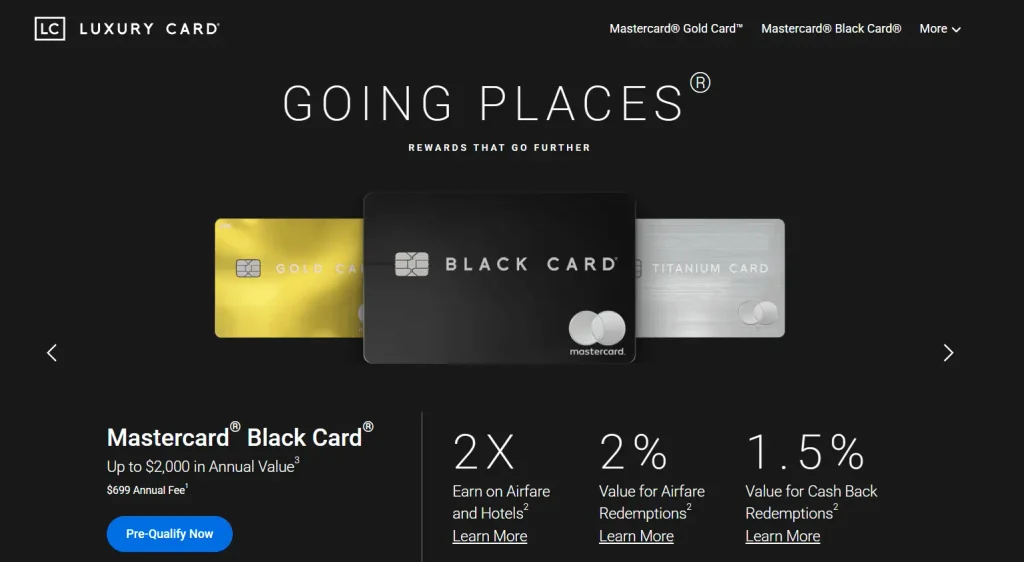
Luxury Card offers the highest flat CPA in this entire list at up to $405 per approved application.
The program covers three Mastercard products: the Black Card, the Gold Card, and the Titanium Card, each targeting high-income consumers who want premium benefits, concierge services, and exclusive travel perks.
Key Features
CPA rates go up to $405 per approved application, significantly higher than any other program in this guide. The cookie window is 45 days.
The program is available directly and through Commission Junction. The products are positioned as premium alternatives to American Express Platinum and similar aspirational card categories.
Pros and Cons
- Pros: The highest CPA available in credit card affiliate marketing, 45-day cookie window, strong aspirational brand positioning that resonates with luxury and lifestyle audiences.
- Cons: Very narrow qualifying audience since applicants need high income and excellent credit scores to be approved, low application approval rates for any audience that is not genuinely affluent, requires luxury-focused content alignment to convert at a meaningful rate.
Verdict
Best for lifestyle bloggers and luxury travel content creators with an audience that genuinely demonstrates high purchasing power and credit quality.
This program has the highest per-conversion payout in this list but the smallest viable audience.
If your content attracts wealthy readers who are comparison shopping premium card benefits, this is the most lucrative program you can promote. If your audience is general personal finance readers, the approval rate on applications will be very low, and the program will underperform despite the headline CPA.
10. Chase
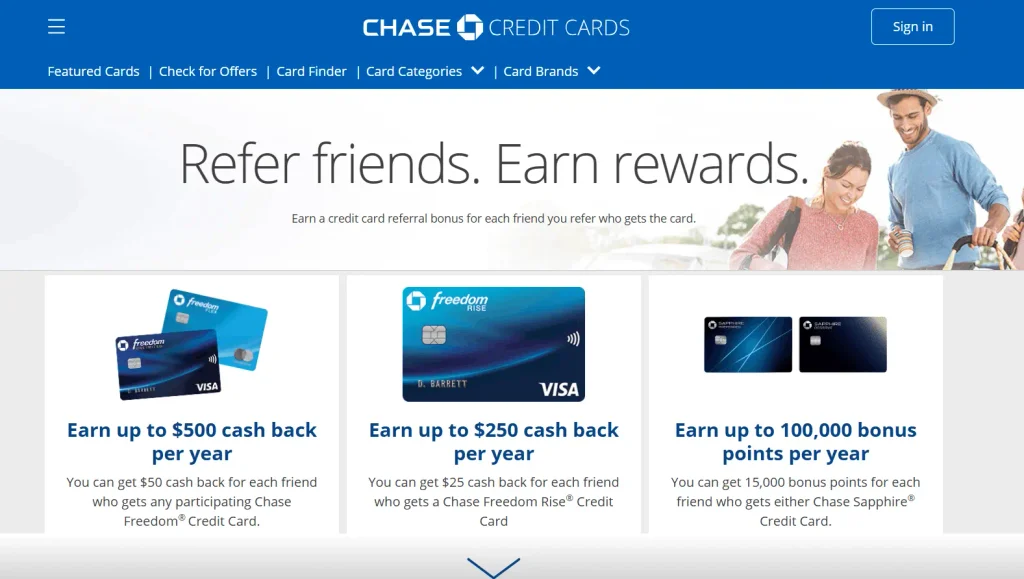
Chase operates some of the most searched-for travel rewards credit cards in the US market, including the Chase Sapphire Preferred, the Chase Freedom Unlimited, and the Chase Ink Business cards.
For travel bloggers and points-and-miles content creators, Chase is the affiliate program with the strongest brand pull in the category.
Key Features
CPA rates range from $50 to $200 per approved application depending on which Chase product the reader applies for. The cookie duration is 14 days, which is the shortest in this list and a genuine consideration for your conversion strategy. The program runs through Chase’s own direct affiliate portal and is available for US publishers only.
Pros and Cons
- Pros: Extremely high brand trust among US credit card consumers, Chase Sapphire is one of the most consistently searched travel rewards cards online, strong conversion rates for travel audiences who are actively comparing card options.
- Cons: The 14-day cookie is very short for a product category where application consideration often spans weeks; the US-only program excludes international publishers; the short cookie window means your conversion rate depends heavily on readers applying quickly rather than researching at their own pace.
Verdict
Best for travel bloggers and points-and-miles content creators whose audience is actively in the comparison stage and likely to apply within a short window after clicking.
Chase performs best when your content targets readers who are ready to apply now rather than readers still in the research phase, because the 14-day cookie window does not give you much recovery time if they leave and come back later.
11. Capital One
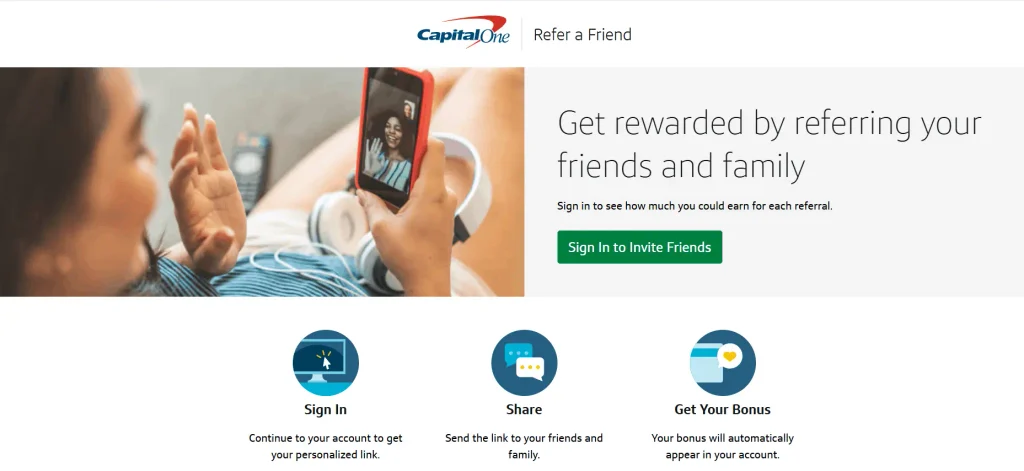
Capital One covers more audience segments than almost any other card issuer on this list.
Their product range spans from secured credit-building cards for people starting from scratch to the Capital One Venture and Venture X for premium travel rewards, with the Quicksilver and Savor cards for cashback in between.
Key Features
CPA rates vary by card and are not always publicly disclosed before program approval. The cookie duration is 30 days. The program runs through Commission Junction.
The breadth of Capital One’s product lineup means you can promote different cards to different content audiences within the same affiliate relationship.
Pros and Cons
- Pros: Wide product range covering multiple credit profiles from secured to premium travel, strong and broadly recognized brand, the ability to match different Capital One cards to different audience segments gives you promotional flexibility.
- Cons: CPA rates vary significantly by card type and are not always transparent before joining, which makes pre-application earnings modeling more difficult than programs with publicly listed rates.
Verdict
Best for finance bloggers with a broad audience covering multiple credit profiles, since Capital One’s product catalog gives you a card to recommend at almost every credit level.
Particularly useful for sites that publish both credit-building content and travel rewards content, since you can promote secured cards in one content area and Venture cards in another.
12. Credit Assistance Network
Credit Assistance Network is a credit repair and counseling service rather than a card issuer, which gives it a distinct position in this list.
Affiliates earn commissions per qualified lead rather than per approved card, and the 45-day cookie window is one of the most generous in the credit repair affiliate category.
Key Features
CPA rates range from $40 to $90 per qualified lead. The cookie duration is 45 days. The program runs through ShareASale, which provides reliable tracking and straightforward payment. Credit Assistance Network specializes in helping people improve their credit scores through dispute assistance and personalized credit counseling.
Pros and Cons
- Pros: Strong CPA rates for the credit repair content niche, 45-day cookie provides a generous conversion window for an audience that often takes time to commit to a credit repair service, ShareASale is a well-established and reliable affiliate network.
- Cons: Promoting credit repair services requires careful attention to FTC regulations around credit repair claims, including avoiding guarantees about score improvement timelines or specific results; the audience must be specifically and actively seeking credit improvement help to convert consistently.
Verdict
Best for bloggers covering credit repair strategies, recovering from bankruptcy or significant financial setbacks, and financial rebuilding topics where recommending a credit repair service is a natural and genuinely helpful recommendation alongside secured card options.
13. CardRatings
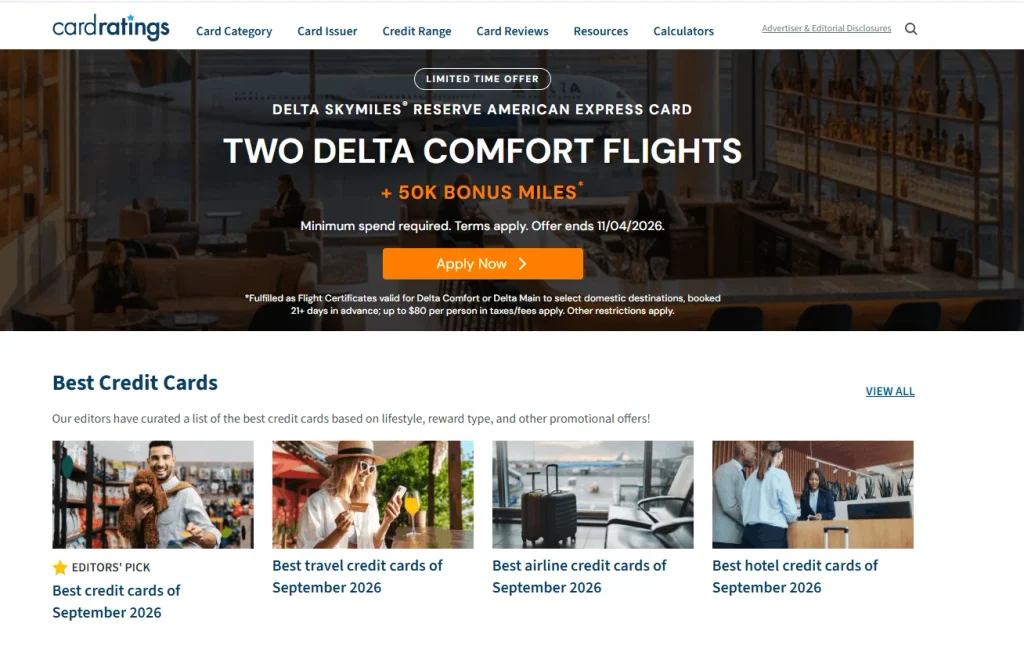
CardRatings operates similarly to Bankrate in that it aggregates multiple card offers through a single affiliate relationship rather than representing a single issuer.
It is specifically designed for content publishers who produce regular editorial credit card reviews and comparison pieces.
Key Features
Commission rates vary by card and issuer within the network. The cookie duration is 30 days. CardRatings runs a direct program and provides editorial support tools specifically designed for content sites, including pre-built comparison tables and card data feeds that publishers can integrate into their own content.
Pros and Cons
- Pros: Multiple card options available through one program application, editorial support tools make it easier to build comparison content, designed specifically for content publishers rather than incentive or coupon sites.
- Cons: Commission rates vary by card and are not fixed across the network; competitive marketplace among CardRatings publishers means differentiated content is necessary to capture meaningful conversion volume.
Verdict
Best for established finance content sites that publish regular credit card comparison and review content on an ongoing basis and want a dedicated editorial-focused affiliate partner that provides both card inventory and publishing support tools.
14. Credit Strong
Credit Strong offers a credit-builder loan rather than a credit card, which makes it a somewhat different product from the rest of this list.
However, it serves the same audience as secured credit cards: people who want to build or repair their credit history and need a financial product designed to help them do that.
Key Features
Commission is paid per qualified signup for a credit-builder loan account. The cookie duration is 30 days. The program is available through the Impact network. Credit Strong works by having applicants make monthly payments toward a loan that is held in a savings account, building payment history and savings simultaneously without requiring a security deposit upfront.
Pros and Cons
- Pros: Unique product in the credit-building category with minimal direct competition compared to mainstream secured card promotions, strong alignment with credit improvement content, the dual benefit of credit building and forced savings resonates well with financially motivated audiences.
- Cons: Narrower audience than mainstream card programs since it requires explaining the credit-builder loan concept before readers will consider applying; smaller overall brand recognition than established issuers.
Verdict
Best for personal finance bloggers who cover credit score improvement and want to diversify their credit-building content recommendations beyond secured credit cards.
Works particularly well as a complementary recommendation alongside secured card content, giving readers multiple tools for the same goal.
How to Maximize Earnings with Credit Card Affiliate Marketing Programs
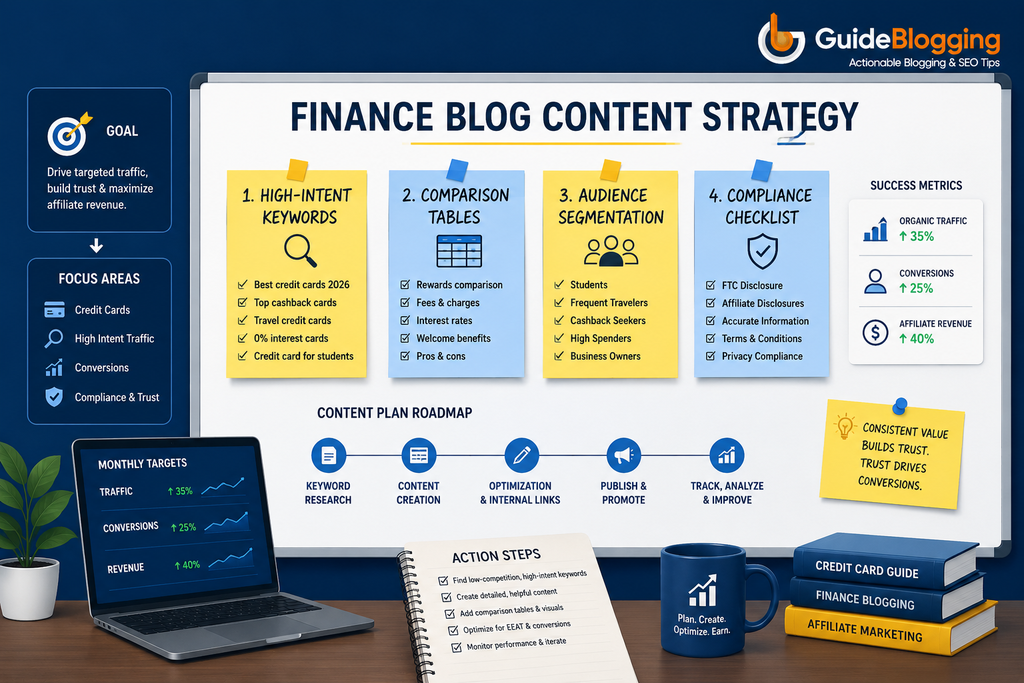
The gap between affiliates who earn consistent income from credit card programs and those who earn almost nothing from the same programs is not usually about which programs they have joined.
It is almost always about how they are using the traffic they already have.
1. Target High-Intent Keywords
The most important distinction in credit card affiliate marketing is the difference between informational intent and commercial intent.
A reader searching “how does credit card interest work” is learning. A reader searching “best cashback credit card for everyday spending” is ready to compare and likely to apply. Informational traffic educates. Transactional traffic converts.
Tools like Ahrefs and Semrush make identifying the commercial investigation keywords in your niche straightforward.
Look for queries that include words like “best,” “top,” “compare,” “which,” “review,” and specific use cases like “for bad credit,” “for students,” “for travel,” or “no annual fee.” These phrases signal a reader who is actively evaluating options rather than just looking for information.
The internal link to your keyword research guide belongs here naturally, since the keyword research approach for finance content differs from other niches.
Also Read: Ahrefs vs SEMrush 2026 – Which SEO Tool Should You Use?
2. Build Comprehensive Comparison Content
The content format that consistently outperforms everything else in credit card affiliate marketing is the “best credit cards for [specific use case]” comparison post.
Not because it is easy to produce, but because it matches exactly what a reader in the commercial investigation phase is looking for.
The structure that converts most reliably follows a predictable pattern: a quick comparison table at the top that lets scanners find their answer immediately, followed by individual card reviews with genuine pros and cons, a clear recommendation for each specific reader type, and prominent affiliate CTAs placed after each recommendation where purchase intent is highest.
3. Segment Content by Credit Profile
The single biggest conversion mistake in credit card affiliate marketing is promoting the wrong card to the wrong credit profile audience. It sounds obvious, but it is remarkably common.
There are three core audience segments in credit card content, and each requires a completely different set of card recommendations.
Readers with excellent credit above 720 are the right audience for premium travel cards and high-reward products.
Readers with fair credit between 580 and 720 are better matched to straightforward cashback cards with no annual fee or basic rewards programs. Readers with poor or no credit below 580 should only be seeing secured cards and credit-builder products.
If your content sends readers with fair credit to apply for the American Express Platinum Card, the application rejection rate will be high, your EPC will be poor, and your readers will have a negative experience that undermines their trust in your recommendations.
Pre-qualifying readers through your content so they only click through to cards they are realistically likely to be approved for is what separates high-EPC finance sites from low-EPC ones.
4. Prioritize Compliance and Disclosure
Every credit card affiliate post you publish needs a clear affiliate disclosure that meets FTC requirements. The disclosure needs to be visible before readers click any affiliate link, not buried in the footer or tucked at the bottom of a 3,000-word article.
It should state plainly that you may earn a commission if a reader applies and is approved through your link.
Beyond the disclosure, CFPB guidelines apply to how you describe credit products. You cannot make claims that imply guaranteed approval.
You cannot publish APR or fee information that is incorrect or outdated. You cannot use language that suggests a credit card will solve someone’s financial problems with certainty.
The compliance requirements that feel restrictive are actually what protects your long-term affiliate income.
Programs audit affiliates regularly, and sites that are found making non-compliant claims get removed. Clean compliance protects both your affiliate accounts and your site’s Google rankings in a YMYL content category.
Also Read: How to Start Affiliate Marketing in India 2026
5. Update Your Content Regularly
Credit card terms change. Introductory APR periods end. Bonus categories rotate. Annual fees go up. Signup bonus offers expire and get replaced with new ones.
An article published eight months ago with specific APR figures, annual fee amounts, and signup bonus values is likely already inaccurate in at least one detail.
Outdated information in credit card affiliate content does two things.
It hurts conversions because readers who click through and find different information than you described lose trust and abandon the application.
It also damages your E-E-A-T signals because Google’s quality raters specifically look for financial content that is current and accurate.
Set a quarterly review calendar for all your credit card content. Update the “last reviewed” or “last updated” date prominently when you make changes.
This signals freshness to both readers and search engines and keeps your content usable for the long term.
Credit Card Affiliate Marketing: Legal and Compliance Essentials
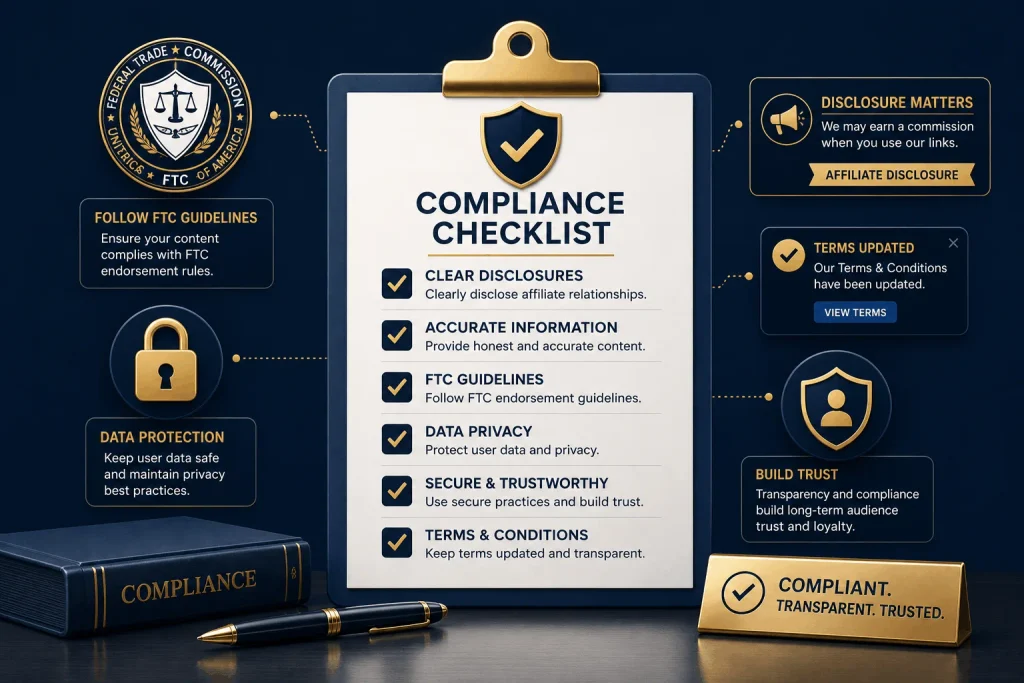
Financial affiliate marketing operates under a stricter regulatory framework than virtually any other affiliate niche. Understanding these rules is not optional if you want to build a sustainable income in this category.
The FTC’s disclosure requirements for credit card affiliate content are specific. The disclosure must be clear and conspicuous, meaning readers must see it before they encounter any affiliate link.
Placing it only in your site’s general footer or in a disclosure page linked from the footer does not meet the standard. The disclosure should use plain language. Something like “This page contains affiliate links.
The good news: every compliance requirement below is straightforward to follow. The affiliates who get terminated are not making complex mistakes. They are ignoring basics that take 10 minutes to get right.
Three regulatory bodies set the rules you need to follow:
| Regulator | Jurisdiction | What They Care About |
|---|---|---|
| FTC (Federal Trade Commission) | United States | Affiliate disclosure placement and clarity |
| CFPB (Consumer Financial Protection Bureau) | United States | Accuracy of financial product claims |
| FCA (Financial Conduct Authority) | United Kingdom | Fair, clear, and not misleading promotions |
Why Affiliate Accounts Get Terminated
Program managers audit affiliate content regularly. The reasons for termination follow a predictable pattern:
1. Approval guarantees
Saying any version of “get approved today” or implying high approval odds for all applicants.
2. Inaccurate financial data
Publishing APR ranges, annual fees, or sign-up bonus values that no longer match the issuer’s current terms.
3. Missing or buried disclosure
The affiliate relationship disclosure is not visible before the first affiliate link appears.
4. Audience mismatch
Actively promoting a premium card to an audience whose credit profile clearly makes them ineligible for approval.
5. Misleading headlines
Using sensationalist framing that overstates a card’s benefits or understates its costs.
Your Pre-Publish Compliance Checklist
Run through this before every credit card affiliate article goes live:
- Affiliate disclosure is visible above the fold and before any affiliate links
- No language implies guaranteed approval or certain financial outcomes
- All APR, annual fee, and sign-up bonus data is sourced from the issuer’s current terms page
- Testimonials or earnings references include “results may vary” or equivalent language
- Content is dated and scheduled for quarterly review when card terms may change
- Any “no credit check” or “pre-approval” claims are accurate and specific to that card’s actual policy
FAQs Related to Credit Card Affiliate Marketing Programs
What are credit card affiliate marketing programs?
They are partnerships where a credit card issuer pays you a flat CPA commission when a reader you refer successfully applies for and gets approved for a credit card through your affiliate link.
How much do credit card affiliates earn per approved application?
Most programs pay between $50 and $150 per approval, with premium cards like Luxury Card paying up to $405 per approved application and entry-level or lead-based programs like Credit Karma paying less per action.
Do you need a finance website to join credit card affiliate programs?
Most programs require a website with relevant financial content and evidence of genuine traffic. A new site with no content or traffic will typically not be approved by major card issuers.
What is the best credit card affiliate program for beginners?
Credit Karma and Experian are the most accessible for newer publishers because they pay per lead rather than per approved card, which lowers the conversion barrier significantly. Capital Bank OpenSky is a good beginner option for bloggers covering credit-building content because its no-credit-check approval process produces higher application success rates.
How do credit card affiliate programs track conversions?
Through browser cookies tied to your unique affiliate tracking link. When a reader clicks your link, a cookie is stored. If they apply and get approved within the cookie window, the network or direct program records the conversion and credits your account.
What is the cookie duration for credit card affiliate programs?
Most programs offer 30-day cookies. Upgrade, Luxury Card, American Express, and Credit Assistance Network offer 45-day windows. Chase is the outlier with a 14-day cookie, which is the shortest on this list.
Can you promote credit card affiliate programs on social media?
Yes, but the FTC disclosure requirement applies to social media posts as well as blog content. Every social media post that contains or directs to a credit card affiliate link must disclose the affiliate relationship clearly in that same post.
What is the highest-paying credit card affiliate program in 2026?
Luxury Card pays up to $405 per approved application, which is the highest flat CPA on this list. American Express and Chase offer competitive rates for volume publishers in the right audience segment.
How do I get approved for credit card affiliate programs?
Have a real website with published financial content, evidence of organic traffic, and a privacy policy and affiliate disclosure page already in place before applying. Most programs also review your content quality and audience relevance as part of the approval process.
What compliance rules apply to credit card affiliate marketing?
FTC disclosure requirements apply to every post and social media mention. CFPB guidelines in the US govern what claims you can make about financial products. Most affiliate programs also have their own editorial standards. The core rule across all of them is the same: be accurate, be transparent, and do not mislead readers about what a card offers or how likely they are to be approved.
Final Thought
Credit card affiliate programs offer some of the highest CPAs in all of affiliate marketing, but the income comes from doing the work correctly: matching the right card to the right audience with content that is compliant, trustworthy, and genuinely useful to the reader.
The programs that pay $100 to $400 per approval do so because they trust affiliates to deliver qualified applicants, not just clicks.
If you are ready to start, American Express is the right entry point for premium and travel-focused audiences; Upgrade is a strong pick for personal finance content with its 45-day cookie and competitive CPA; and Luxury Card offers the highest per-conversion upside for lifestyle publishers with affluent readers.
ALSO READ:
18 thoughts on “14 Best Credit Card Affiliate Marketing Programs in 2026 (High-Paying)”