Quick Answer: Semrush is the best all-in-one platform for agencies and marketers who need PPC and AI visibility data. Ahrefs leads in backlink depth and research accuracy. Moz is the most beginner-friendly with trusted authority metrics. Ubersuggest is the most affordable option for solo bloggers and freelancers starting on a tight budget.
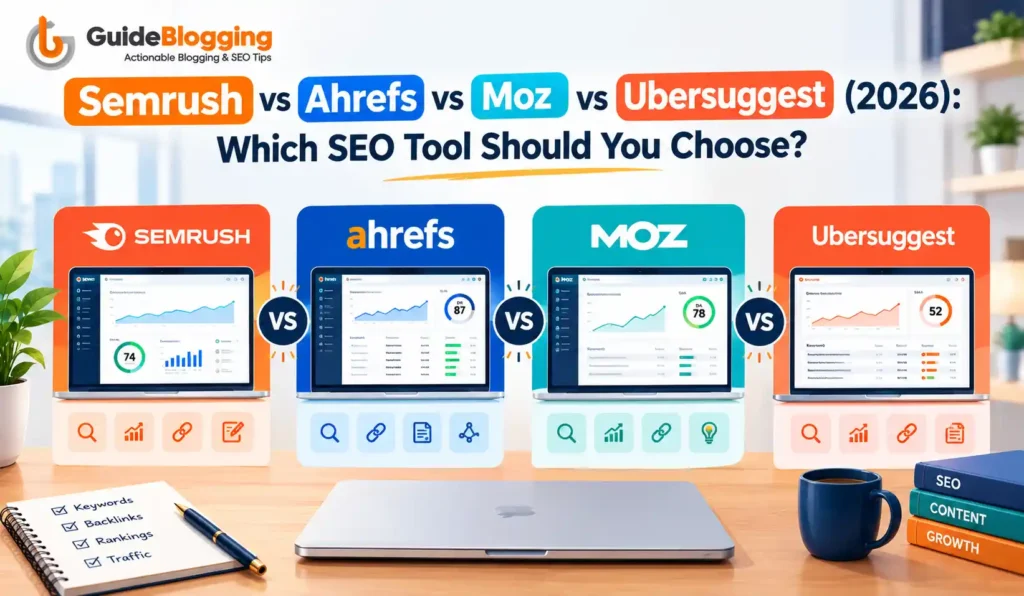
Are you looking for the best SEO tool between semrush vs ahrefs vs moz vs ubersuggest but not sure which one is actually worth your money?
If you are looking for a clear, no-fluff answer, you are in the right place.
Every platform markets itself as the complete solution, but none of them explain who actually needs what. A solo blogger has completely different data needs than an agency SEO.
A freelancer on a tight budget has no business paying for enterprise features they will never open. This guide tests all four tools head to head across every category that matters so you can match the right tool to your specific situation, budget, and workflow without spending a month researching pricing pages.
Semrush vs Ahrefs vs Moz vs Ubersuggest at a Glance
Semrush leads on all-in-one workflow breadth and PPC research, Ahrefs leads on backlink depth and crawl accuracy, Moz leads on trusted authority metrics and beginner accessibility, and Ubersuggest leads on affordability and clean interface simplicity.
All database and index figures in the table below are vendor-reported and used for orientation only, not as definitive tiebreakers.
| Feature | Semrush | Ahrefs | Moz | Ubersuggest |
|---|---|---|---|---|
| Best For | All-in-one marketing and PPC | Backlink depth and research | Beginners and DA metrics | Budget-conscious solo users |
| Paid Plans From | $117.33/month | $129/month | $99/month | $29/month |
| Free Option | Limited free account | Ahrefs Free (own sites) | Limited free tier | Free account with daily limits |
| Keyword Database | About 25 billion (reported) | About 28.7 billion (reported) | Standard coverage | Estimated third-party data |
| Backlink Index | About 43 trillion (reported) | About 35 trillion (reported) | Functional standard view | Limited basic snapshot |
| Site Audit | 140 plus checks | 170 plus issue checks | Core crawl | Basic audit |
| AI Search Visibility | Yes (Semrush One from $199) | Yes (Brand Radar add-on, $199/month) | Not available mid-2026 | Included on all plans |
| Ease of Use | Complex, built for pros | Organised with strong guides | Gentle learning curve | Very clean and simple |
| Best Reader Type | Agency, mid-large team | Dedicated SEO specialist | Beginner, small team | Freelancer, solo blogger |
What Is Semrush?
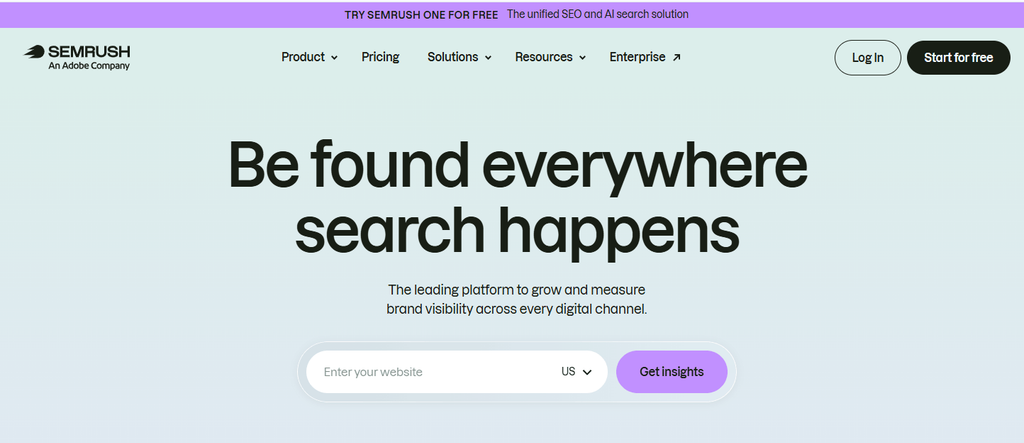
Semrush is an all-in-one digital marketing platform that covers keyword research, site auditing, backlink analysis, PPC competitor intelligence, content marketing tools, and AI search visibility tracking in a single workspace.
It was founded in 2008 and has grown to serve over 10 million marketing professionals, making it the broadest platform of the four tools in this comparison.
It suits agencies, marketing teams, and PPC managers who need to manage organic SEO, paid search research, and AI visibility from one place without switching between separate platforms. Its signature differentiator is that it is the only full PPC competitive research suite among the four tools reviewed here.
What Is Ahrefs?
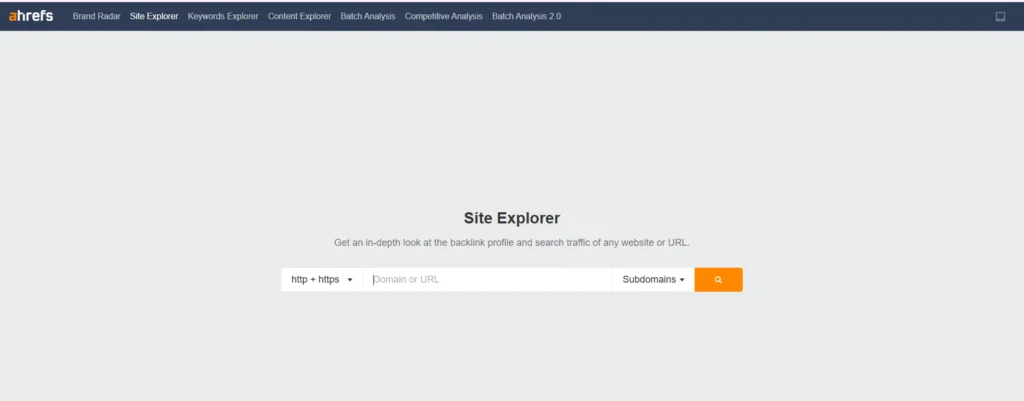
Ahrefs is a professional SEO platform known for its backlink index depth, accurate keyword data, and fast crawl frequency across its database of links and search terms.
It was founded in 2011 as a backlink analysis specialist before expanding into a complete SEO suite covering keyword research, site auditing, rank tracking, and content research.
It suits SEO specialists, content strategists, and link building teams who prioritize research accuracy, crawl speed, and the depth of backlink data they need to make competitive decisions.
Its signature differentiator is the Traffic Potential metric, which estimates total traffic from ranking first rather than just the volume of one keyword.
What Is Moz?
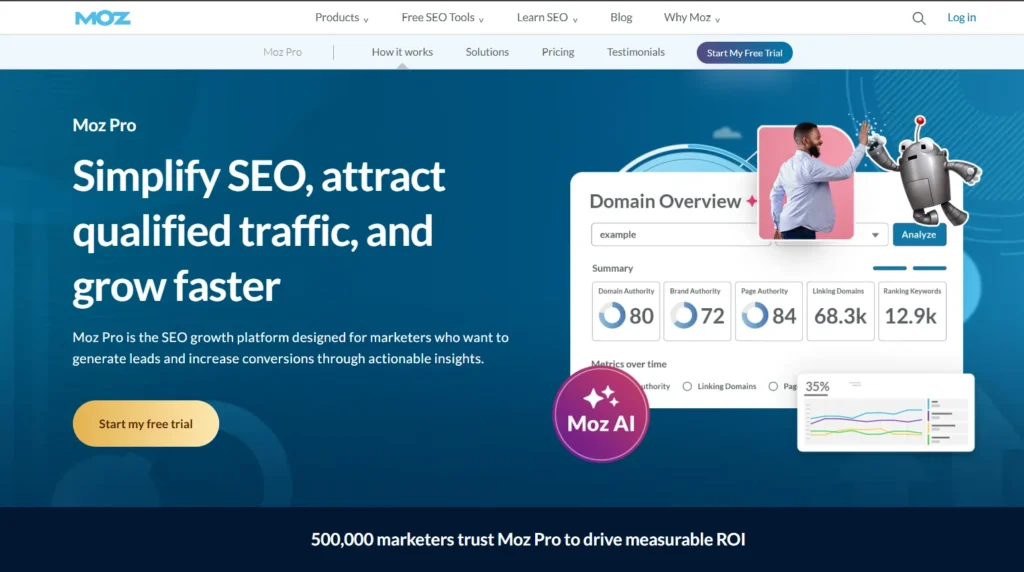
Moz is an SEO platform best known for inventing Domain Authority, the industry-standard metric for measuring website link authority that is now used across the entire SEO industry.
It was founded in 2004, making it the oldest platform in this comparison, and has spent over two decades building a strong educational community alongside its toolset.
It suits beginners, educators, and small in-house teams who want trusted authority metrics, a gentle learning curve, and access to strong community resources and SEO documentation. Its signature differentiator is DA, the most widely understood authority benchmark across SEO teams globally.
What Is Ubersuggest?
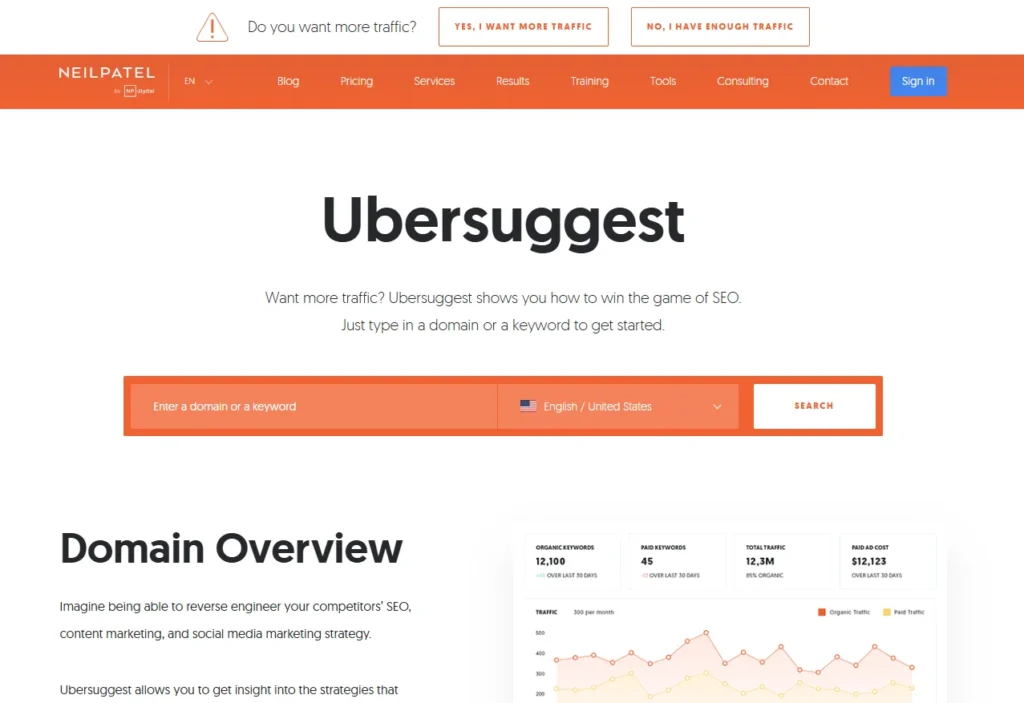
Ubersuggest is a budget-friendly SEO tool offering keyword research, site auditing, rank tracking, and AI search visibility in a clean, minimal interface designed for users who are new to SEO tools.
It was created by Neil Patel, originally as a free Google Suggest scraper before developing into a lightweight SEO suite available at the most affordable price point in this comparison.
It suits solo bloggers, freelancers, and budget-conscious beginners who need basic keyword ideas, simple site audits, and rank tracking without committing to a large monthly spend. Its signature differentiator is the inclusion of AI Search Visibility on every paid plan, including the lowest tier.
Semrush Key Features
- Keyword Magic Tool: About 25 billion keyword database (reported) with four-category intent classification (informational, commercial, transactional, navigational) and keyword clustering.
- Backlink Analytics: About 43 trillion link index (reported) with toxic link scoring, referring domain trends, and Link Gap analysis comparing your profile against competitors.
- Site Audit: Over 140 technical checks including Core Web Vitals, crawlability, redirect chains, and broken links with scheduled crawl runs.
- PPC Research: Competitor ad copy history, spend estimates, and keyword bid data. No equivalent tool in Ahrefs, Moz, or Ubersuggest makes this the clearest Semrush differentiator.
- AI Visibility Tracking: Semrush One from $199 per month tracks brand presence in ChatGPT, Gemini, and AI Overviews. The standalone AI Visibility Toolkit is also available at $99 per domain as an add-on.
- Semrush Free: Limited daily searches across core tools with no site audit access. A 7-day trial of paid plans is available through standard signup, with a 14-day trial through some partner links.
Ahrefs Key Features
- Keywords Explorer: About 28.7 billion keywords (reported) across Google, YouTube, Amazon, and Bing. Includes the unique Traffic Potential metric, intent classification, keyword clustering, and Questions and Also Rank For filters.
- Site Explorer: About 35 trillion backlink index (reported) with daily updates, among the fastest crawl frequencies in the industry. Link Gap analysis and Top Pages report for competitor research.
- Site Audit: Over 170 issue checks with full JavaScript rendering for React, Vue, and Angular frameworks. Scheduled crawls with email alerts. Full access requires Standard plan or above.
- Content Explorer: Discover top-linked content by topic for outreach and content gap strategy. Available from the Standard plan at $249/month.
- Brand Radar: AI visibility add-on tracking brand mentions in AI-generated prompts from $199/month. Limited AI prompt tracking is bundled in base plans. Requires Standard plan or above for full brand Radar access.
- Ahrefs Free: Free indefinitely for verified sites you own. Includes site audit, backlink data, and keyword rankings for your own domains only. No competitor research included.
Moz Key Features
- Domain Authority (DA): Moz invented DA, which remains the most widely recognised link authority metric across the SEO industry and is referenced in competitor and client reporting globally.
- Keyword Explorer: Core keyword research with Difficulty, Opportunity, and Priority scoring designed to help beginners prioritise targets without reading raw competitive data.
- Link Explorer: Backlink analysis with Spam Score and Domain Authority per linking domain. Useful for routine link audits and identifying low-quality inbound links.
- Site Crawl: Technical audit covering crawl errors, redirect issues, missing meta elements, and duplicate content on standard HTML sites.
- MozBar: Free Chrome extension showing DA and PA inline on Google SERPs without logging into the platform. Permanently free.
- Moz Free: Limited searches per month on the free tier. MozBar is permanently free with no daily search limit.
Ubersuggest Key Features
- Keyword Ideas: Keyword suggestions with volume, CPC, and difficulty sourced from third-party estimated data. Functional for content ideation and basic research.
- Site Audit: Basic crawl covering on-page issues. Individual plan is limited to 1,000 pages, Business to 5,000, Enterprise to 10,000.
- Rank Tracking: 125 tracked keywords on Individual, 150 on Business, and 300 on Enterprise with daily position updates.
- AI Search Visibility: Included on every paid plan from $29/month. This is a genuine differentiator against Moz, which has no equivalent feature at any price in mid-2026.
- Lifetime Deal: Available periodically at $290 for Individual, $490 for Business, $990 for Enterprise. [VERIFY availability before publishing.]
- Ubersuggest Free: Free account with small daily limits and a 7-day free trial on monthly plans.
Semrush Pricing (2026)
| Plan | Monthly Price | Annual Price Per Month | Who It Fits |
|---|---|---|---|
| Pro | $139.95 | $117.33 | Freelancers and small teams |
| Guru | $249.95 | $208.33 | Growing agencies with content needs |
| Business | $499.95 | $416.66 | Large agencies and enterprises |
| Semrush One | From $199 | Varies | Teams needing AI visibility tracking |
Ahrefs Pricing (2026)
| Plan | Monthly Price | Who It Fits |
|---|---|---|
| Starter | $29 | Very limited, occasional checks only |
| Lite | $129 | Individual SEOs and small sites |
| Standard | $249 | Growing content teams |
| Advanced | $449 | Larger agencies |
| Enterprise | From $1,499 | Enterprise teams |
Moz Pricing (2026)
| Plan | Monthly Price | Annual Price Per Month | Who It Fits |
|---|---|---|---|
| Standard | $99 | $79USD / mo | Small businesses and beginners |
| Medium | $179 | $143USD / mo | Growing businesses |
| Large | $299 | $239USD / mo | Agencies |
Ubersuggest Pricing (2026)
| Plan | Monthly Price | Who It Fits |
|---|---|---|
| Individual | $29 | Solo bloggers and freelancers |
| Business | $49 | Small businesses [VERIFY] |
| Enterprise | $99 | Agencies |
| Lifetime Individual | $290 | Solo users wanting no monthly fee |
Semrush Pros and Cons
Pros:
- All-in-one platform covering SEO, PPC, content marketing, and AI visibility in one workspace
- The only tool in this comparison with full PPC competitor research, including ad copy history and spend estimates.
- AI Overview tracking available through Semrush One and the standalone AI Visibility Toolkit
- Integrates natively with Google Analytics, Google Search Console, and Google Ads
- Strongest workflow breadth across all four tools for agency and multi-channel teams
Cons:
- Most expensive starting point when factoring in per-user seat costs of $45 to $100 extra per user
- AI visibility requires Semrush One at $199 on top of the base plan, not included by default
- Steeper learning curve than Moz or Ubersuggest for users new to professional SEO tools
- Can overwhelm solo bloggers who only need basic keyword research and rank tracking
- Extra users add cost quickly for small agencies managing shared access
Ahrefs Pros and Cons
Pros:
- Industry-leading backlink index with among the fastest crawl frequency of any tool in this comparison
- Traffic Potential metric unique to Ahrefs gives a more realistic traffic estimate than raw search volume
- Strongest site audit of the four with full JavaScript rendering for modern frontend frameworks
- Content Explorer for link building research and content gap strategy
- Ahrefs Free gives verified site owners genuinely useful backlink and site audit data at zero cost
Cons:
- No PPC research capability, unlike Semrush, which is a meaningful gap for agencies managing paid search
- Starter plan at $29/month is too limited for meaningful keyword research or competitive analysis
- Brand Radar AI visibility tracking is a separate $199/month add-on, not included in base plans
- Extra seats cost $40 to $80 per user per month depending on plan
- Content Explorer requires the Standard plan at $249/month, not available on Lite
Moz Pros and Cons
Pros:
- Invented Domain Authority, still the most recognised and widely used authority metric in the SEO industry
- Gentlest learning curve of the four tools, with strong onboarding resources and educational community
- MozBar Chrome extension is free and shows DA and PA inline on Google SERPs permanently
- Spam Score useful for identifying low-quality inbound links in routine link audits
- Strong community documentation and blog resources for beginners learning SEO fundamentals
Cons:
- No AI search visibility tracking available as of mid-2026, a meaningful gap versus Semrush, Ahrefs, and even Ubersuggest
- Smaller keyword and backlink database than Semrush or Ahrefs for competitive research at scale
- No PPC research capability at any plan level
- Interface feels more dated compared to the cleaner dashboards of Ahrefs and Ubersuggest
- Not suitable for enterprise-scale SEO workflows requiring daily data freshness and deep competitive intelligence
Ubersuggest Pros and Cons
Pros:
- Most affordable paid plan at $29/month with a lifetime deal option that removes the recurring subscription entirely
- AI Search Visibility included on all paid plans, the only tool in this comparison to bundle this at entry-level pricing
- Very clean interface with minimal learning curve; most new users are productive within an hour
- 7-day free trial on monthly plans with a permanent free account available beyond the trial
- Neil Patel’s large content library provides extensive free guidance for beginners using the tool
Cons:
- Third-party estimated data is less accurate than Semrush or Ahrefs for competitive keyword research at scale
- Smallest backlink database of the four tools, not suitable for serious link building campaigns
- Individual plan limited to 1,000-page site audit and 125 tracked keywords, which constrains larger sites
- Not designed for agency or enterprise use where multiple client sites need simultaneous management
- Data accuracy limitations become apparent when targeting competitive niches requiring precise difficulty scoring
Semrush vs Ahrefs vs Moz vs Ubersuggest: Keyword Research Comparison
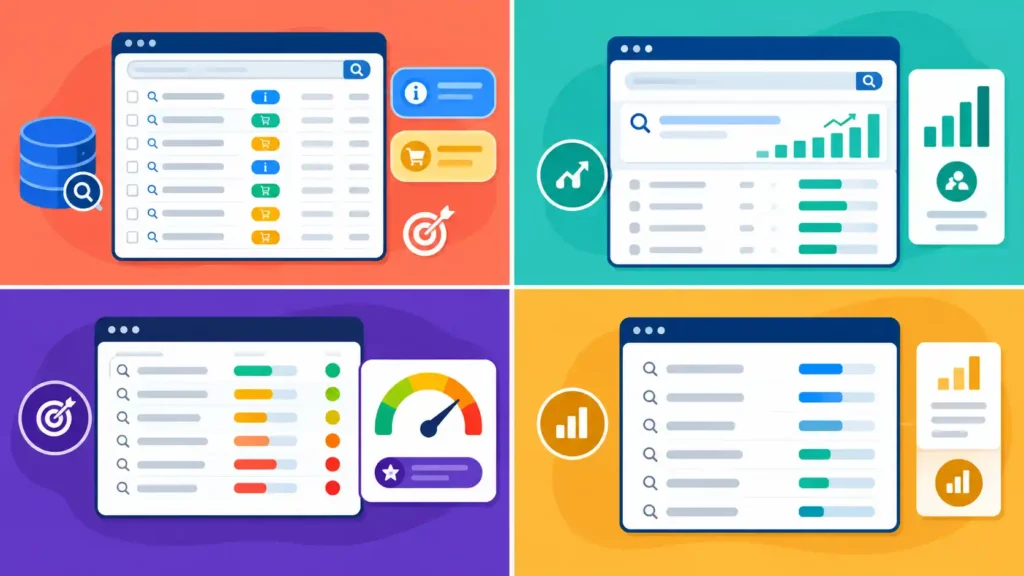
Semrush and Ahrefs lead on database size and data quality, with Semrush adding four-category intent classification and Ahrefs adding the unique Traffic Potential metric.
Moz handles standard keyword research competently for beginners, while Ubersuggest relies on estimated third-party data that is adequate for basic content research but falls short for competitive analysis.
Semrush Keyword Research
Semrush’s Keyword Magic Tool covers about 25 billion keywords (reported) across 140 countries. The four-category intent classification (informational, commercial, transactional, navigational) is the most granular of the four tools and helps content teams match format to search intent before writing.
Keyword clustering groups related terms into topic groups automatically, reducing manual planning time on large content calendars.
Keyword difficulty in Semrush is calibrated to actual backlink profiles of pages currently ranking for each term, making it more accurate for competitive keyword assessment than tools relying on estimated signals.
Historical volume trend data is available from the Guru plan and above.
Ahrefs Keyword Research
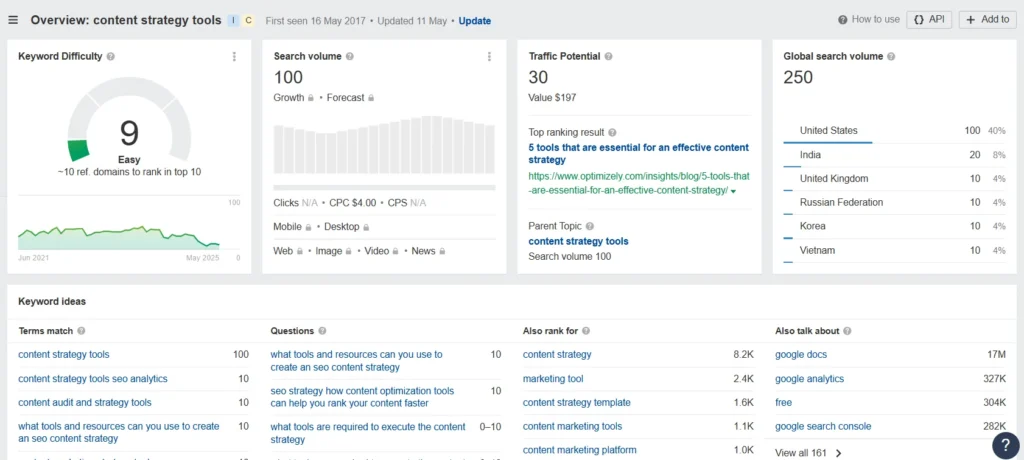
Ahrefs Keywords Explorer covers about 28.7 billion keywords (reported) across Google, YouTube, Amazon, and Bing from a single interface.
The Traffic Potential metric is unique to Ahrefs and estimates the total traffic a page would receive by ranking first for a keyword, accounting for all related queries that page would also capture.
This changes how you prioritise content investments in competitive niches.
The Questions, Also Rank For, and Related Terms filters give a complete semantic map of any topic. Multi-platform support makes it the only tool in this comparison with meaningful keyword research capability beyond Google.
Moz Keyword Research
Moz’s Keyword Explorer provides keyword difficulty, search volume, organic click-through rate estimates, and a Priority score that combines volume and difficulty into a single actionable number.
This Priority scoring is well-suited to beginners who find raw KD numbers difficult to interpret in isolation.
The database is smaller than Semrush and Ahrefs, which means fewer long-tail suggestions on niche topics. For standard competitive research in established markets, it is functional.
For deep niche-specific keyword discovery, it falls short.
Ubersuggest Keyword Research
Ubersuggest generates keyword suggestions with search volume, CPC, and SEO difficulty from third-party estimated data.
For beginners building a basic keyword list and understanding broad content opportunities, the data is adequate. For competitive analysis against established sites in high-value niches, the accuracy gap versus Semrush and Ahrefs becomes noticeable.
The content ideas feature shows top-performing articles for any topic, which is a useful entry-level research shortcut for solo bloggers who want to understand what ranks before planning new content.
Keyword Research Verdict
Ahrefs wins on data depth, multi-platform coverage, and the Traffic Potential metric. Semrush is close behind with stronger intent classification.
Moz is adequate for beginners and small teams. Ubersuggest is suitable for basic ideation only.
For a detailed comparison of Ahrefs and KWFinder specifically on keyword research, see our Ahrefs vs KWFinder comparison.
Ahrefs vs Semrush vs Ubersuggest vs Moz: Backlink Analysis Comparison
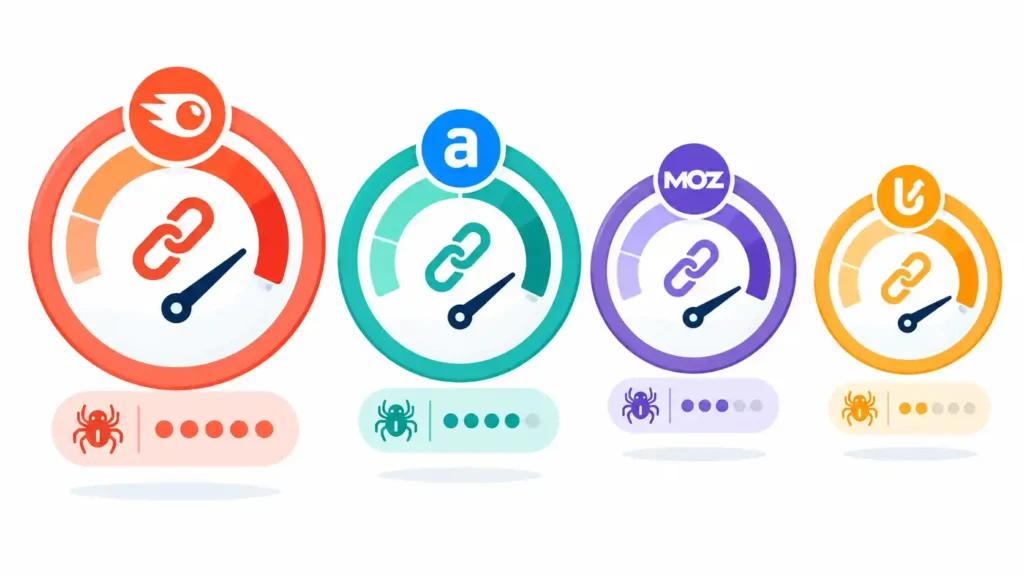
Ahrefs holds the edge on backlink index crawl speed and detection of new and lost links, making it the strongest choice for active link building campaigns.
Semrush is close in competitive gap analysis and adds PPC link intelligence, Moz provides a functional standard view with its Spam Score metric, and Ubersuggest offers a limited basic snapshot only.
Semrush Backlink Analysis
Semrush’s Backlink Analytics covers about 43 trillion links (reported) with daily index updates, toxic link scoring with severity levels, Link Gap analysis comparing your backlink profile against competitors, and disavow file export.
The Backlink Audit tool integrates directly with Google Search Console for accurate link status verification.
The key advantage Semrush adds over Ahrefs in backlink research is the direct connection to its PPC research suite, allowing agencies to understand both the organic and paid competitive landscape for any domain simultaneously.
Ahrefs Backlink Analysis
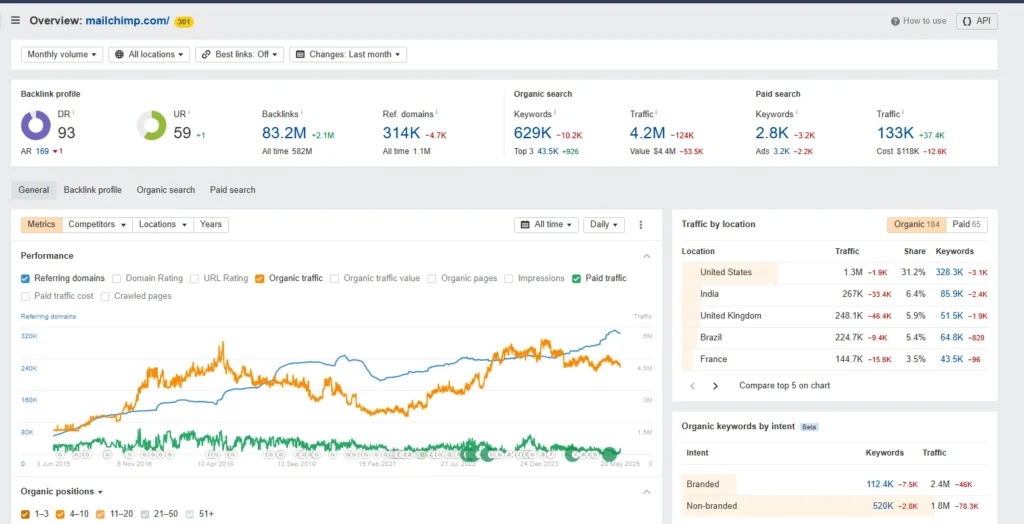
Ahrefs operates a backlink index of about 35 trillion live links (reported) with one of the fastest index update frequencies in the industry.
New and lost links are detected quickly, which matters for active link building campaigns where timing outreach around competitor link gains and losses produces better results.
Link Gap analysis compares your profile against five competitors simultaneously, and the Top Pages report identifies which competitor pages earn the most external links.
For a deeper look at how Ahrefs handles link analysis against other dedicated backlink tools, see our Ahrefs vs Majestic article.
Moz Backlink Analysis
Moz Link Explorer provides referring domain tracking, Spam Score per linking domain, anchor text distribution, and basic new and lost link monitoring.
The Spam Score metric is Moz’s most distinctive contribution to backlink analysis and remains useful for identifying potentially harmful inbound links before a disavow audit.
The database is smaller and updates less frequently than Semrush or Ahrefs, which limits its usefulness for time-sensitive competitive link research. For routine monthly backlink checks and Spam Score monitoring on small sites, it is functional.
Ubersuggest Backlink Analysis
Ubersuggest provides a basic backlink snapshot showing referring domain count, domain authority scores, and anchor text overview.
The Individual plan limits backlink row access to 2,000 rows, Business to 5,000, and Enterprise to 10,000. This is significantly smaller than any of the other three tools and is not suited for active link building or comprehensive link audits.
Backlink Analysis Verdict
Ahrefs wins on crawl speed and detection accuracy for active link building work. Semrush is competitive on gap analysis and adds PPC context. Moz is adequate for routine monitoring and Spam Score auditing. Ubersuggest is not a viable option for serious backlink research.
ALSO READ: 13 Best Answer The Public Alternatives in 2026 (Free and Paid)
Semrush vs Moz vs Ahrefs vs Ubersuggest: Technical SEO and Site Audit Comparison
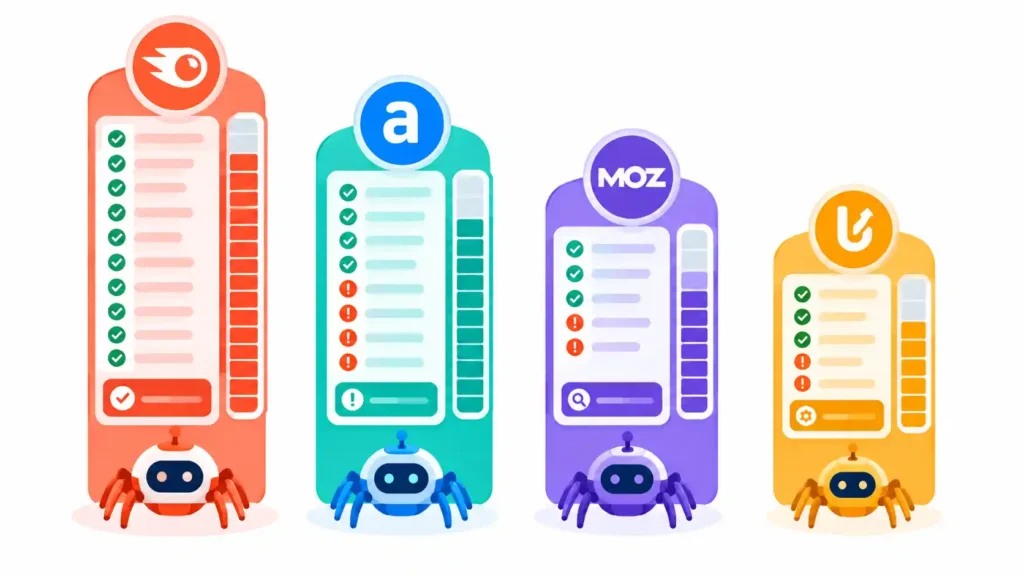
Ahrefs leads on technical audit depth with full JavaScript rendering for modern frontend frameworks, while Semrush covers over 140 checks and integrates Core Web Vitals directly into the audit dashboard.
Moz handles standard crawl issues competently for conventional HTML sites, and Ubersuggest provides a basic page-level audit suited to smaller sites with straightforward technical setups.
Semrush Technical SEO and Site Audit
Semrush Site Audit runs over 140 checks covering crawlability, indexability, broken links, redirect chains, duplicate content, Core Web Vitals, and missing meta elements.
Scheduled crawls run automatically with email alerts for new critical issues. The audit dashboard integrates with Google Search Console data for accurate index status verification.
The Core Web Vitals integration is a notable strength, pulling real field data alongside the crawl findings and making it easier to prioritise performance fixes alongside structural technical issues.
Ahrefs Technical SEO and Site Audit
Ahrefs Site Audit runs over 170 issue checks with full JavaScript rendering for React, Vue, and Angular frameworks. This is the most important advantage for technical auditing of modern web properties built on JavaScript-heavy frontends, where other crawlers routinely miss indexing issues hidden behind client-side rendering.
Scheduled crawls with email alerts catch new issues between manual checks.
Full audit access requires the Standard plan at $249/month, not available on the Lite plan at $129/month.
See our Best WordPress SEO Plugins guide for on-site technical tools that complement any of the four platforms reviewed here.
Moz Technical SEO and Site Audit
Moz Site Crawl covers crawl errors, redirect issues, missing meta elements, duplicate content, and broken links on standard HTML sites.
The interface is beginner-friendly, and the issue categories are explained with clear guidance on how to fix them, which is a genuine advantage for small teams without a dedicated technical SEO resource.
The crawl does not support JavaScript rendering, which means it will miss issues on sites built with React, Vue, or Angular frameworks. For conventional WordPress and static HTML sites, the core crawl is functional.
Ubersuggest Technical SEO and Site Audit
Ubersuggest’s site audit covers common on-page issues including broken links, missing meta tags, slow pages, and duplicate content.
The Individual plan is limited to 1,000 pages, which constrains its usefulness for sites with larger page counts. JavaScript rendering support is basic.
For solo bloggers on small sites with fewer than 50 posts and a standard WordPress setup, the audit surfaces the most impactful technical issues without requiring a more expensive tool.
Technical SEO Verdict
Ahrefs wins on audit depth and JavaScript rendering for technically complex sites.
Semrush is close behind on check count and adds Core Web Vitals integration.
Moz is adequate for standard HTML sites and beginner teams. Ubersuggest is suitable only for small sites with simple technical setups.
Compare Moz and Ahrefs vs Semrush vs Ubersuggest: Competitor Analysis Comparison
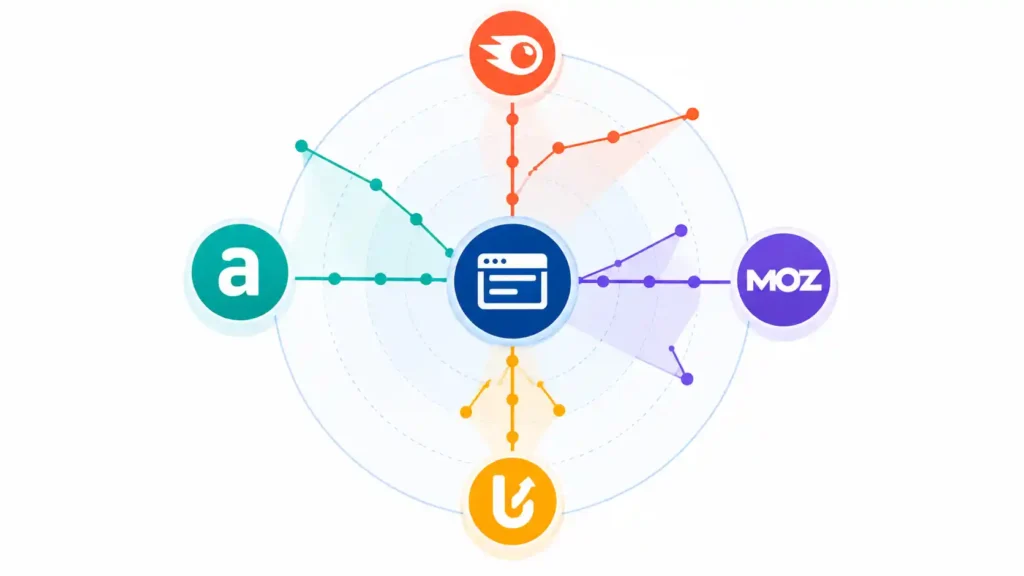
Semrush is the strongest tool for full competitor intelligence, combining organic keyword gap, PPC ad research, display advertising data, and traffic analytics in one platform.
Ahrefs provides deep organic competitor research through Content Explorer and keyword gap analysis, while Moz and Ubersuggest cover basic domain comparison only.
Semrush Competitor Analysis
Semrush combines more competitive intelligence channels than any other tool in this comparison. Traffic Analytics estimates competitor website traffic by source.
Keyword Gap shows which keywords competitors rank for that you do not. Advertising Research reveals competitor ad copy history, estimated spend, and keyword targeting strategies going back years.
Market Explorer gives a high-level view of your competitive landscape, including traffic share by domain. For agencies managing both SEO and PPC for clients, the advertising intelligence layer is the single strongest argument for Semrush over any other tool in this comparison.
Ahrefs Competitor Analysis
Ahrefs provides deep organic competitive research through Site Explorer, which shows any competitor’s top organic pages by traffic, keyword rankings, and backlink profile.
The Content Gap tool identifies keywords competitors rank for that your site does not, and the Top Pages report surfaces which content earns competitors the most external links.
Content Explorer extends competitor research to topic-level analysis, showing the top-performing content in any niche by backlink count, traffic, and social shares. This is a strong foundation for both content strategy and link building outreach planning.
Moz Competitor Analysis
Moz provides basic domain comparison through Link Explorer and Keyword Explorer, allowing a side-by-side view of DA, backlink counts, and keyword rankings for competing domains. True Link Intersect analysis identifies domains linking to competitors that do not link to you.
The competitive intelligence is functional for small business owners checking a handful of direct competitors. It does not scale to agency-level multi-competitor monitoring or the traffic and advertising research depth that Semrush and Ahrefs provide.
Ubersuggest Competitor Analysis
Ubersuggest provides Top Pages reports showing competitor content earning the most organic traffic, a basic keyword gap tool, and traffic estimate comparisons between domains.
The data comes from third-party estimates, which reduces its reliability for precise competitive research.
For beginners understanding what type of content a competitor publishes and which broad topics drive their traffic, the data is adequate as a starting point.
Competitor Analysis Verdict
Semrush wins outright when PPC intelligence alongside organic analysis is required. Ahrefs wins for pure organic competitive research depth. Moz and Ubersuggest are limited to basic domain comparison and not suitable for systematic competitive analysis at agency or professional scale.
AI Search Visibility in 2026: Semrush vs Ahrefs vs Moz vs Ubersuggest
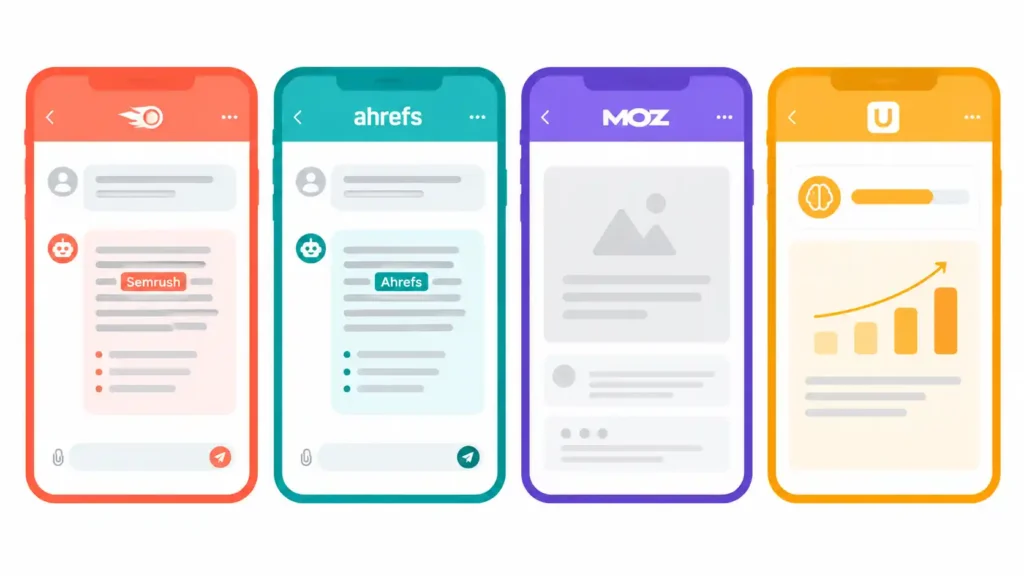
Semrush and Ahrefs both offer AI search visibility tracking in 2026, though both require an investment beyond base plan pricing. Moz has no AI visibility tracking as of mid-2026, while Ubersuggest includes a basic AI Search Visibility feature on every paid plan, making it the only tool in this comparison to bundle this capability at entry-level pricing.
Semrush AI Visibility Tracking
Semrush One from $199 per month bundles AI Overview tracking for ChatGPT, Gemini, and Bing Copilot, showing which of your pages appear in AI-generated answers, how frequently you are cited, and how competitor citation frequency changes over time.
The standalone AI Visibility Toolkit is also available at $99 per domain as an add-on to any base plan. Custom prompt tracking allows monitoring of specific queries relevant to your brand or topic area.
This is the most comprehensive AI tracking platform of the four tools reviewed here, and the integration with Semrush’s existing competitive and keyword data makes it the most actionable for agencies reporting on AI search presence.
Ahrefs AI Visibility Tracking
Ahrefs brand Radar tracks brand mentions inside AI-generated prompts for $199 per month as an add-on.
current scope of AI prompt tracking bundled in base Ahrefs plans as at publication date.] Full brand Radar access requires the Standard plan at $249/month or above.
Moz AI Visibility Tracking
Moz has no dedicated AI search visibility feature available as of mid-2026.
Users who need to monitor their presence in Google AI Overviews, ChatGPT, or Gemini results need a separate tool or an upgrade to Semrush or Ahrefs with the relevant add-on.
Ubersuggest AI Visibility
Ubersuggest includes AI Search Visibility on every paid plan from $29/month. The scope is more limited than Semrush or Ahrefs, but it is the only tool in this comparison to offer any AI visibility monitoring at the entry price point without an additional subscription or add-on.
AI Visibility Verdict
Semrush leads on AI visibility tracking depth and cross-tool integration. Ahrefs brand Radar is strong for brand monitoring in AI prompts.
Ubersuggest offers the only entry-level AI visibility feature in this comparison. Moz has no current capability in this category. For a broader view of how AI search is reshaping SEO strategy and off-page authority, see our Off-Page SEO Tactics guide.
Ease of Use and Learning Curve
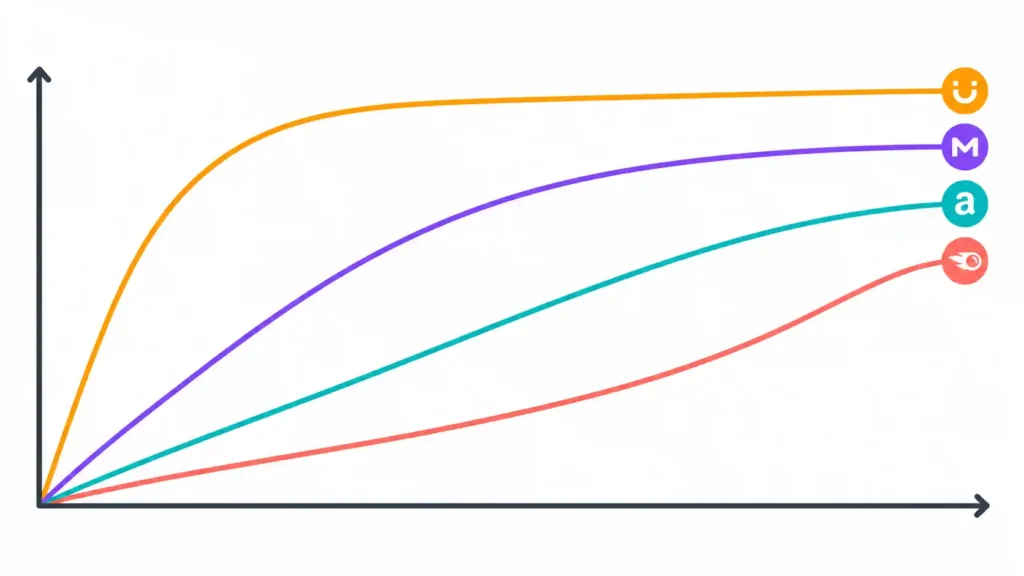
Ubersuggest is the fastest to learn, with a clean, minimal interface that most users navigate confidently within an hour, followed by Moz with its friendly onboarding and strong educational community.
Ahrefs requires a few weeks to navigate the full suite comfortably (rough estimate), while Semrush has the steepest learning curve given its 55 plus interconnected tools.
Ubersuggest Ease of Use
Ubersuggest was built with non-technical users as the primary audience. Navigation is immediate, options are limited to what matters most, and the interface presents data in plain language. Most users run a complete keyword research session within their first login session. There is no configuration required and no complex setup before the tool is useful.
Moz Ease of Use
Moz has invested significantly in making its tools accessible to users learning SEO for the first time. The Keyword Explorer’s Priority score removes ambiguity from keyword selection, the Site Crawl interface explains each issue category in plain language, and the MozBar extension provides immediate value without any dashboard learning required.
Ahrefs Ease of Use
Ahrefs requires a real learning investment. New users typically spend one to two weeks, as a rough estimate, before navigating the full suite confidently.
The volume of data, reports, and filters creates complexity that rewards investment in learning. Ahrefs addresses this with an extensive YouTube tutorial library, detailed documentation, and contextual tooltips throughout the interface.
Semrush Ease of Use
Semrush’s 55 plus integrated tools create the steepest learning curve of the four. New users typically need two to four weeks as a rough estimate before moving between tools efficiently.
The breadth of features is also Semrush’s strongest selling point, so the complexity is inherent to its value. Semrush Academy free certifications and an extensive self-service knowledge base support new users through the onboarding process.
Ease of Use Verdict
Ubersuggest wins on simplicity and speed to first productive result. Moz is the friendliest of the professional-grade options. Ahrefs rewards learning investment with research depth. Semrush is built for users who will use most of its tools regularly and can justify the onboarding time against the breadth of capability.
Semrush vs Ahrefs vs Moz vs Ubersuggest for Small Businesses
For small businesses with limited budgets and no dedicated SEO team, Ubersuggest at $29/month provides the cleanest starting point, while Moz Pro suits small businesses that want trusted authority metrics without a steep learning curve.
Small businesses ready to invest in professional-grade SEO will find Ahrefs the better long-term platform over Semrush if their primary need is organic search rather than PPC.
Best for Small Business on a Tight Budget
Ubersuggest at $29/month is the right starting tool. The interface requires no SEO training, AI Search Visibility is included without an add-on, and the lifetime deal option removes the recurring subscription cost entirely for users who commit long-term. The data limitations are real but acceptable at the early stages of a small business SEO strategy.
Best for Small Business Growing Organically
Ahrefs Lite at $129/month is the right upgrade when organic search becomes a primary revenue channel.
The Traffic Potential metric changes how you prioritise content investments, and the backlink and technical audit depth provides the competitive intelligence a growing site needs.
For small businesses that want trusted authority metrics at a lower price, Moz Standard at $99/month is a viable alternative before upgrading to Ahrefs.
Best for Small Business Running Paid and Organic Together
Semrush Pro is the right choice for any small business managing Google Ads alongside organic SEO. It is the only tool in this comparison with full PPC competitor research, making it uniquely valuable for businesses where paid and organic search run in parallel and competitor ad intelligence informs both channel strategies.
Which Tool Is Best for You?
These four tools serve distinct workflows: Semrush for all-in-one marketing including PPC, Ahrefs for backlink and organic research depth, Moz for beginners and authority-metric workflows, and Ubersuggest for budget-first solo content creators.
| Your Situation | Best Pick |
|---|---|
| Running SEO and PPC together | Semrush |
| Building and auditing backlink profiles | Ahrefs |
| Starting SEO for the first time | Moz or Ubersuggest |
| Working on a budget under $30/month | Ubersuggest |
| Agency managing multiple client sites | Semrush |
| Tracking AI Overview presence in 2026 | Semrush or Ahrefs |
| Solo blogger focused on content | Ahrefs or Ubersuggest |
| Small business with no SEO background | Moz |
| Need a free option for your own site | Ahrefs Free |
| Want a lifetime deal with no monthly fee | Ubersuggest |
FAQs About Semrush vs Ahrefs vs Moz vs Ubersuggest
Which is better: Semrush or Ahrefs in 2026?
Both are professional-grade platforms at similar price points with different strengths. Semrush is better if you need PPC research, content marketing tools, and broad multi-channel workflow coverage in one platform. Ahrefs is better if your primary focus is backlink analysis, organic competitive research, and technical site auditing. For most dedicated SEO specialists focused on organic search, Ahrefs produces slightly more accurate organic data.
Is Moz still worth using in 2026?
Yes, for specific use cases. Moz invented Domain Authority, which remains the most widely recognised link authority metric across the SEO industry. For beginners, small teams, and educators who need trusted metrics and a gentle learning curve, Moz Pro at $99/month delivers genuine value. It is not the right choice for enterprise teams, active link building campaigns, or anyone who needs AI visibility tracking.
Is Ubersuggest good enough for SEO in 2026?
For solo bloggers and freelancers doing basic keyword research, content planning, and simple site audits, yes. Ubersuggest’s AI Search Visibility feature, included at every plan level, is a genuine advantage over Moz at a lower price. Its limitations become apparent when targeting competitive niches where the accuracy gap versus Semrush and Ahrefs produces meaningfully different keyword and backlink data.
SEMrush vs Ahrefs vs Ubersuggest: which has the best keyword data?
Ahrefs leads on keyword data accuracy with about 28.7 billion keywords (reported) and the unique Traffic Potential metric that estimates total traffic rather than just single-keyword volume. Semrush is close behind with about 25 billion keywords (reported) and stronger four-category intent classification. Ubersuggest relies on estimated third-party data that is adequate for ideation but not competitive analysis at scale.
Compare Moz and Ahrefs: which is better for backlinks?
Ahrefs is significantly better for backlink research. Its index is among the largest and most frequently updated, with daily crawl updates and Link Gap analysis across five competitors simultaneously. Moz’s Link Explorer is functional for basic backlink checks and Spam Score monitoring, but it is not designed for active link building campaigns or comprehensive competitive backlink research at professional scale.
Which SEO tool is cheapest?
Ubersuggest is the most affordable at $29/month for the Individual plan, with a lifetime deal available periodically from $290. Moz Standard is next at $99/month. Ahrefs Lite starts at $129/month, and Semrush Pro at $139.95/month on monthly billing. For a genuinely free option with professional-grade data, Ahrefs Free gives verified site owners backlink data and site audit access at no cost.
Which SEO tool is best for AI search visibility?
Semrush is the most comprehensive for AI visibility tracking through Semrush One, covering ChatGPT, Gemini, and AI Overviews with custom prompt tracking. Ahrefs brand Radar provides brand mention tracking in AI prompts from $199/month as an add-on. Ubersuggest includes basic AI visibility on all paid plans. Moz has no AI search visibility feature as of mid-2026.
Which SEO tool should a beginner buy first?
Ubersuggest at $29/month is the easiest starting point with the cleanest interface and a 7-day free trial on monthly plans. Moz Pro at $99/month is the better choice for beginners who want industry-standard authority metrics alongside keyword and backlink research. Both Ahrefs and Semrush are better suited to users with some SEO experience who can extract value from their depth without being overwhelmed.
Is the Ubersuggest lifetime deal worth it?
For solo bloggers and freelancers who plan to use the tool long-term, yes. The Individual lifetime deal at $290 pays for itself after roughly 10 months compared to the monthly plan. Verify availability before purchasing, as lifetime deals are offered periodically rather than permanently.
Final Thought
The right choice in Semrush vs Ahrefs vs Moz vs Ubersuggest is determined not by which tool has the longest feature list but by which one matches the specific workflow, budget, and experience level you are working with today.
Start with the tool that fits your current situation and upgrade as your site and strategy grow to require more.
ALSO READ: