
Ahrefs is an enterprise-grade, all-in-one SEO suite starting at $129/month with a database of 28.7 billion keywords, built for agencies and advanced SEOs.
KWFinder (part of Mangools) is an affordable, beginner-friendly keyword tool starting at $29.90/month, ideal for bloggers and freelancers hunting low-competition keywords quickly.
Choose Ahrefs for full-funnel SEO; choose KWFinder for fast, budget-friendly keyword discovery.
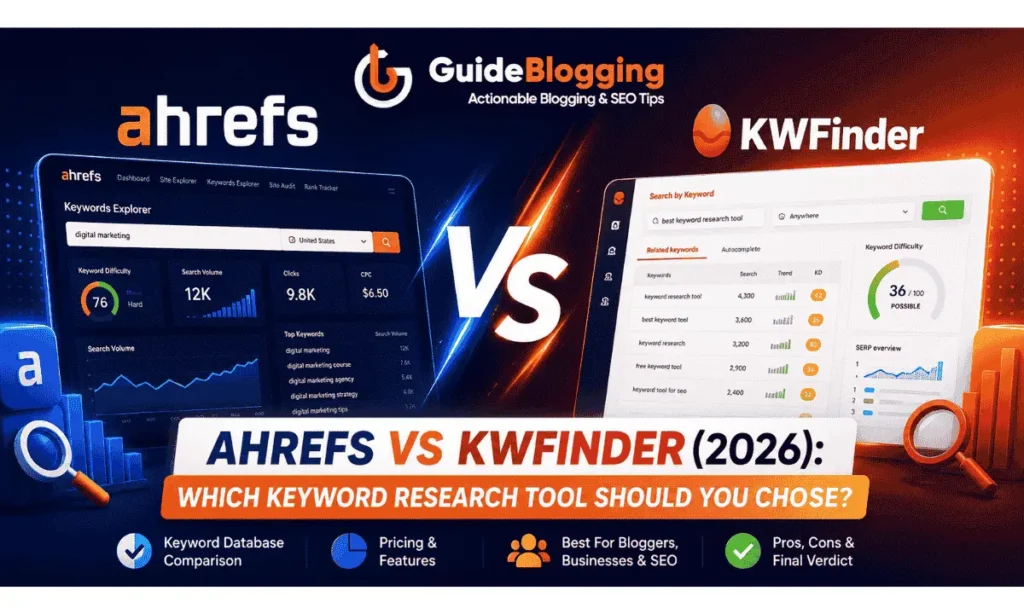
If you’ve spent more than five minutes researching keyword research tools, you’ve almost certainly come across both Ahrefs and KWFinder.
They’re both highly rated, both trusted by real SEOs and both claim to help you find the right keywords to rank on Google.
But here’s the thing: despite doing similar jobs on the surface, Ahrefs and KWFinder are built for completely different users, budgets, and workflows.
Choosing the wrong one doesn’t just waste money it can mean months of using a tool that either overwhelms you with data you don’t need, or leaves you missing the depth your strategy requires.
In this guide, we put Ahrefs vs KWFinder head-to-head across every category that actually matters: keyword research power, backlink data, site audit capabilities, pricing, ease of use, and real-world use cases.
By the time you finish reading, you’ll know exactly which tool fits your workflow and whether it’s worth your money in 2026.
Ahrefs vs KWFinder at a Glance
| Ahrefs | KWFinder | |
|---|---|---|
| Best For | Agencies, SEO pros, enterprise teams | Bloggers, freelancers, beginners |
| Keyword Database | 28.7 billion keywords | 2.5 billion keywords |
| KD Scoring | Backlink-profile based (more precise) | Color-coded, beginner-friendly |
| Starting Price | $129/month (Lite) | $29.90/month (Basic) |
| Free Option | Ahrefs Webmaster Tools (free) | 10-day free trial |
| Backlink Analysis | Full suite, industry-leading | Basic (via Mangools LinkMiner) |
| Rank Tracking | Built-in Rank Tracker | Via Mangools SERPWatcher |
| Learning Curve | Moderate to steep | Very easy |
What Are Ahrefs and KWFinder?.
Ahrefs Overview
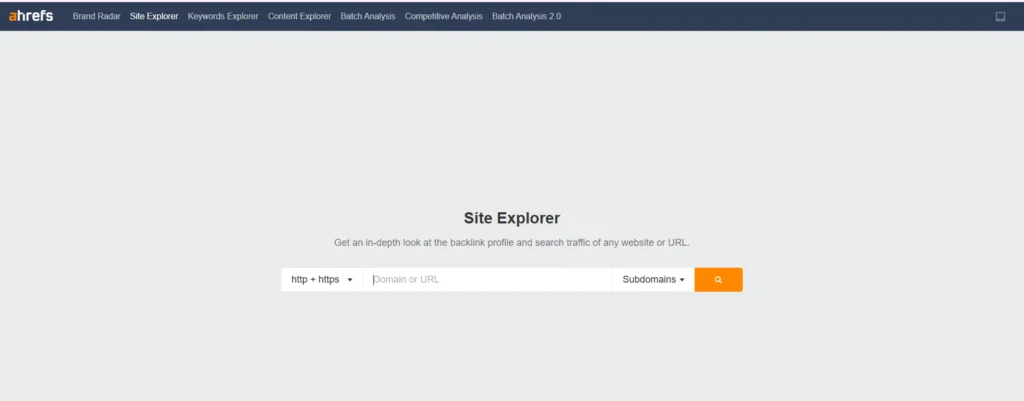
Ahrefs launched in 2010 and has grown into one of the most trusted all-in-one SEO platforms in the industry.
It’s used by everyone from solo bloggers to Fortune 500 marketing teams but it was genuinely built for SEO professionals who need depth, accuracy, and breadth across every part of the SEO workflow.
The core Ahrefs toolkit includes:
- Keywords Explorer: multi-search engine keyword research (Google, YouTube, Amazon, Bing, and more)
- Site Explorer: backlink analysis and organic traffic data for any domain
- Site Audit: technical SEO crawler that finds broken links, missing tags, redirect issues, and more
- Content Explorer: discover top-performing content by topic
- Rank Tracker: track organic keyword positions over time
Ahrefs Pros & Cons
| Ahrefs Pros | Ahrefs Cons |
|---|---|
| Largest keyword database in the industry (28.7B keywords) | Expensive entry point ($129/month minimum for Lite) |
| Best-in-class backlink data and analysis | Steep learning curve for beginners |
| Full technical site audit built in | Can be overwhelming for users who only need basic keyword research |
| Multi-platform keyword data (not just Google) | No true standalone free trial (free Webmaster Tools are limited to verified sites) |
| Superior competitor analysis and content gap tools |
Also Read: (Is Ahrefs Worth It in 2026? Full Review for SEO Beginners & Professionals)
KWFinder Overview (KWFinder Review)
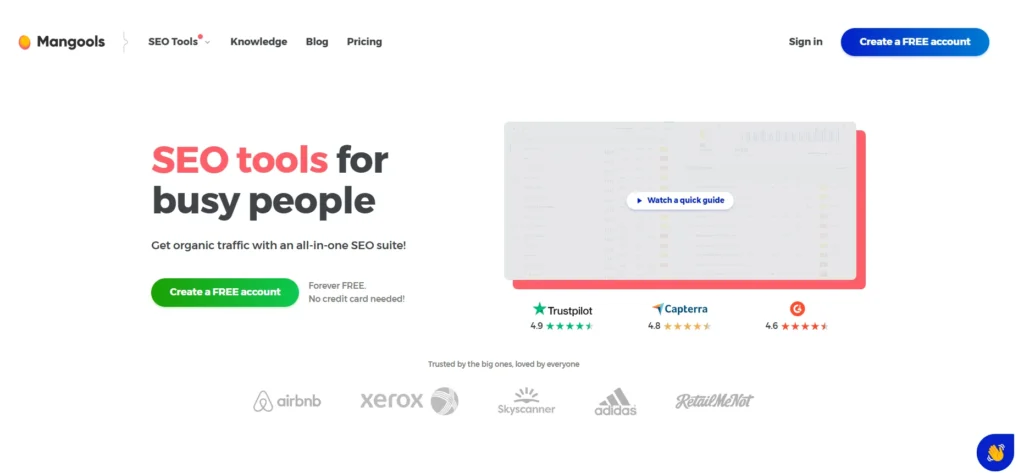
KWFinder is part of the Mangools suite of SEO tools, developed by a small team based in Bratislava, Slovakia.
Where Ahrefs tries to do everything, KWFinder does one thing extremely well: help you find low-competition, long-tail keywords fast, in a clean, intuitive interface that doesn’t require a manual to navigate.
The Mangools suite includes KWFinder (keyword research), SERPChecker (SERP analysis), SERPWatcher (rank tracking), LinkMiner (backlink checker), and SiteProfiler (domain overview) but each is a separate module, not a unified platform the way Ahrefs is.
| KWFinder Pros | KWFinder Cons |
|---|---|
| Extremely affordable entry point ($29.90/month) | No native site audit capability |
| Clean, beginner-friendly interface with virtually no learning curve | Smaller keyword database (~2.5B vs Ahrefs’ 28.7B) |
| Color-coded Keyword Difficulty (KD) scoring that’s easy to interpret | Backlink data requires a separate Mangools tool (LinkMiner) |
| 10-day free trial with no credit card required | Limited integrations and API access |
| Strong keyword suggestion quality for long-tail keyword discovery | Strong keyword suggestion quality for long-tail keyword discovery |
What Does a Typical SEO or Content Marketer Need?

Before comparing features side by side, it’s worth stepping back and defining what a well-rounded SEO tool should actually deliver.
Not every blogger or marketer needs every feature but knowing the full list helps you see clearly where each tool leaves gaps.
Core SEO Tool Requirements
A complete SEO toolkit should ideally cover:
- ✅ Backlink tester: check who links to your site (and your competitors’)
- ✅ Rank explorer: track where your pages rank for target keywords
- ✅ Website relevance measurement: understand topical authority and domain strength
- ✅ Content and keyword explorer: discover topics and keywords worth targeting
- ✅ Technical SEO audit: catch site-wide issues that hurt rankings
- ✅ Broken links detection: find and fix links that lead to 404 errors
- ✅ Broken redirects detection: identify redirect chains and loops
- ✅ Missing title tags and meta descriptions: catch on-page SEO gaps at scale
- ✅ Missing alt tags: identify accessibility and SEO issues on images
- ✅ Bulk backlink checker: analyze backlink profiles in bulk
- ✅ Domain comparison tool: benchmark your domain against competitors
- ✅ Website crawler: crawl your own site the way Googlebot does
Also Read: (Top Best SEO Audit Tools 2026 [In-Depth Review])
Ahrefs checks every single box on this list natively.
KWFinder checks keyword research, basic rank tracking (via SERPWatcher), and a surface-level domain overview (via SiteProfiler) but misses technical audit, bulk backlink analysis, and crawler capabilities unless you subscribe to additional Mangools tools.
Ahrefs Keyword Explorer vs KWFinder Head-to-Head Feature Comparison
1. Keyword Database Size and Coverage
The database gap between these two tools is significant. Ahrefs indexes approximately 28.7 billion keywords across Google, YouTube, Amazon, Bing, Baidu, and more which means you can research keywords for content, video, and e-commerce all in one place.
KWFinder works with approximately 2.5 billion keywords, curated primarily for Google search.
In practice, both databases cover the most commonly searched terms well.
The gap shows most in obscure niches, international markets, and non-Google platforms where Ahrefs’ broader crawl pulls in results that KWFinder doesn’t have.
Verdict: Ahrefs wins on raw database size and multi-platform coverage.
KWFinder’s curated database is more than enough for most bloggers targeting Google.
2. Keyword Difficulty Scoring
This is one of the most important differences between the two tools, and it’s frequently misunderstood.
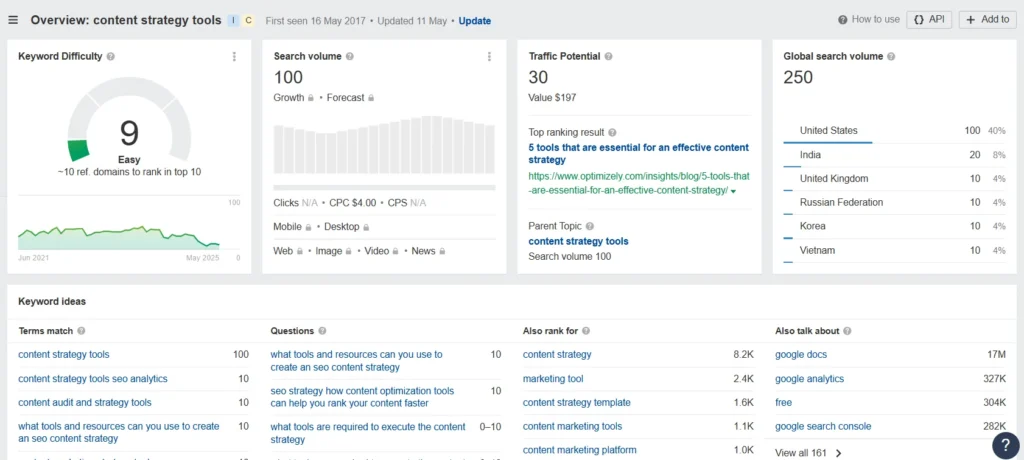
Ahrefs Keyword Difficulty (KD) is calculated based on the backlink profiles of pages currently ranking in the top 10 for a keyword.
If those pages have thousands of referring domains, the KD score reflects that accurately making it a reliable benchmark for established sites with link equity.
However, for newer or smaller sites, this scoring can make everything look difficult, because it’s measuring the competition, not your ability to break in.
KWFinder’s KD score uses a color-coded system (green = easy, yellow = medium, red = hard) that accounts for multiple on-page and off-page factors and is deliberately tuned to be more achievable-looking for newer sites.
This makes it more practical and immediately actionable for beginner bloggers and affiliate marketers who need to identify opportunities fast.
Verdict: Ahrefs KD is more technically accurate; KWFinder KD is more actionable for beginners.
If you’re running a new blog or affiliate site, KWFinder’s scoring system will feel more usable in day-to-day practice.
3. Autocomplete, Questions & SERP Features
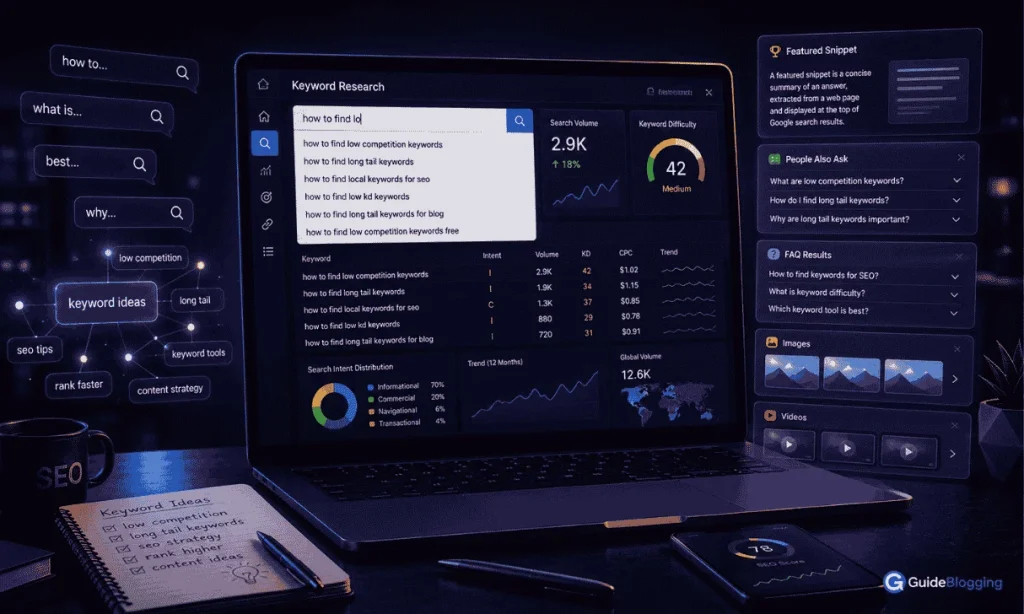
KWFinder’s strength in keyword discovery lies in its autocomplete suggestions and People Also Ask coverage both of which are excellent for bloggers who want to build topic clusters and FAQ-style content.
Its SERP feature detection shows you exactly what types of results appear for each keyword (featured snippets, local packs, image packs, etc.) so you know what type of content to create before you start writing.
Ahrefs has an equivalent Questions filter in its Keywords Explorer, along with parent topic grouping, keyword clustering, and traffic potential estimates that go significantly deeper.
But for pure keyword ideation at speed, KWFinder’s clean interface makes the process faster.
Verdict: KWFinder is faster for quick ideation. Ahrefs is more comprehensive once you need depth.
4. Backlink Data
This category isn’t a close contest.
Ahrefs has one of the best backlink databases in the SEO industry its index is updated constantly, its data is reliable, and the filtering and analysis capabilities inside Site Explorer are genuinely industry-leading.
You can check referring domains, anchor text distribution, link velocity, DR of linking pages, and lost/gained backlinks all from one dashboard.
KWFinder has no native backlink tool. Backlink analysis requires a separate Mangools subscription to LinkMiner which means extra cost and a separate workflow.
LinkMiner is decent for basic backlink research but doesn’t come close to Ahrefs in depth or database size.
Verdict: Ahrefs wins decisively. If backlink analysis is important to your workflow at all, KWFinder alone won’t cut it.
5. Site Audit & Technical SEO
Ahrefs’ Site Audit crawls your entire website at scheduled intervals, identifies technical issues, and organizes them by severity.
It catches broken links, broken redirects, missing meta titles and descriptions, missing alt tags, slow pages, duplicate content, and much more the full checklist we outlined above.
KWFinder has no site audit capability whatsoever.
If you need technical SEO analysis, you’ll need a separate tool entirely which adds cost and complexity to your workflow.
Verdict: Ahrefs wins outright. Technical SEO is not part of what KWFinder does.
6. Rank Tracking
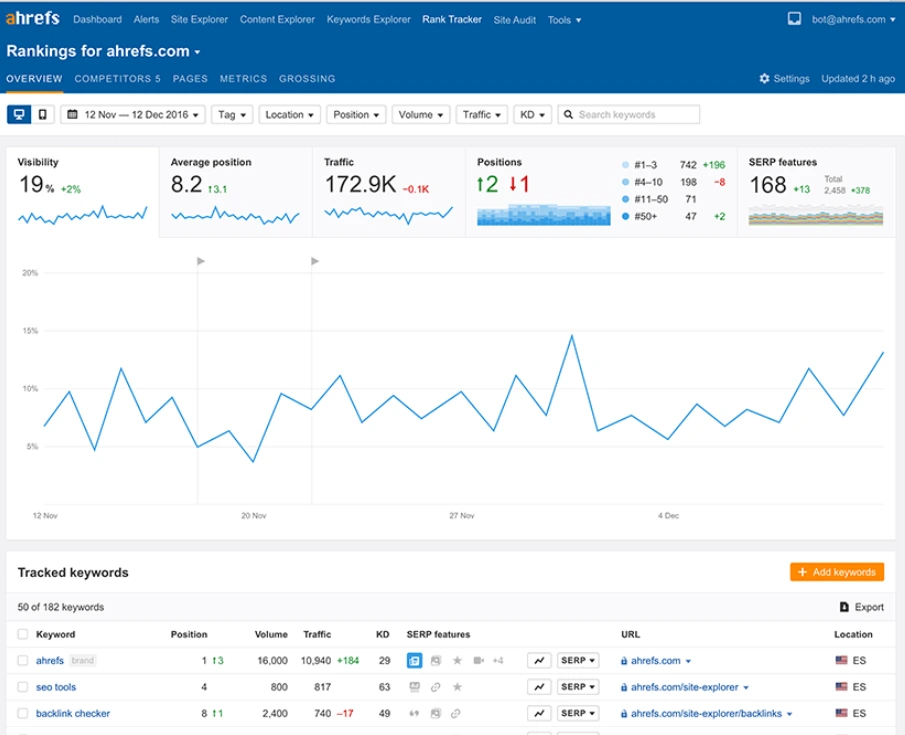
Ahrefs Rank Tracker is included in all paid plans and lets you track keyword positions daily, compare progress over time, monitor competitors’ rankings for the same keywords, and set up visibility score dashboards for client reporting.
KWFinder uses Mangools’ SERPWatcher for rank tracking it’s a separate module within the Mangools suite.
It covers the basics (daily position checks, movement alerts) and is well-suited for bloggers with a smaller set of keywords to track.
Verdict: Ahrefs wins for agency/multi-site use. SERPWatcher is adequate for a solo blogger tracking their own site.
7. Content Planning & Competitor Keyword Analysis
Ahrefs offers a full content planning toolkit: Content Explorer (discover top-performing content by topic), Content Gap analysis (find keywords competitors rank for that you don’t), the top-pages report per competitor domain, and backlink-based content filtering to see what’s earning the most links.
KWFinder offers competitor keyword analysis via URL search you can enter a competitor’s domain and see what keywords it ranks for. It’s simpler and less detailed, but functional for basic research.
Verdict: Ahrefs is significantly more powerful for content strategy. KWFinder covers the basics for simple competitor research.
8. User Interface and Ease of Use
This is where KWFinder genuinely wins. Its interface is clean, minimal, and designed to be instantly usable without documentation. New users can start finding keywords within minutes of signing up.
Ahrefs is more complex it has far more data points, more filtering options, and more interconnected tools. The learning curve is real.
That said, Ahrefs does a good job of supporting new users with linked documentation, tooltips, and a well-produced YouTube library of tutorials.
Verdict: KWFinder wins for ease of use. Ahrefs wins once you’ve climbed the learning curve.
9. Speed and Performance
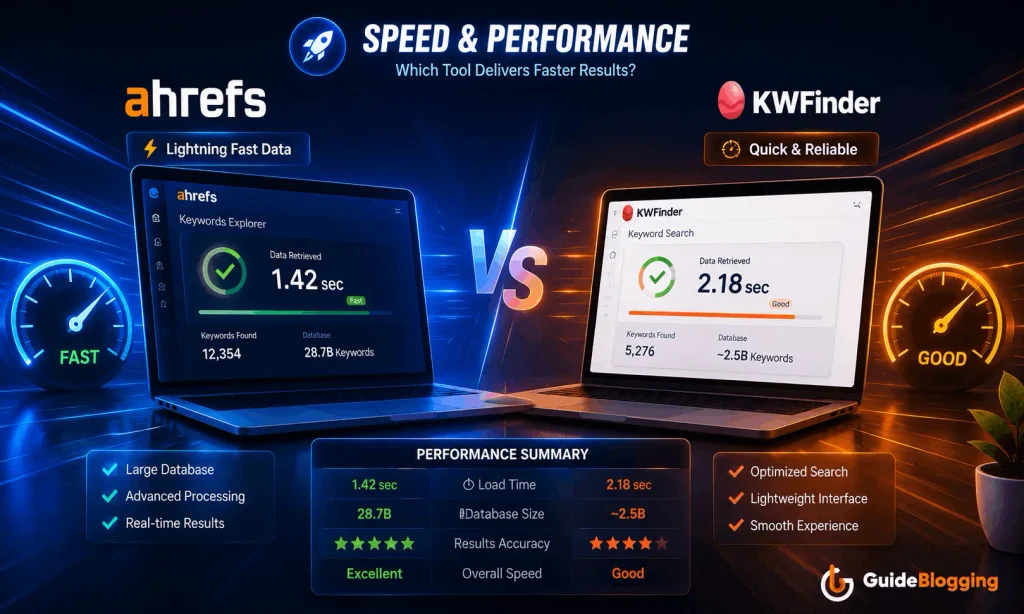
Both tools are cloud-based and perform well on standard connections.
Ahrefs can feel slower when running large-scale crawls or bulk keyword exports, which is expected given the volume of data involved.
KWFinder is consistently fast because it’s doing less heavy lifting.
10. Integration and API
Ahrefs offers a full API for developers and data teams, integrates with Google Search Console, and connects to Looker Studio for custom reporting dashboards. It’s built for teams that want to pipe data into their own workflows.
KWFinder has a limited API and minimal third-party integrations. It’s a standalone tool, not a data platform.
11. Customer Support
Ahrefs uses AI-first chat support that responds quickly but can feel impersonal for complex issues. An extensive help center and YouTube channel fill most gaps.
KWFinder/Mangools uses human email support during business hours, which users consistently rate highly for quality even if response times can be slower than Ahrefs’ AI chat.
Also Read: (Ahrefs vs Majestic (2026): Which SEO Tool Should You Choose?)
KWFinder vs Ahrefs Real Keyword Research Comparison

Let’s run the same seed keyword through both tools to show you what each actually returns in practice. The keyword: “best web hosting for bloggers”.
In KWFinder, entering this keyword returns roughly 150–200 related suggestions with clear KD scores color-coded green, yellow, and red.
Long-tail variations like “best cheap web hosting for beginner bloggers” and “best managed WordPress hosting for blogs” appear immediately.
The SERP preview shows you exactly who’s ranking in the top 10 for the head term. KD for the main keyword shows as medium-high (around 45/100 on KWFinder’s scale) still potentially approachable for a newer site in KWFinder’s framing.
In Ahrefs Keywords Explorer: The same query returns 1,000+ keyword ideas across matching terms, related terms, questions, and search suggestions.
You get traffic potential (not just search volume), click data, parent topic grouping, and a KD score based on backlink profiles of current top-ranking pages.
The Questions tab surfaces queries like “what is the best web hosting for new bloggers?” and “is Bluehost good for bloggers?” immediate content angle ideas.
KD shows as 50–60 (Ahrefs scale), with the insight that the top-ranking pages carry 80–200+ referring domains each.
Takeaway: KWFinder gets you to actionable keyword ideas faster with a friendlier interface.
Ahrefs shows you the full competitive picture who you’re up against, what it will take to win, and dozens of related opportunities you wouldn’t have found otherwise.
Pricing Comparison Ahrefs vs KWFinder in 2026
KWFinder Pricing
KWFinder is priced through the Mangools suite:
| Plan | Monthly Price | Annual Price |
|---|---|---|
| Basic | $49/month | $29.90/month |
| Premium | $69/month | $44.90/month |
| Agency | $129/month | $89.90/month |
All plans include a 10-day free trial with no credit card required one of the best try-before-you-buy offers in the SEO tool space.
The Basic plan covers up to 100 keyword lookups per 24 hours, 200 keyword suggestions per search, and basic SERP analysis. It’s genuinely usable for a solo blogger or small affiliate site.
Ahrefs Pricing
| Plan | Monthly Price |
|---|---|
| Starter | $29/month |
| Lite | $129/month |
| Standard | $249/month |
| Advanced | $449/month |
| Enterprise | $1,499/month |
The Starter plan at $29/month is extremely limited mainly useful for occasional keyword lookups and basic site exploration.
Serious users need at least the Lite plan at $129/month for rank tracking, full keyword data, and site audit access. Ahrefs Webmaster Tools is free for verified site owners and includes Site Audit and basic backlink data a genuinely useful free entry point.
Which Gives You Better Value for Your Budget?
- Budget under $50/month: KWFinder (Mangools Basic, billed annually) is the clear winner. You get a solid keyword research tool with a clean interface, a 10-day free trial, and everything a beginner blogger needs.
- Budget $129+/month: Ahrefs Lite delivers dramatically more value per dollar keyword research, backlink analysis, site audit, rank tracking, and content planning all under one roof. You’d need to pay for multiple Mangools tools plus a separate backlink tool to replicate a fraction of what Ahrefs provides at this tier.
- The “Use Both” Angle: Some SEOs especially affiliate marketers use KWFinder for fast, budget-friendly keyword discovery and Ahrefs for competitive backlink and content gap research. It’s a legitimate approach if your budget allows, and it gives you the best of both worlds.
Use Cases Which Tool Fits Your Situation?

Scenario: 1 The Beginner Blogger
You’re starting a blog from scratch, writing about a niche you’re passionate about, and you have a tight budget. → KWFinder wins. It’s affordable, easy to learn, and gives you exactly what you need: low-competition keyword ideas you can realistically rank for as a new site.
Scenario: 2 The Affiliate Marketer
You’re building affiliate content around product comparisons, reviews, and buying guides. KWFinder for initial niche discovery; Ahrefs for competitive backlink gap analysis once you’re ready to scale.
The combination is particularly powerful for this use case.
Also Read: (How to Start Affiliate Marketing in India 2026)
Scenario: 3 The Local Business Owner
You want to rank for local service keywords in your city without hiring an agency. KWFinder wins. The local filtering and clean interface make it easy to find geographic keyword opportunities without a steep learning curve or a hefty monthly bill.
Scenario 4: The Freelance SEO Consultant
You’re managing SEO for 3–5 client sites and need to produce reports, find opportunities, and track results professionally. → Ahrefs wins.
The client reporting features, competitor analysis depth, and site audit capabilities are essential at this level of work. KWFinder doesn’t scale with you.
Scenario: 5 The SEO Agency or Enterprise Team
You’re managing 20+ sites, running technical audits, and building link campaigns. Ahrefs is the only real choice here. The data depth, API access, Looker Studio integration, and enterprise plan features are built for this kind of operation.
Ahrefs or KWFinder Which Better for You?
Here’s the honest bottom line: neither tool is objectively “better” they’re built for different people at different stages.
Choose KWFinder if you’re a beginner blogger, solo affiliate marketer, or small business owner who wants a clean, affordable keyword research tool with a low learning curve.
At $29.90/month (billed annually), it’s one of the best value tools in the market for what it does, and the 10-day free trial means you can verify that before spending a cent.
Choose Ahrefs if you’re a professional SEO, agency owner, or serious blogger who needs the full picture backlink analysis, technical site audits, competitor intelligence, and keyword research all under one roof.
Yes, $129/month is a real investment. But if you’re using it properly, the ROI is there.
Use both if your budget allows KWFinder for fast keyword discovery during content planning, Ahrefs for competitive research and link building. Many affiliate marketers find this combination genuinely pays for itself.
FAQs Realted to Ahrefs vs KWFinder
What is the difference between Ahrefs and KWFinder?
Ahrefs is a full-suite SEO platform covering keyword research, backlink analysis, site audits, rank tracking, and content research.
KWFinder is a specialized keyword research tool focused on finding low-competition keywords quickly, with a much lower price point and simpler interface. Ahrefs starts at $129/month; KWFinder starts at $29.90/month.
Ahrefs KW Explorer vs KWFinder which is better for keyword research?
Ahrefs Keywords Explorer wins on raw database size (28.7B vs 2.5B keywords), multi-platform coverage, and depth of filtering. KWFinder wins on ease of use, beginner-friendly KD scoring, and affordability.
For pure keyword discovery on a budget, KWFinder is excellent. For comprehensive research used by an experienced SEO, Ahrefs Keywords Explorer is the better tool.
Which one is cheaper, Ahrefs or KWFinder?
KWFinder is significantly cheaper. The Mangools Basic plan (which includes KWFinder) costs $29.90/month billed annually. Ahrefs starts at $29/month for the Starter plan (very limited) and $129/month for the Lite plan with full features.
Who should choose KWFinder?
Beginner bloggers, solo affiliate marketers, local business owners, and anyone who wants a simple, affordable keyword research tool without a steep learning curve.
Who should choose Ahrefs?
Professional SEOs, content agencies, serious bloggers with growing sites, and anyone who needs backlink analysis, site audits, and competitor intelligence alongside keyword research.
Can I use KWFinder and Ahrefs together?
Yes and many affiliate marketers and content agencies do exactly this. KWFinder for fast, budget-friendly keyword discovery during content planning; Ahrefs for competitive backlink analysis and technical audits.
The combination gives you broad coverage without relying on one tool for everything.
Is KWFinder good for beginners?
Yes KWFinder is one of the most beginner-friendly keyword tools on the market. Its interface is clean, its KD scores are color-coded and easy to interpret, and the 10-day free trial means you can learn it risk-free.
Does KWFinder have a free trial?
Yes. Mangools offers a 10-day free trial with no credit card required, giving you access to all KWFinder features during the trial period.
Is Ahrefs worth the price in 2026?
For professional SEOs, agency owners, and bloggers who rely on SEO for their income yes.
The data accuracy, breadth of features, and time saved on research justify the $129/month investment if you’re using the tool consistently. For beginners or very small sites, KWFinder is the smarter starting point.
Final Thoughts on Ahrefs vs KWFinder
Both Ahrefs and KWFinder are legitimate, well-built tools they’re just designed for different people. If you’re starting, KWFinder gives you everything you need at a price that makes sense. If you’re scaling up, Ahrefs is the tool that grows with you.
Don’t let the decision paralyze you. Start where you are. KWFinder’s 10-day trial costs you nothing to explore and Ahrefs Webmaster Tools is free for your own site. Try both, see which fits your actual workflow, and commit once you know.
ALSO READ



7 thoughts on “Ahrefs vs KWFinder 2026: Which Keyword Research Tool Should You Choose?”