
Quick Answer: Off page SEO refers to all actions taken outside your own website to build authority, trust, and rankings. The most effective off page SEO tactics in 2026 include earning high-quality backlinks, guest blogging, digital PR outreach, broken link building, brand mention conversion, local citations, influencer partnerships, podcast appearances, and social media amplification. All 20 tactics are covered below with actionable steps.
You can have the best-written, fastest-loading, perfectly optimized website in your niche and still be invisible on Google. The reason is almost always the same: no one outside your site is vouching for you.
Off page SEO tactics are what change that. They are every action you take beyond your own website to tell search engines that your content is credible, authoritative, and worth ranking.
In 2026, this goes far beyond collecting backlinks. Google now weighs E-E-A-T signals, brand entity recognition, AI platform visibility, and the full breadth of your digital reputation when deciding where you land in the results.
This guide covers all 20 off page SEO techniques you need, organized by category so you know exactly which activities to prioritize at your current stage, whether you are a beginner blogger, a growing affiliate site, or an established brand looking to scale.
What is Off-Page SEO?
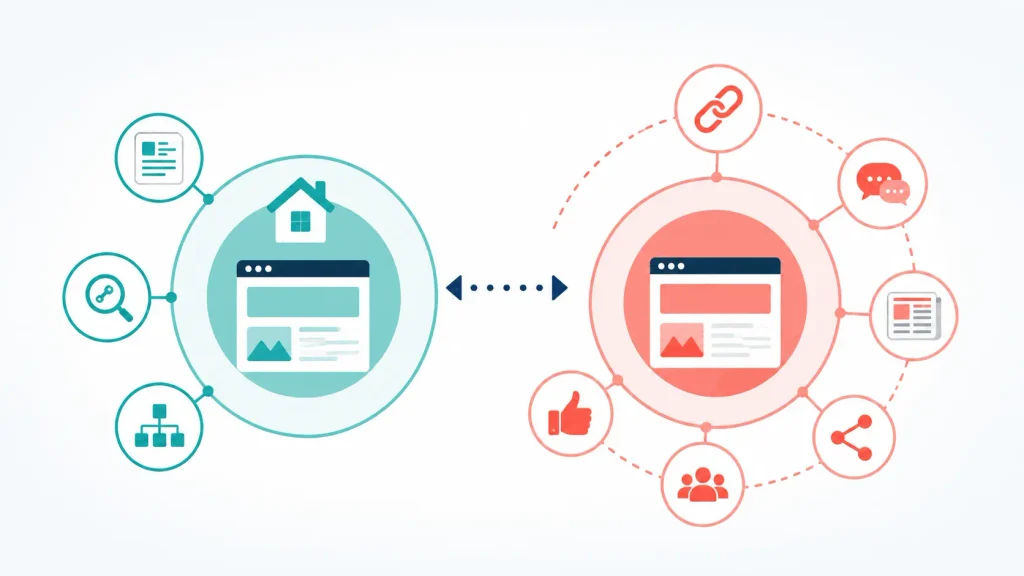
Off page SEO is every action you take outside your own website to improve your search engine rankings, authority, and visibility.
While on page SEO tells Google what your site is about, off page SEO tells Google how much the rest of the internet trusts it.
Google cannot visit every website and personally vouch for its quality. Instead, it uses signals from across the web to make that judgment.
When trusted, relevant websites link to yours, when your brand gets mentioned in reputable publications, when people actively search for your name, and when your content gets shared widely, Google takes all of that as evidence that your site deserves a higher position in search results.
The distinction between on page and off page SEO is worth understanding clearly:
| On-Page SEO | Off-Page SEO | |
|---|---|---|
| Where it happens | On your website | Across the internet |
| What it covers | Content, keywords, technical structure | Backlinks, brand mentions, PR, social signals |
| Who controls it | You, directly | Partly you, partly others |
| Primary goal | Relevance | Authority and trust |
Neither works as well without the other. On-page SEO without off-page SEO produces content that Google cannot fully trust.
Off-page SEO without on-page SEO sends links to a weak foundation. Together, they consistently produce rankings.
Why Off-Page SEO Matters More Than Ever in 2026
Google’s E-E-A-T framework, which stands for Experience, Expertise, Authoritativeness, and Trustworthiness, has fundamentally changed what it means to compete in search.
These signals cannot be manufactured on your own website alone. They come from who links to you, who mentions you, where your content appears, and what reputation signals exist around your brand entity across the web.
The growth of AI-powered search surfaces adds another dimension. Google AI Overviews, Perplexity, and similar tools do not pull from every website equally.
They source from sites they consider authoritative, well-cited, and credible. Whether your content appears in these AI-generated answers is now determined almost entirely by your off-page authority profile.
There is also a clear shift happening from pure link counting to brand entity recognition.
Google increasingly treats your brand as an entity in its knowledge graph, not just a domain.
When your brand appears consistently across publications, podcasts, social platforms, and directories, Google builds a more complete picture of who you are and how much you can be trusted.
Seo Off page activities that build this entity presence now carry as much weight as individual backlink acquisition.
Off Page SEO Factors That Google Actually Weighs
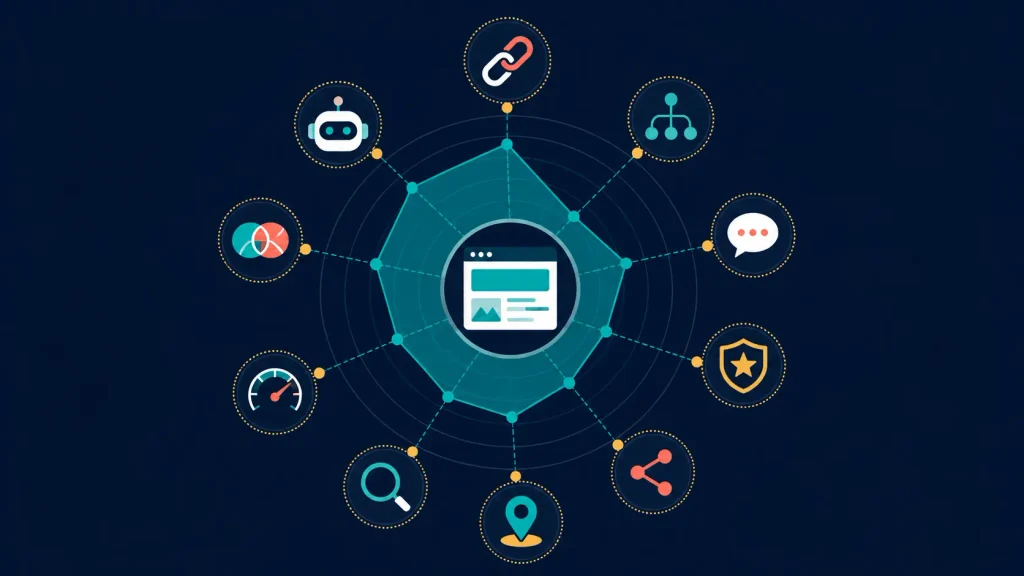
Most off page SEO guides talk about what to do. This section covers why each Off Page SEO Factors list actually matters in Google’s ranking evaluation so that you can prioritize intelligently.
- Backlink quality and relevance: A link from a high-authority domain in your niche carries far more weight than dozens of links from unrelated or low-authority sites. Topical relevance and natural anchor text distribution both matter.
- Referring domain diversity: 100 links from 100 different domains signals organic, earned authority. 100 links from one domain signal something artificial.
- Brand mentions: Google can recognize your brand being mentioned even without a hyperlink. These unlinked citations still contribute to trust signals.
- E-E-A-T signals: Author credentials on content, expert quotes, media coverage, verified reviews, and professional associations all feed into how Google evaluates your expertise and trustworthiness.
- Social signals: While social shares are not direct ranking factors, they increase content visibility and the probability of earning organic backlinks from people who discover the content.
- Local citations: For businesses serving specific locations, consistency of your name, address, and phone number across online directories is a direct local ranking factor.
- Brand search volume: How often people search your brand name directly signals to Google that your brand has real-world demand and recognition.
- Link velocity: How quickly you are acquiring backlinks matters. A sudden unnatural spike triggers algorithmic scrutiny. Steady, consistent growth over time is what Google rewards.
- Co-citation patterns: Being mentioned alongside well-known authoritative sources in the same context tells Google what kind of company you keep.
- AI platform visibility: Being cited or referenced by AI tools like ChatGPT, Gemini, or Perplexity is an emerging off-page signal that reflects the same underlying trust factors Google already measures.
Core Off Page SEO Tactics: Link Building
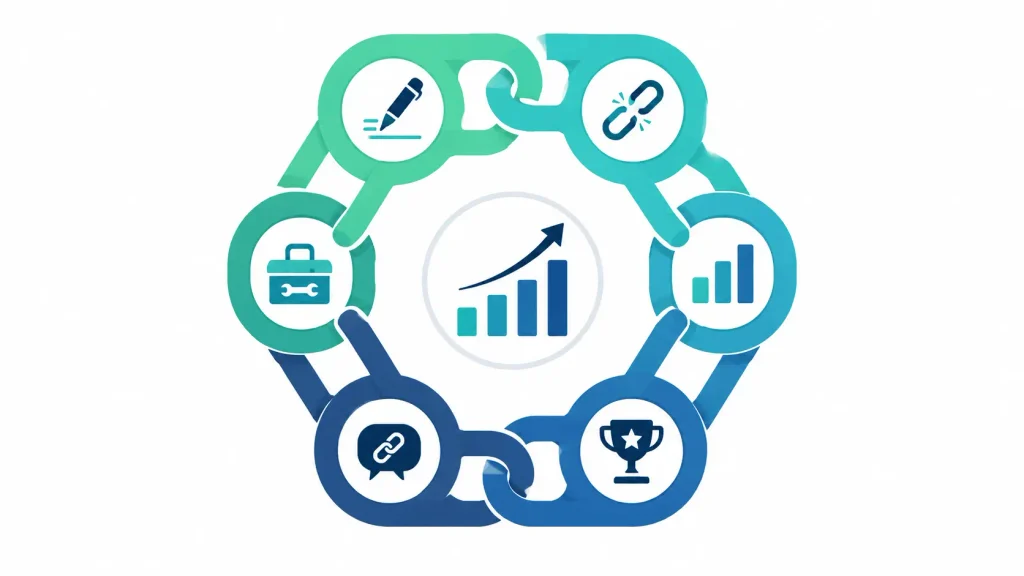
Off-page SEO isn’t a single activity it’s an ecosystem of tactics that work together to signal trust, relevance, and authority to search engines.
The tactics below cover everything from foundational link building to modern E-E-A-T signals and AI discovery. Work through them in the order that matches your current site stage: beginners should start with tactics 1 through 6, intermediate bloggers with 7 through 14, and advanced publishers with 15 through 20.
1. Guest Blogging on Reputable Sites
Guest blogging is one of the most reliable off-page SEO techniques for building authority links when done correctly. The key word is correctly. Publishing thin, keyword-stuffed articles on low-authority blogs to get a link is not guest blogging. It is a tactic Google actively penalizes.
Effective guest blogging means contributing genuinely valuable content to sites that already have an established, relevant audience in your niche. The link you earn should be a natural result of the value you contributed, not the primary reason the post was written.
How to find the right guest posting opportunities: Use search operators like your niche + "write for us" or your niche + "guest post guidelines" in Google.
You can also run a competitor backlink analysis in Ahrefs or Semrush if a site linked to your competitor through a guest post, there’s a strong chance they’ll accept a pitch from you too.
What makes a guest post earn a real link: The host site should have a Domain Rating (DR) of at least 40+, be genuinely relevant to your niche, and attract real editorial traffic.
Your author bio should include your real name, a brief credential line, and a link back to your site. Avoid exact-match anchor text keep it natural and branded.
What to avoid: Low-authority “guest post farms” that accept any submission, irrelevant niches, and sites with thin traffic. Google’s link spam systems have grown sophisticated enough to identify and discount links from these properties, so links from them can be neutral at best and harmful at worst.
Pro tip: Start with sites in the DR 40–60 range where editorial standards are real but competition for placement isn’t as fierce as the top-tier publications. Build your guest posting portfolio here before targeting higher-authority sites.
Also Read: Best Websites to Buy Backlinks for Your Blog 2026
2. Broken Link Building
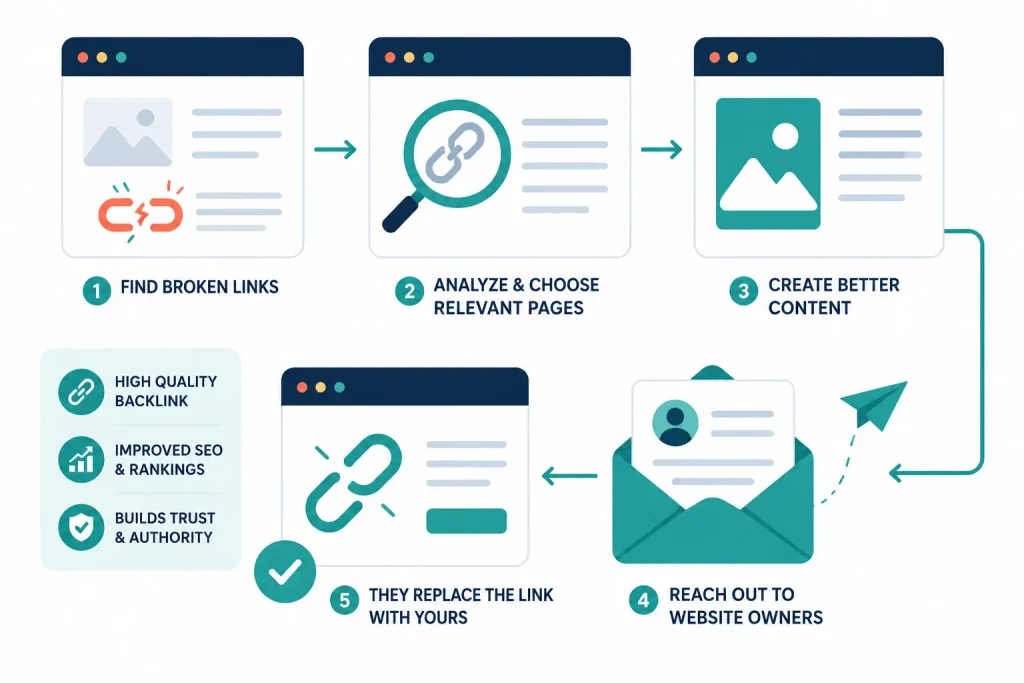
Broken link building is one of the highest-ROI link building tactics available because it benefits everyone involved. You find a link on a relevant website that points to a dead page.
You reach out to the site owner, let them know about the broken link, and suggest your relevant content as a replacement.
The site owner fixes a problem they did not know they had, and you earn a link.
Step-by-step process:
- Use Ahrefs’ Site Explorer or Content Explorer to find pages in your niche that have significant referring domains but are returning a 404 status
- Verify that you either already have a piece of content that’s a relevant replacement, or that creating one is realistic
- Export the list of sites that link to the broken URL these are your outreach targets
- Send a simple, helpful email: flag the broken link, mention that you found it while reading their content, and suggest your resource as a replacement
- Don’t be pushy one follow-up maximum
Why site owners respond: You’re doing them a genuine favor. The ask (replace a dead link with a live one) is low friction compared to a cold guest post pitch, which is why response rates for broken link building outreach are consistently higher than traditional link requests.
What to look for: Resource pages, “best tools” lists, “helpful links” roundups, and tutorial pages in your niche are prime targets they link to many external resources and are more likely to have accumulated broken links over time.
3. Publish Original Research and Become a Data Source
If there is one off page SEO tactics that scales without requiring ongoing manual outreach effort, it’s publishing original data that other writers in your niche need to cite.
Every day, bloggers, journalists, and content teams are searching for statistics to back up the claims they’re making. When they find a statistic they want to use, they link back to the source.
If your site is the source, you earn that backlink passively often from sites far more authoritative than anything you’d reach through direct outreach.
What counts as original research for a blogger:
- A reader survey (even 100–200 responses is publishable)
- An analysis of publicly available data (industry reports, government data, social media trends)
- A compiled industry statistic roundup with original commentary
- A case study from your own site’s performance data
How to amplify your research: Once published, don’t wait for links to come on their own. Email journalists and bloggers who regularly cover your topic and let them know your study exists.
A simple message like “I noticed you write about [topic] I just published a survey with X respondents on [related angle] that might be useful for a future piece” is all it takes. Include the headline finding so they can see the value immediately.
Why this is durable: Unlike guest posts, which require ongoing effort, a solid original study can earn links for years. Some of the most linked-to pages on the internet are years-old research articles that are still being cited today.
4. The Skyscraper Technique
The skyscraper technique is one of the most effective advanced off-page SEO tactics for sites that already have some content published.
Find the most-linked piece of content on a topic you cover using Ahrefs Content Explorer or Semrush. Study why it earned so many links.
Then create a significantly better version: more current, more comprehensive, better formatted, with original examples and data the original lacks.
Once published, reach out to every site linking to the original piece and show them your improved version. Your outreach message is simple: here is a better, more recent resource on this topic your readers would find more valuable.
The success of this tactic depends entirely on your content genuinely being better.
A superficially longer article with no additional value will not convince anyone to switch their link.
5. Unlinked brand Mention Conversion
Every time your brand gets mentioned online without a hyperlink, you have an opportunity to earn a link from someone who already likes you enough to reference you.
This is the easiest link-building ask you will ever make because the relationship already exists.
Set up Google Alerts for your brand name, your site domain, and your name.
Check the results weekly. When you find a mention without a link, send a short, friendly email to the author thanking them for the mention and politely asking if they would add a link to the reference.
Conversion rates on these requests are consistently higher than any cold outreach because there is zero discovery friction.
For more systematic monitoring, Semrush brand Monitoring and Ahrefs Content Explorer both allow you to track brand mentions at scale across the web.
Also Read: Ahrefs vs Majestic (2026): Which SEO Tool Should You Choose?
6. Strategic Resource Link Building
Creating free, genuinely useful resources is one of the most sustainable link-building tactics for bloggers and affiliate marketers.
When you publish a free tool, template, calculator, or comprehensive checklist that others in your niche want to share with their readers, links accumulate naturally over time without ongoing outreach effort.
Examples relevant to a blogging and affiliate marketing audience: a free SEO audit checklist, a content calendar template, a keyword research spreadsheet, or a commission calculator for affiliate marketers.
Each of these earns links from sites that recommend useful free resources to their readers, and those recommendations happen without you asking.
Also Read: Is Affiliate Marketing Legit in 2026? Uncovering the Truth
7. Digital PR and Media Outreach
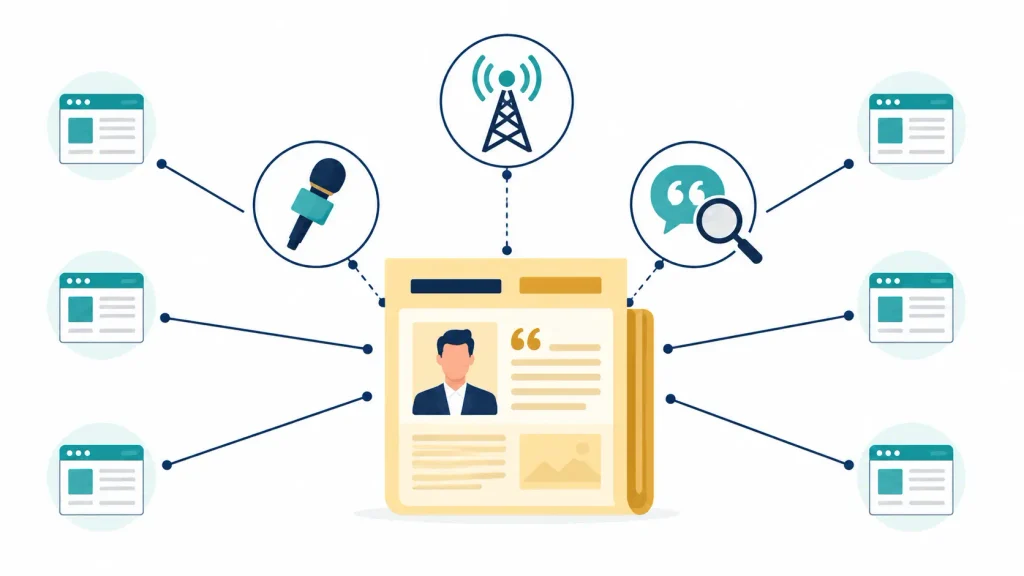
Digital PR means actively working to get your brand, expertise, or content featured in online news outlets, industry publications, and authority media sites.
The SEO value is significant: editorial links from news and media sites carry some of the highest trust scores in any backlink profile.
The most accessible starting point journalist query platforms:
- HARO (Help a Reporter Out) / Connectively: Journalists submit requests for expert sources, and you respond with your insight. A successful response earns you a quote and typically a link in the published article.
- Featured.com: Similar model, with requests from content teams at major publications
- Qwoted and SourceBottle: Alternatives with slightly different publication mixes
How to stand out in journalist responses: Be specific, be fast (respond within the first few hours of a query going live), and lead with the most quotable insight immediately. Journalists get dozens of pitches they’re looking for the one that makes their article better, not the one that’s most thorough.
For proactive pitching: Track trending stories in your niche using Google Trends and BuzzSumo. When a topic is heating up that you have genuine expertise on, pitch journalists covering it before they start sourcing.
8. Press Release Distribution
Press releases earn SEO value only when there is genuine news worth covering. A new product launch, an original research publication, a significant partnership, or a company milestone that actual readers would find interesting all qualify.
A press release written purely to manufacture links from wire distribution services is a waste of budget and can trigger scrutiny if the content is low quality.
When you do have real news, PR Newswire, Business Wire, and EIN Presswire are the major distribution platforms. For smaller budgets, PRLog and PR.com offer free distribution with smaller reach.
The links earned from press release distribution itself are typically no-follow and carry limited direct SEO value. The real value comes when journalists pick up the story and cover it editorially on their own publication.
9. Participate in Expert Roundups and Interviews
Expert roundup posts, where a blogger collects perspectives from multiple industry experts on a single question, are consistently popular in the blogging and marketing niches.
Being featured in one earns you a link, positions you as a recognized voice in your field, and often introduces you to the host blogger’s audience.
How to get included in roundups:
- Search Google for
"[your niche]" + "expert roundup"to find blogs in your space that regularly publish this format - Reach out directly to the publisher with a specific, useful answer to the kind of question they typically pose
- Build relationships with other bloggers in your niche roundup invitations often circulate within existing professional networks
Podcast appearances are an underused link-building and authority-building channel for bloggers.
Podcast show notes almost always include a link to the guest’s website, and those links tend to be contextual, editorial, and on topically relevant pages.
Beyond the link, podcast appearances build real brand recognition within an audience that self-selects for deep interest in your niche.
How to secure podcast bookings:
- Create a one-page speaker profile or media kit that clearly articulates who you are, what topics you speak to, and what value you provide to an audience
- Search for podcasts in your niche using Listen Notes, Podchaser, or Spotify’s podcast directory
- Pitch with a specific episode angle not “I’d love to be on your podcast” but “Here’s a topic your audience would get real value from”
Recommended tools: BuzzSumo (finding roundup publishers), Listen Notes (finding niche podcasts), Semrush (identifying authority podcast sites for backlink potential)
10. Build and Optimize Your Google Business Profile
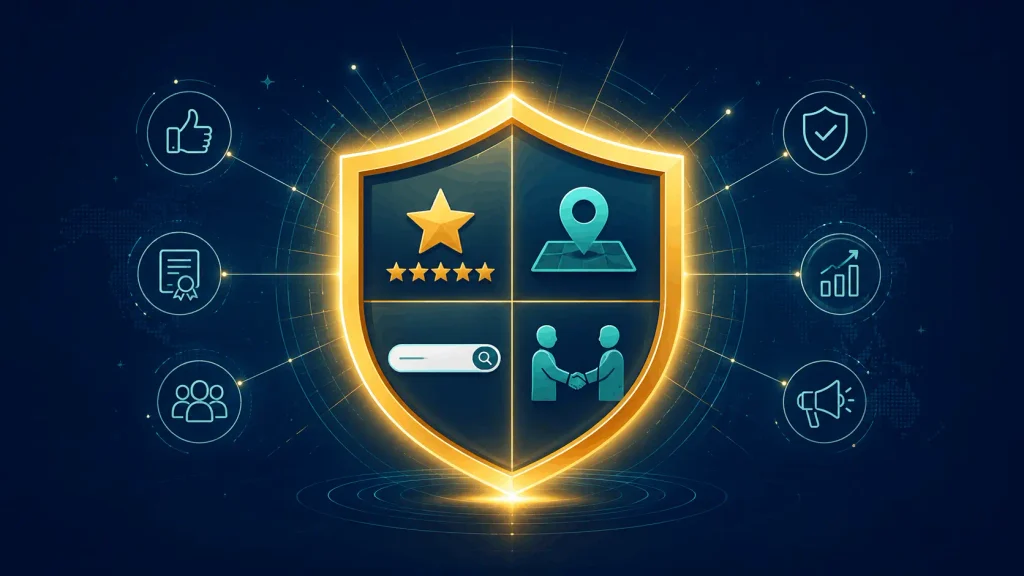
Your Google Business Profile (GBP) is one of the clearest brand entity signals available to Google.
Even for websites that are not primarily local businesses, a fully optimized GBP reinforces that your brand is real, legitimate, and operating at a specific address.
For local businesses, GBP optimization is non-negotiable.
It directly determines whether you appear in the local map pack, which captures a significant share of local search clicks that never reach organic results.
How to optimize your GBP for maximum SEO impact:
- Complete every available field: business name, website URL, phone number, address (even if your “business” is your blog operation), category, and hours
- Write a 250-character description that includes your primary keyword naturally in the first sentence
- Post to your GBP profile at least once per week regular posting signals an active, maintained presence
- Upload real photos under appropriate categories; active visual profiles see higher engagement in the local pack
- Respond to every review, positive or negative, within 24 to 48 hours
11. Get Positive Reviews on Authority Platforms
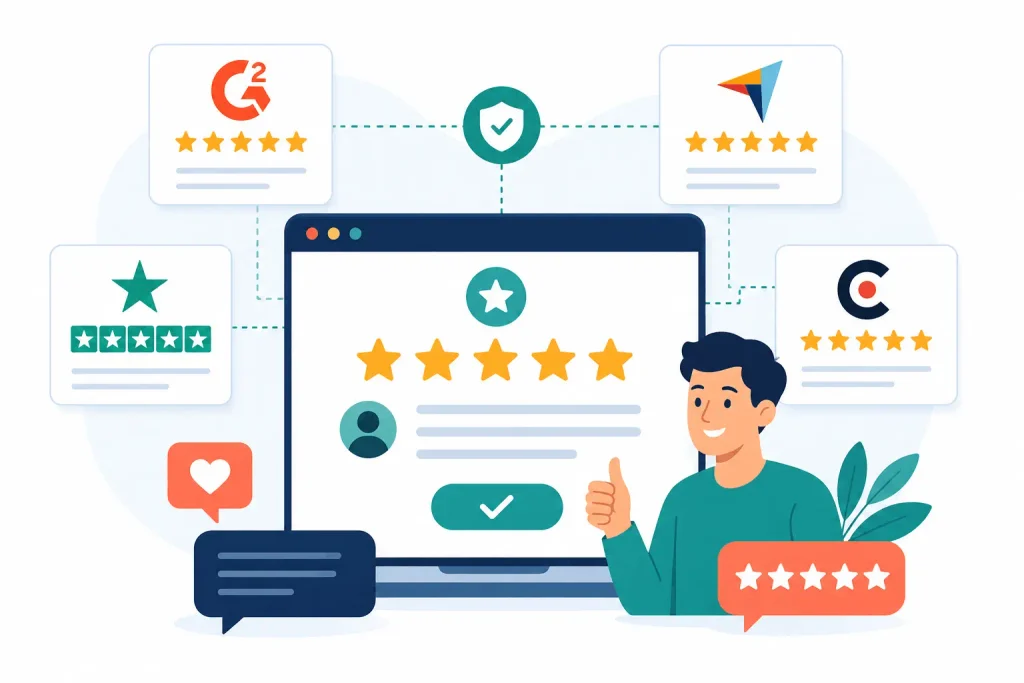
Reviews on Google, Trustpilot, G2, Capterra, and niche-specific review platforms contribute to your brand’s trust signals in Google’s evaluation framework.
A brand with dozens of verified, detailed positive reviews from real users signals something about its quality that no amount of on-page optimization can replicate.
The most effective way to earn reviews ethically is to make it easy and timely.
A follow-up email sent 48 to 72 hours after a purchase or service delivery, with a direct link to your preferred review platform, captures the highest response rate.
In-product prompts work well for software products. For service businesses, asking directly at the end of a successful engagement is both natural and effective.
How to handle negative reviews: respond calmly, acknowledge the concern, and describe what you have done or will do to address it.
A professional, constructive response to a negative review often converts skeptical readers more effectively than a uniformly positive rating.
12. Audit and Build Branded Search Volume
When people search for your brand name directly, Google registers that as a demand signal.
A brand that generates consistent, growing branded search volume is treated as more authoritative and trustworthy than an equivalent site without it.
This is an underrated off-page factor that most guides completely ignore.
Track your branded search volume in Google Search Console under the Performance tab.
Filter by your brand name as a query. You will see impressions and clicks, and you can track whether that number is growing over time.
To grow branded search: PR coverage and media mentions introduce your brand to new audiences who then search for you. Social media presence keeps your brand in front of people who might search for it later.
Content that gets widely shared and discussed builds brand recognition at scale.
Even offline marketing that drives people to search your brand name online contributes to this signal.
13. Get brand Mentions on Authority Sites
Being mentioned on a high-authority domain, even without a hyperlink, sends a co-citation signal to Google.
When your brand consistently appears in the same context as established authoritative sources, Google’s understanding of your brand’s topical relevance and credibility improves.
To earn authority site mentions: contribute expert commentary to publications in your niche, publish original research that other writers need to reference, participate in industry events that get covered in publications, and be available as a source for journalists covering your topic area.
Use Semrush brand Monitoring and Google Alerts to track where your brand is being mentioned. When a mention appears without a link, convert it using the process from tactic five above.
14. Partner with Larger Brands
Co-marketing partnerships with established brands in adjacent niches are one of the most underused off-page SEO tactics available.
When you collaborate on a joint webinar, a co-authored guide, or a co-produced piece of research with a brand that already has authority, you inherit some of the trust signals from that association.
Their audience links to the collaborative content. Their site mentions yours. Both brands benefit from the cross-promotion.
Identify brands that serve the same audience as you without being direct competitors. Reach out with a specific collaboration idea that provides clear value to both sides.
The pitch that works best is not “let us promote each other” but “here is a specific piece of content we could create together that would genuinely help both our audiences.”
15. Social Media Amplification
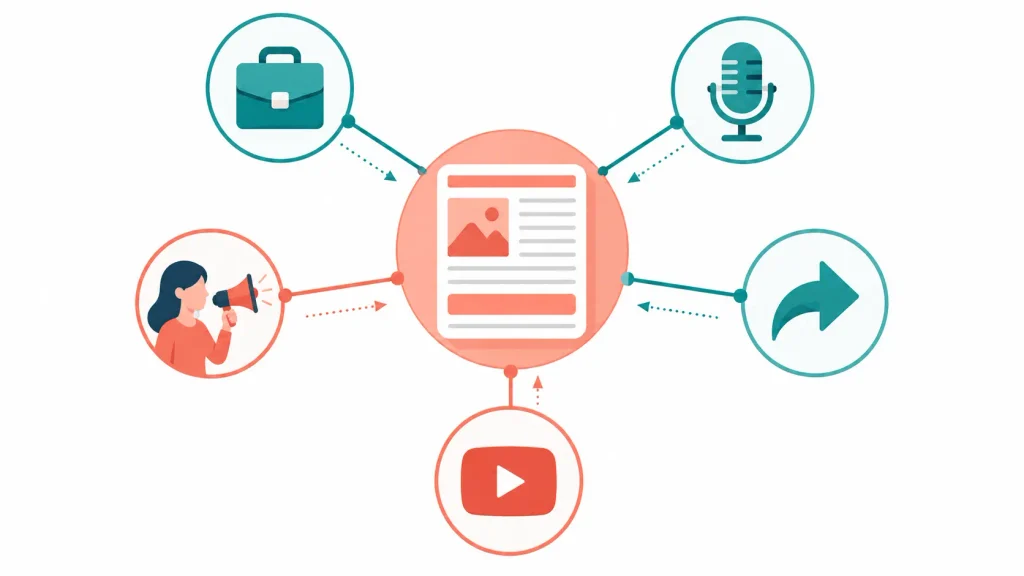
The SEO value of social media is in amplification, not direct ranking.
When your content reaches more people through social platforms, more of those people link to it, share it, discuss it, and search for your brand.
Those downstream effects are what actually move SEO metrics.
Which platforms matter most depends on your niche. LinkedIn is essential for B2B and professional content. Pinterest drives significant referral traffic for bloggers and visual content.
YouTube is valuable across virtually every niche. Reddit is particularly important for SEO, marketing, and tech topics, where engaged communities share useful content aggressively.
The most effective social amplification strategy is to share each piece of content multiple times in different formats, not just once at publication.
A blog post can become a Twitter thread, a LinkedIn carousel, a Pinterest pin, a short Instagram caption, and a Reddit post, each of which reaches a different segment of your potential audience.
16. LinkedIn Publishing and Thought Leadership
Google indexes LinkedIn content, and individual LinkedIn articles can rank in search results independently of your main site.
For professionals, consultants, and B2B-adjacent bloggers, LinkedIn publishing is one of the most underused off-page techniques available.
Publishing native LinkedIn articles on topics you already cover on your blog accomplishes two things simultaneously.
It builds your personal authority as an expert in your field, and it directs LinkedIn readers back to your main site for the full version of the content. Google sees both the LinkedIn article and the link back to your site.
The most effective LinkedIn strategy for SEO purposes: repurpose your three to five highest-performing blog posts as LinkedIn articles, each ending with a clear link back to the full original resource.
17. Influencer Partnerships and Outreach
Partnering with relevant influencers in your niche generates both brand visibility and contextual backlinks from the content they create about you.
Reviews, collaborative posts, and product mentions published on an influencer’s blog or YouTube channel typically include a link back to your site.
Micro-influencers with between 5,000 and 50,000 followers are often the most effective for SEO purposes because their audience engagement rates are higher, their recommendation carries more trust with a tightly defined niche audience, and partnership terms are far more accessible than those of large influencers.
The key to effective influencer partnerships is alignment.
The influencer should genuinely be interested in your topic or product, and their audience should match your target reader profile. Forced or clearly commercial partnerships produce low engagement and low SEO value.
18. Optimize for AI Discovery: The Advanced Off Page SEO Techniques for 2026
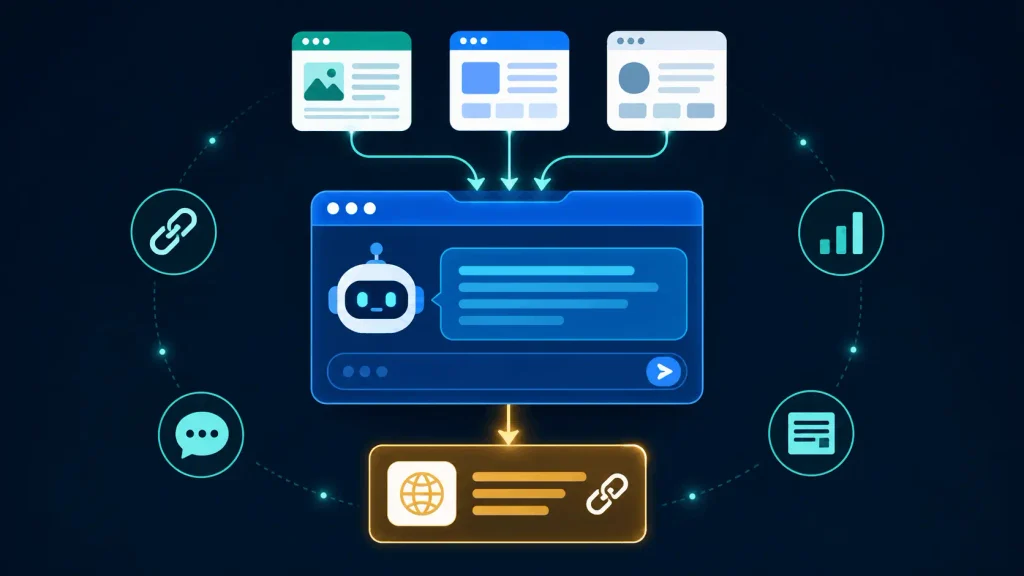
Being cited or referenced by AI systems when they generate answers is an emerging off-page SEO signal that most guides in 2026 are still not covering adequately.
When a user asks ChatGPT, Google Gemini, or Perplexity a question in your niche and the AI cites your content as a source, that citation is both a trust signal and a direct traffic driver.
The signals that determine AI citation likelihood are almost identical to those that determine traditional authority: strong backlink profiles, consistent brand mentions across the web, original data worth citing, and content structured clearly enough that AI systems can extract and use it.
Practical tactics to increase AI platform visibility:
Publish original research and data that AI tools need to attribute to a source. A statistic with no citable origin gets paraphrased.
A statistic from a named study at your domain gets cited with attribution.
Get mentioned on high-authority pages that AI training sources draw from. Wikipedia articles, major industry publications, and well-linked resource pages all contribute to the corpus these systems draw from.
Structure your content with short, self-contained answer blocks of 40 to 60 words that directly answer specific questions. These are the blocks AI systems extract most reliably.
Build the brand entity signals covered in the E-E-A-T section above.
AI systems that recognize your brand as a credible authority in a specific topic area are more likely to surface your content when that topic is queried.
19. Local Citations and Business Directory Listings
A citation is any online mention of your business name, address, and phone number, referred to collectively as NAP.
Citations on recognized local directories and platforms tell Google that your business is real, operating at a legitimate physical location, and consistent in how it presents itself across the internet.
NAP consistency matters deeply. A single discrepancy between how your address appears on your website versus how it appears on Yelp or an industry directory creates confusion for both Google and potential customers.
The difference between “Suite 4” and “Ste 4” or an old phone number from three years ago can suppress local rankings.
Key directories to claim and maintain: Google Business Profile, Bing Places, Apple Maps, Yelp, Foursquare, and any industry-specific directories relevant to your business category.
For managing citations at scale, BrightLocal and Semrush’s Listing Management tool both offer audit and synchronization features that identify and fix NAP inconsistencies across dozens of directories from a single dashboard.
20. Forum Participation and Community Engagement
Active, genuine participation in niche forums, Reddit communities, and Q&A platforms like Quora builds brand visibility and earns referral traffic from highly relevant audiences.
It also contributes to the brand mention signals that off page SEO depends on.
The key word is genuine. Joining forums only to post links to your content is recognized immediately by community moderators and other members as spam.
It produces no SEO value and often results in removal.
The approach that works is to contribute real answers, join existing discussions, and build a reputation as a knowledgeable member of the community over time.
Links to your content arise naturally when they are the most relevant resource for a question being asked.
Which platforms to prioritize: Reddit subreddits in your niche are among the highest-traffic forum environments available, and posts linking to high-quality resources from established accounts carry genuine referral value.
Quora questions about your topic area can drive long-term referral traffic when answered comprehensively.
Niche-specific community forums and Facebook Groups are also worth participating in for smaller but highly targeted audiences.
Best Off Page SEO Tools in 2026
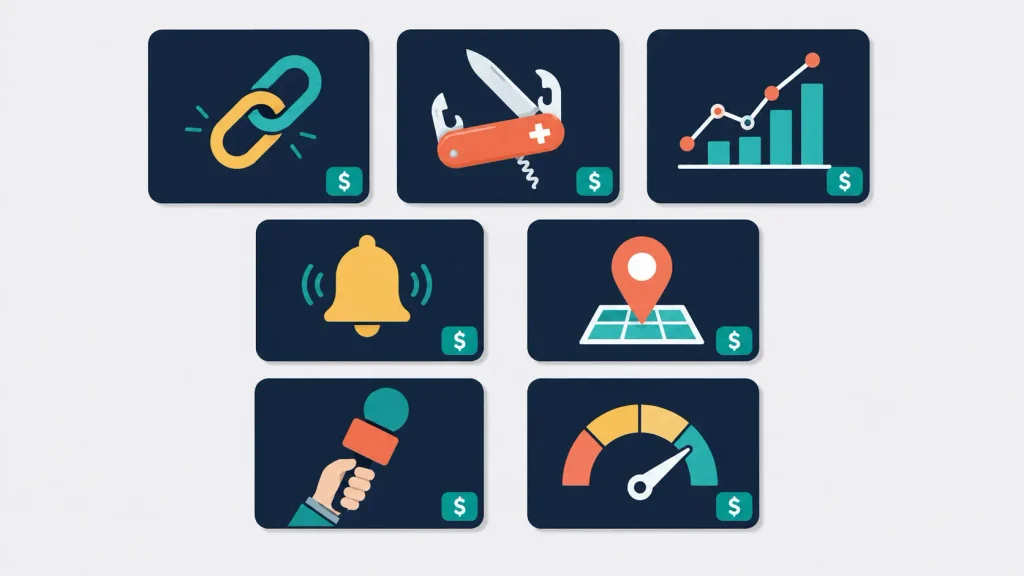
| Tool | Best For | Free Option | Starting Price |
|---|---|---|---|
| Ahrefs | Backlink analysis, broken link building, competitor research | Ahrefs Webmaster Tools | $129/month |
| Semrush | Brand monitoring, backlink audit, digital PR, link building | Limited free account | $117/month |
| BuzzSumo | Finding shareable content, roundup opportunities, influencer research | Limited free trial | $199/month |
| Google Alerts | Free brand mention monitoring | Completely free | Free |
| BrightLocal | Local citation management, review tracking | Free trial | $39/month |
| HARO / Connectively | Digital PR, media mention opportunities | Free limited tier | Free to $149/month |
| Moz Link Explorer | Spam score, domain authority trending | Limited free | $99/month |
For most bloggers and affiliate marketers starting with off-page SEO, Semrush and Ahrefs cover the largest share of what is needed: backlink analysis, brand monitoring, competitor research, and broken link discovery. Both offer free starting points before committing to a paid plan.
Off-Page SEO Checklist: Activities to Do Every Month
| Frequency | Activity |
|---|---|
| Weekly | Check Google Alerts for new brand mentions |
| Weekly | Engage in 1 to 2 niche forums or communities with genuine value |
| Monthly | Run a backlink audit to check for new toxic or spammy links |
| Monthly | Review unlinked brand mentions and send link requests |
| Monthly | Publish at least 1 piece of content specifically designed to earn links |
| Quarterly | Run a full competitor backlink gap analysis |
| Quarterly | Audit local citations for NAP consistency across all directories |
| Quarterly | Pitch 3 to 5 podcast appearances or guest post opportunities |
| Ongoing | Monitor Google Search Console for new referring domains |
FAQs
What is off-page SEO and why does it matter?
Off-page SEO is all activity taken outside your own website to build authority, trust, and search engine rankings. It matters because Google uses signals from across the web, not just your own pages, to evaluate how credible and authoritative your site is. Off-page SEO is what tells Google the rest of the internet vouches for you.
What is the difference between on-page SEO and off-page SEO?
On-page SEO covers everything you do on your own website: content, keywords, technical structure, and metadata. Off-page SEO covers everything that happens elsewhere: backlinks, brand mentions, digital PR, social signals, and local citations. Both are needed. On-page alone cannot build the external trust signals Google weighs heavily in competitive niches.
What are the most important off-page SEO ranking factors?
The most weighted factors are backlink quality and topical relevance, referring domain diversity, brand mentions, E-E-A-T signals from author credentials and media coverage, and brand search volume. In 2026, AI platform visibility is emerging as an additional trust signal worth actively building.
What are the best off-page SEO tactics for beginners?
Start with Google Alerts to monitor brand mentions, claim and optimize your Google Business Profile, set up profiles on key local directories, and begin reaching out for guest posting opportunities on relevant blogs in your niche. These four activities cost nothing beyond time and produce measurable results within three to six months.
What are advanced off-page SEO tactics for experienced sites?
The skyscraper technique, original research publication, digital PR through HARO and media outreach, systematic unlinked brand mention conversion, and AI discovery optimization are the most impactful advanced tactics for sites that already have a baseline of content and some existing authority.
How long does off-page SEO take to show results?
Off-page SEO results typically become visible in Google rankings within three to six months of consistent activity. Link building from high-authority domains can show ranking impact faster. Local citation work often produces local ranking improvements within two to three months. Brand entity and E-E-A-T signals take longer to accumulate but have compounding long-term value.
Is social media part of off-page SEO?
Social media is an indirect off-page SEO factor. Social signals are not direct Google ranking inputs, but social amplification increases content discovery, drives branded search growth, and raises the probability of earning organic backlinks from people who discover your content through social platforms.
What is the best tool for off-page SEO?
For most bloggers and affiliate marketers, Semrush and Ahrefs each cover the largest share of off-page SEO needs: backlink analysis, brand mention monitoring, competitor research, and broken link discovery. Google Alerts is the most accessible free tool for brand monitoring. BrightLocal is the strongest choice specifically for local citation management.
How do I build backlinks without getting penalized?
Focus only on white-hat tactics: guest blogging on relevant, legitimate sites, broken link building, earning links through original content and research, and digital PR outreach. Avoid buying links, participating in link exchange schemes, using private blog networks, or building links at unnatural velocity. See our Google Penalty Checker guide for how to audit your current backlink profile for risk.
Does off-page SEO still matter with AI search in 2026?
Yes, more than before. AI search surfaces like Google AI Overviews, Perplexity, and Copilot source from authoritative, well-cited content. The same off-page signals that earn Google trust, including quality backlinks, brand mentions, and E-E-A-T, also determine whether your content is cited in AI-generated answers. Off-page SEO is the foundation of AI visibility.
Conclusion
Off page SEO tactics is not a task you complete and move on from. It is an ongoing practice of building your site’s reputation and authority across the web, one link, one mention, one partnership at a time.
The sites ranking at the top of competitive search results in 2026 are not there because of a single link-building campaign. They are there because they have consistently, patiently built external trust signals month after month.
Start with the free seo off page tactics: set up Google Alerts, claim your Google Business Profile, and submit to key directories.
Then build toward the link building tactics that match your current content library. Add digital PR and podcast outreach as your authority grows.
Track everything in Search Console so you can see which activities are actually producing referring domain growth.
ALSO READ:

5 thoughts on “20 Off-Page SEO Tactics That Actually Work in 2026 (Complete Guide)”